To guarantee you’ll actually use your drone, focus on key specs like a good camera with stabilizing gimbals for sharp shots, and a user-friendly controller with smart flight modes for easy handling. Consider flight time—longer lasts means more fun without frequent recharges—and range, so you won’t lose connection easily during adventures. Safety features like obstacle avoidance and portability also matter. Keep exploring this guide to discover more essential specs to match your needs.
Key Takeaways
- Consider camera quality and gimbal stabilization for professional-looking footage and steady shots.
- Evaluate flight time, battery efficiency, and charging speed to ensure extended usage without frequent recharges.
- Check signal range, control responsiveness, and obstacle avoidance features for safe, confident flying.
- Assess build durability and component reliability for long-term performance and reduced maintenance.
- Prioritize user-friendly controls, smart flight modes, and safety features to simplify operation and enhance usability.
What Drone Specs Matter Most for Fun and Daily Use
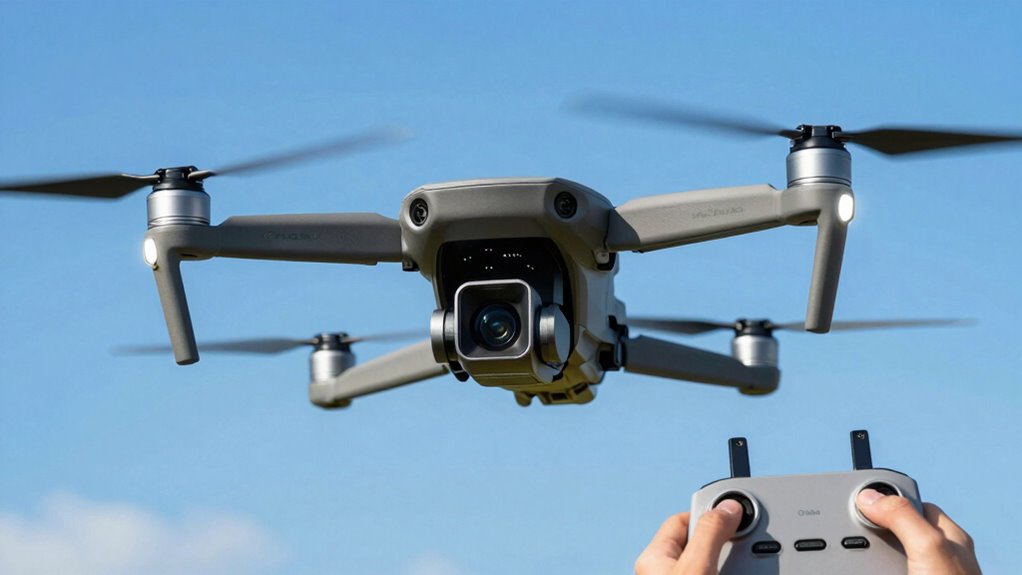
When choosing a drone for fun and daily use, certain specs can markedly enhance your experience. First, consider camera quality if you want stunning photos or videos, which can make flying more enjoyable. Ease of control is also key; look for features like beginner modes or intuitive controls. Don’t forget to check drone accessories, such as extra batteries or propeller guards, to extend your flying time and safeguard your investment. Regulatory considerations are important too—familiarize yourself with local drone laws to avoid fines and ensure safe flying. A lightweight, portable drone can be more convenient for daily adventures. Additionally, understanding Victorian Steampunk Roleplay Etiquette can help you navigate community interactions more confidently while sharing your drone adventures. Being aware of drone regulations can save you from potential legal issues and ensure your flying remains hassle-free. Researching drone safety tips can further help prevent accidents and protect both your drone and bystanders. For example, staying informed about weather impacts can help you choose optimal flying conditions and avoid crashes. Being aware of flight planning strategies can also improve your overall flying experience. By focusing on these specs, you’ll find a drone that’s fun, practical, and compliant with regulations, making your flying experience more enjoyable and hassle-free.
How Flight Time and Battery Life Affect Your Flying Experience
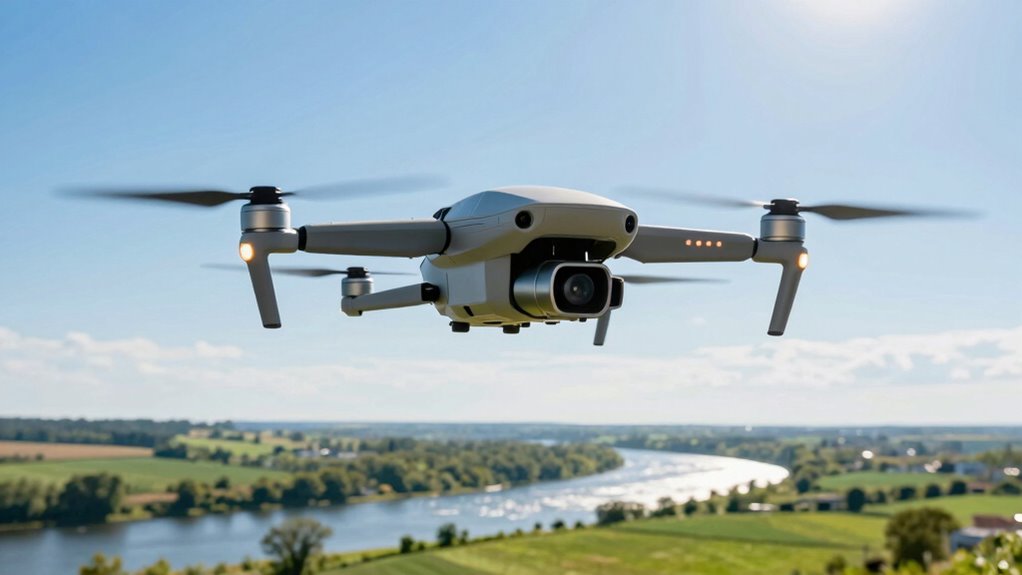
Long flight times and strong battery life are essential for a satisfying drone experience because they directly determine how long you can enjoy flying without interruptions. Better battery efficiency means you get more flight time per charge, maximizing your adventures. Additionally, fast charging speed helps you get back in the air quickly, reducing downtime. Keep in mind that longer flight times often come with larger batteries, which can add weight. Here’s a quick comparison:
| Battery Life | Charging Speed |
|---|---|
| 20-30 mins | 30-60 mins |
| 10-15 mins | 15-30 mins |
| 5-10 mins | Under 15 mins |
| 30-40 mins | Over 60 mins |
| 15-20 mins | 20-45 mins |
Choose a drone with balanced battery efficiency and fast charging to enhance your flying experience. Also, consider battery management features that can extend overall drone performance and battery longevity, ensuring your drone stays reliable over time. Understanding the battery capacity can help you select a drone that matches your desired flight duration and usage needs. Additionally, selecting a drone with smart charging features can further optimize your charging routine and overall battery health. Incorporating battery monitoring tools can also assist in maintaining optimal battery performance and lifespan.
How Range and Signal Strength Limit Your Exploration
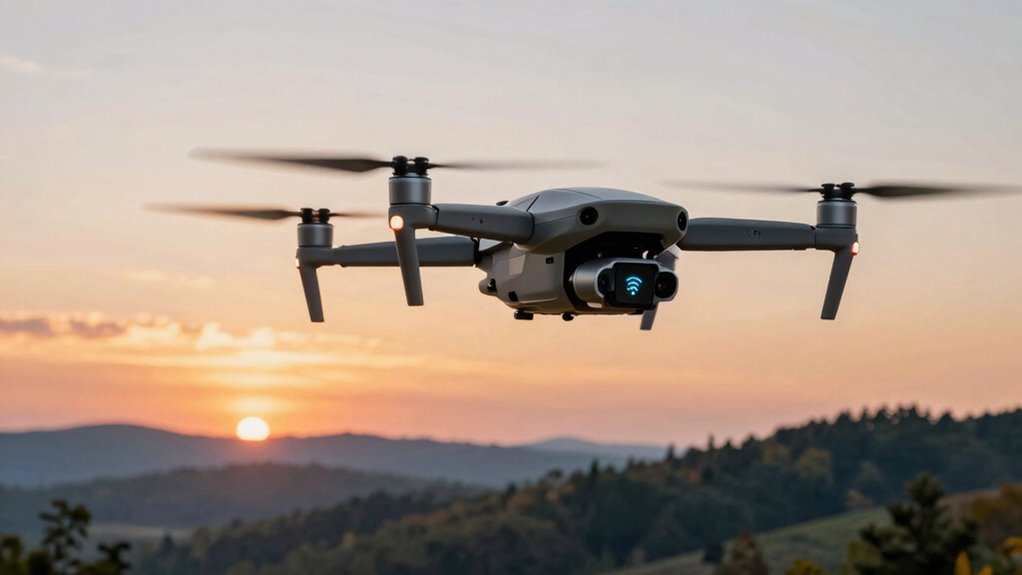
Your drone’s range and signal strength directly influence how far and how confidently you can explore. The signal range determines how much distance you can cover before losing connection, while strong communication helps prevent interruptions. If your drone has a limited signal range, you might need to stay close to avoid losing control. Additionally, communication latency—the delay between your controls and the drone’s response—can impact your ability to navigate smoothly, especially over longer distances. Poor signal strength increases the risk of disconnection, which can lead to crashes or the drone flying away. To maximize exploration, choose a drone with a reliable signal range and low latency, ensuring you can safely push boundaries without losing control or missing critical moments. Maintaining optimal signal quality is essential for safe and effective flight. Incorporating Support Breakfast options, such as those offered at cozy bed and breakfasts, can provide comfort and refreshment during extended flying sessions, enhancing your overall experience. A higher signal stability also reduces the chances of interference and ensures a more consistent connection during your flights. Furthermore, understanding the impact of interference sources can help you select the best flying conditions for your drone. Being aware of potential interference sources like Wi-Fi networks or other electronic devices can help you avoid disruptions and maintain a strong connection.
Why Camera Quality and Gimbal Stability Are Key for Great Shots
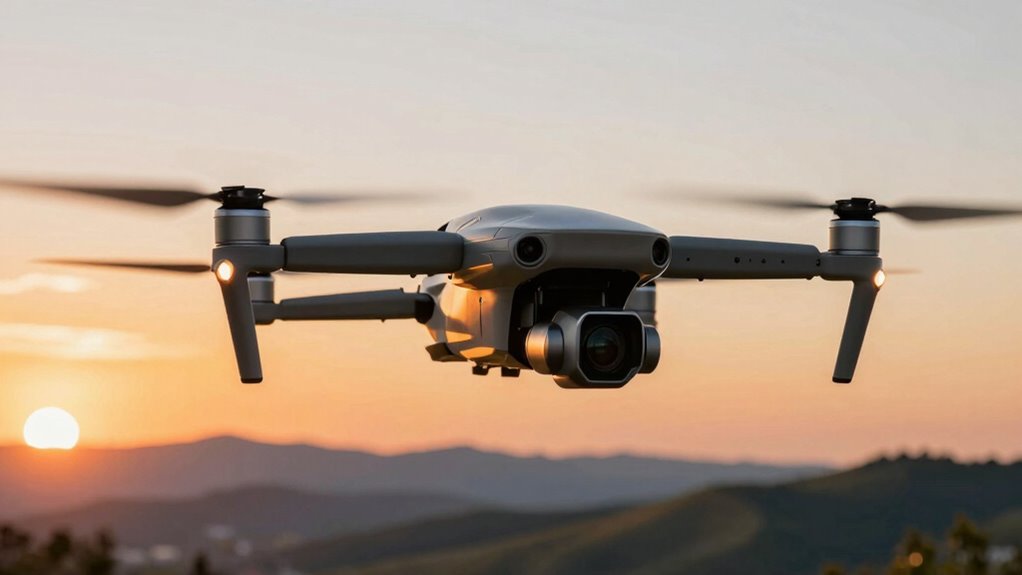
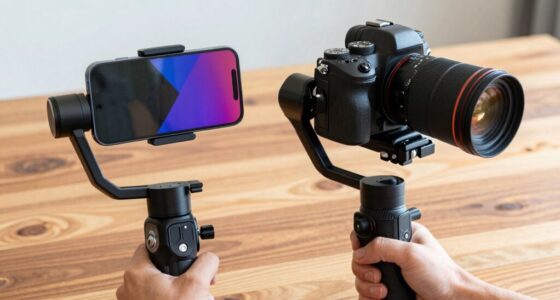
A drone’s ability to capture stunning footage hinges on more than just its flight capabilities; the quality of its camera and the stability provided by the gimbal play vital roles. Higher camera resolution ensures your footage is sharp and detailed, making your shots look professional. However, even the best camera won’t shine without gimbal stabilization, which keeps the camera steady during flight. This stability prevents shaky footage and smooths out movements, especially in windy conditions or when making quick maneuvers. When shopping, prioritize drones with good camera resolution and advanced gimbal stabilization. Additionally, understanding battery capacity and how it affects flight time can help you choose a drone that suits your shooting needs. Combining camera specifications with reliable gimbal technology guarantees you take clear, steady shots that truly stand out, whether for personal projects or professional work. Moreover, familiarizing yourself with remote control features can enhance your overall flying experience and shot precision. Paying attention to flight stability can also significantly improve the quality of your footage in dynamic environments. A focus on these key features will ensure you get the most out of your drone photography.
Controller Features That Make Flying Easier and More Enjoyable
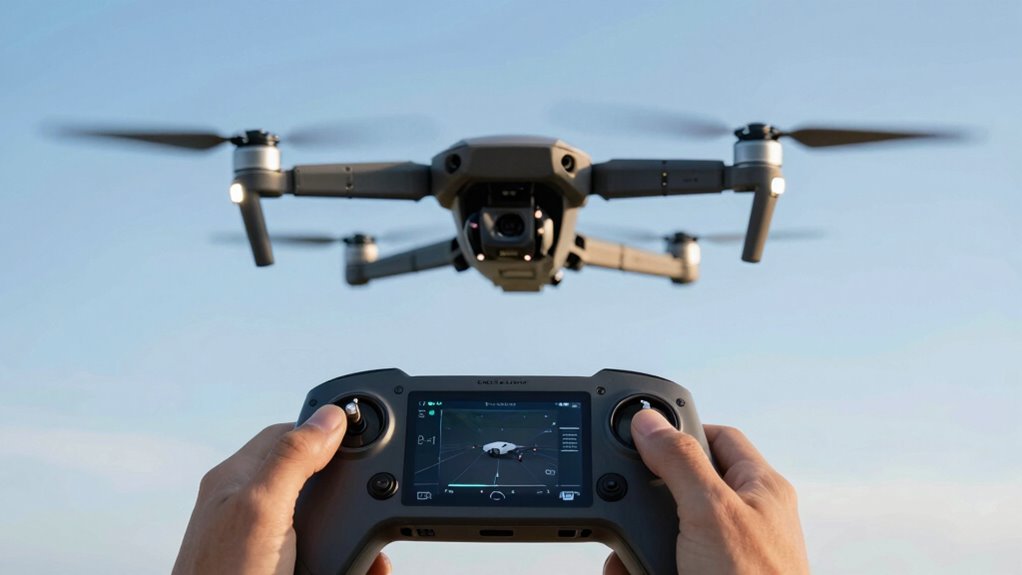
A good controller can transform your flying experience, making it smoother and more intuitive. Features like intuitive control layouts, smart flight modes, and responsive joysticks help you fly with confidence. These elements guarantee you focus on capturing great shots rather than struggling with complex controls. Additionally, incorporating ergonomic design ensures comfortable handling during extended flights, reducing fatigue and enhancing precision. Incorporating user-friendly interfaces can also significantly improve overall ease of use, especially for beginners or casual flyers. Furthermore, understanding proper ventilation and ensuring your drone’s electronics are well-cooled can extend the lifespan and performance of your gear. Regular maintenance of durable components helps prevent unexpected failures and keeps your drone operating at peak efficiency. Proper component selection is crucial for maintaining long-term reliability and performance.
Intuitive Control Layouts
Having intuitive control layouts can substantially enhance your flying experience by making it easier to maneuver your drone smoothly. Well-designed controls reduce the learning curve and help you focus on capturing great footage. Features like gesture controls allow you to command your drone with simple hand movements, making operation more natural and fun. Voice commands add another layer of ease, letting you control functions without touching the controller. Look for layouts that place essential controls within easy reach and avoid clutter. A logical arrangement helps prevent accidental inputs and improves responsiveness. When your controls are intuitive, flying becomes more enjoyable and less stressful. This setup not only boosts confidence but also ensures you can focus on capturing the perfect shot instead of struggling with complex button configurations.
Smart Flight Modes
Ever wondered how to make drone flying simpler and more fun? Smart flight modes do just that by automating complex maneuvers and making control easier. Features like gesture controls let you command your drone with simple hand signals, adding a fun, intuitive touch. Obstacle avoidance keeps your drone safe by detecting and orchestrating around objects automatically, reducing crashes. These modes improve flight stability and help you focus on capturing great shots without stressing over controls. Look for features like:
- Gesture controls for hands-free commands
- Intelligent tracking modes for auto-follow
- Waypoint navigation for precise routes
- Obstacle avoidance for added safety
Smart flight modes make flying more accessible and enjoyable, especially for beginners or casual users.
Responsive Joystick Design
Responsive joystick design is essential for precise control and a smooth flying experience. When your controller responds accurately to your movements, you can maneuver your drone effortlessly, whether you’re capturing shots or navigating tight spaces. Look for controllers with gesture controls, which let you command the drone with simple hand movements, adding ease and fun to flying. An intuitive joystick setup also supports features like automatic landing, making it safer and more convenient, especially for beginners. When your joysticks are responsive, you spend less time correcting drift and more time enjoying your flight. This precision helps you execute smooth turns, altitude changes, and complex maneuvers effortlessly. Overall, a well-designed joystick system enhances control, confidence, and the overall flying experience.
Extra Features to Maximize Your Drone’s Capabilities
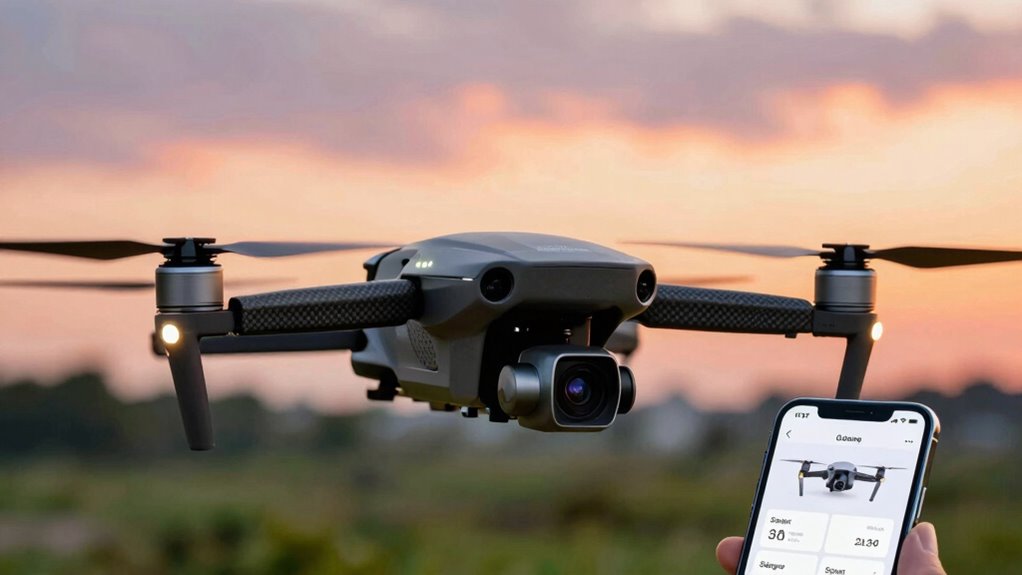
To get the most out of your drone, consider extra features that enhance its capabilities and expand your creative options. Safety features like obstacle avoidance and geofencing help prevent accidents, giving you peace of mind. Storage options, such as removable or expandable SD cards, guarantee you can easily save high-quality footage without worrying about space. Additional features like follow-me modes, waypoints, and automated flight paths can elevate your filming and navigation experience. These tools make flying safer and more versatile, especially in complex environments. By choosing a drone with these extras, you maximize usability and creative potential.
Enhance your drone with obstacle avoidance, geofencing, expandable storage, and automated flight modes for safer, more versatile flying.
- Obstacle avoidance sensors
- Geofencing technology
- Expandable storage options
- Automated flight modes
Frequently Asked Questions
How Does Drone Weight Impact Portability and Flight Performance?
Weight heavily impacts both portability and flight performance. A lighter drone is easier to carry around, making it more portable for adventures. It also enhances flight stability, so your camera stays steady, capturing clearer shots. Heavier drones may offer longer battery life, but they tend to reduce agility and increase the hassle of transport. Consider your priorities—if portability and camera stability matter most, opt for a lighter model.
What Safety Features Should I Look for in a Beginner Drone?
Think of your beginner drone as a cautious explorer. Look for safety features like propeller guards, which act like a shield to prevent accidents, and an emergency landing function, like a quick escape route in tricky situations. These features help you learn confidently, reducing risks. With propeller guards and emergency landing options, you’re better protected, making your flying experience safer and more enjoyable as you master the skies.
How Do Software Updates Improve Drone Functionality Over Time?
Software updates enhance your drone’s functionality by improving software optimization and delivering firmware improvements. These updates fix bugs, enhance stability, and add new features, ensuring your drone operates smoothly and safely. Regularly installing updates keeps your drone compatible with the latest technology, extends its lifespan, and enhances flight performance. Staying current with firmware improvements means you get the most out of your drone, making every flight more reliable and enjoyable.
Is Obstacle Avoidance Essential for Casual Flying?
Obstacle avoidance isn’t essential for casual flying, but it’s highly beneficial. It helps prevent crashes, so you can focus on capturing great footage with your drone’s camera quality. Keep in mind, obstacle avoidance features can impact battery life, so if you prefer longer flights, you might opt for simpler models. However, safety and ease of use often outweigh the extra battery drain, especially if you’re new to flying.
How Does Wind Resistance Affect Drone Stability and Control?
Wind resistance greatly impacts drone stability and control, especially in gusty conditions. An aerodynamic design helps reduce drag, making it easier to maintain steady flight. Additionally, efficient propellers improve lift and responsiveness, allowing you to better handle wind. When choosing a drone, look for features that boost wind resistance through design and propeller quality, so you can enjoy smoother flights even when the weather isn’t perfect.
Conclusion
Choosing the right drone isn’t just about specs—it’s about what you’ll actually use. Think about your flying style and needs, then pick features that enhance your experience. Remarkably, some argue that beginner-friendly features often lead to more creative flying, proving that the right tools can boost your confidence and skills. So, trust your instincts, focus on what matters most to you, and enjoy every flight—because the best drone is the one that gets you flying more often.