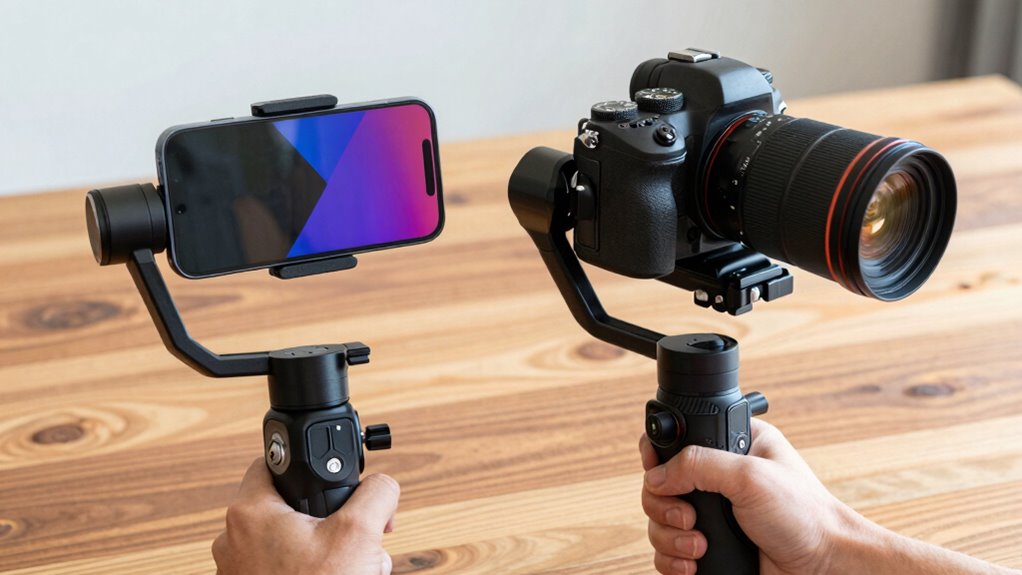

When choosing between phone and camera gimbals, consider your workflow, shooting environment, and gear. Phone gimbals are lightweight, portable, and ideal for quick, on-the-move filming, while camera gimbals support heavier setups and advanced features for professional shoots. Think about your shooting style—if you need speed and flexibility, a phone gimbal may suit you better. For more insights on matching your workflow with the right stabilizer, keep exploring.
Key Takeaways
- Consider device weight and size; phones require lightweight, portable gimbals, while cameras need more robust, heavy-duty models.
- Match gimbal features like stabilization and control options to your shooting environment and content style.
- Budget constraints influence whether to choose affordable phone gimbals or advanced, feature-rich camera stabilizers.
- Assess your workflow: quick setup and portability suit phone gimbals, while longer shoots benefit from camera gimbals with longer battery life.
- Compatibility with accessories and stabilization needs should align with your filming requirements and equipment setup.
What Are the Main Differences Between Phone and Camera Gimbals?
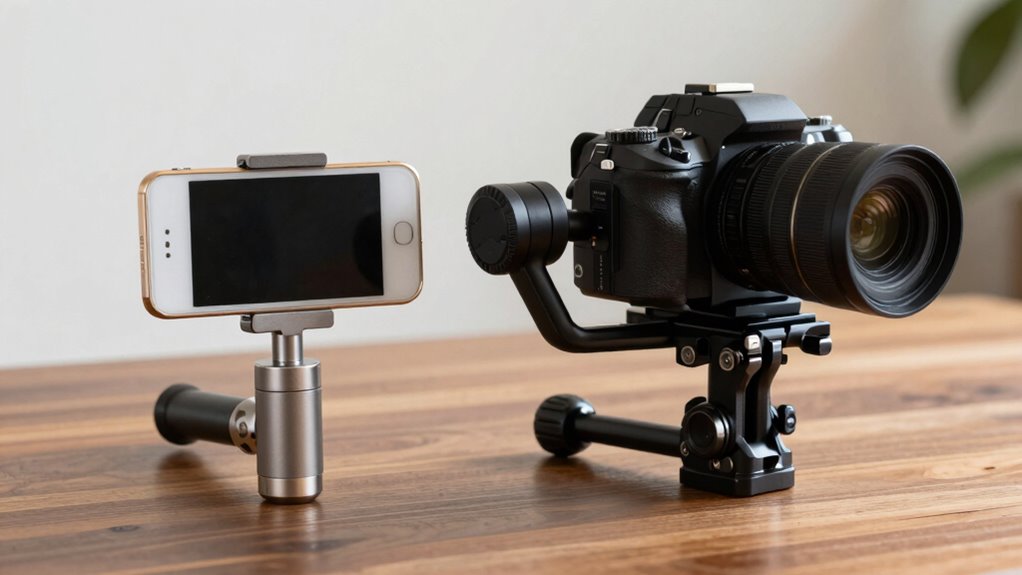
While both phone and camera gimbals serve to stabilize footage, they differ considerably in design and functionality. Phone gimbals are compact, lightweight, and optimized for portability, often featuring stabilization technology tailored for lighter devices. They typically offer easy accessory compatibility, such as mounts for microphones or lighting, to enhance mobile shooting. Camera gimbals, on the other hand, are larger and built to handle heavier professional cameras, providing advanced stabilization technology to manage increased weight and complexity. They usually support a wider range of accessories, including follow focus systems and external monitors. This difference in design and accessory compatibility means your choice depends on your equipment size and the level of stabilization you require for your workflow. Additionally, adaptability in content formats plays a crucial role when choosing between these stabilization tools, depending on the scope of your projects.
How Does Your Shooting Style Influence Your Gimbal Choice?
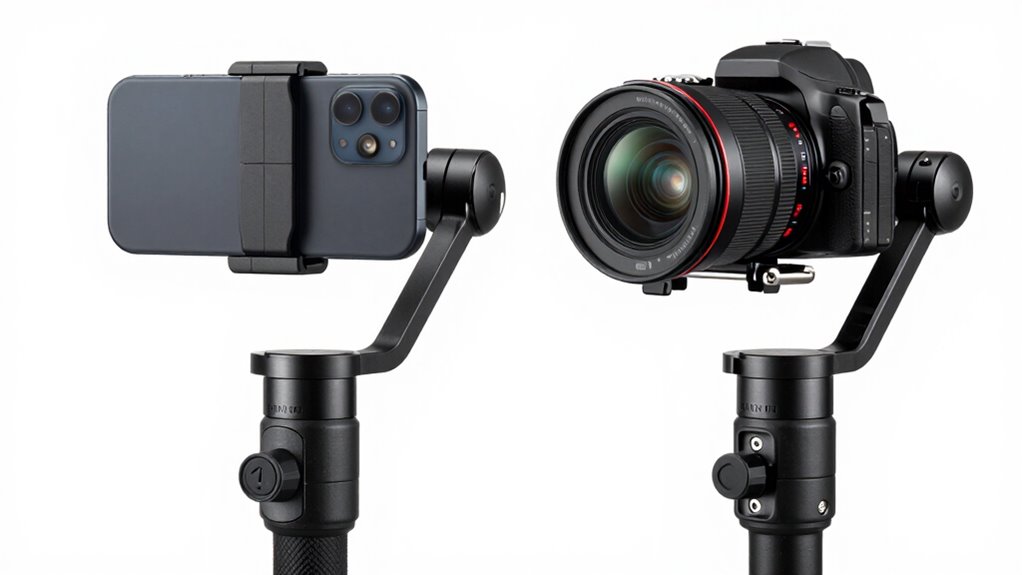
Your shooting style plays a significant role in determining which gimbal best suits your needs. If you often shoot in dynamic environments like outdoor locations or fast-paced events, you’ll want a gimbal that offers stability and quick maneuverability. A higher creativity level, such as shooting cinematic shots or complex movements, requires a gimbal with advanced controls and smooth tracking features. Conversely, if your shooting environment is more controlled, like a studio or indoor setup, a simpler gimbal may suffice. Your style of shooting influences whether you need lightweight portability for on-the-go filming or a more robust stabilizer for complex shots. Understanding your shooting environment and creativity level helps you select a gimbal that enhances your workflow and delivers the desired footage quality. Additionally, considering the types of gimbals available can help you choose the one that best aligns with your specific shooting style. Recognizing how different gimbal features impact your filming can further optimize your equipment choices for your workflow.
What Budget and Portability Factors Should You Consider?
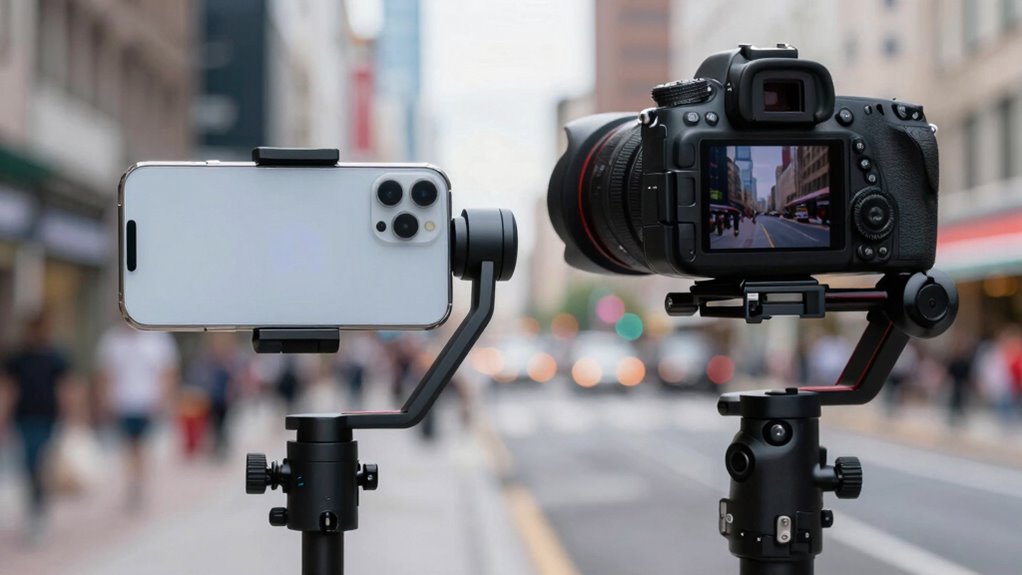
Considering your budget and portability needs is essential when choosing a gimbal, as these factors directly impact your overall experience and convenience. If budget constraints are tight, you might lean toward more affordable phone gimbals, which still offer good stabilization without breaking the bank. On the other hand, if you prioritize portability, look for lightweight, compact models that are easy to carry for on-the-go shoots. Heavier, feature-rich camera gimbals may provide advanced stabilization but can be less practical for extended use or travel. Assess how often you’ll need to move your gear and what level of stabilization is necessary. Balancing your budget constraints with battery capacity considerations guarantees you select a gimbal that fits seamlessly into your workflow without sacrificing essential features. Additionally, consider the design and build quality to ensure durability during transportation and use. In particular, material durability plays a crucial role in maintaining the longevity of your equipment during frequent travel or demanding conditions, especially when choosing models with compact and lightweight designs. Furthermore, evaluating the compatibility with your devices can help ensure seamless operation and maximize the gimbal’s usefulness in your specific workflow.
Which Performance Features Matter Most in a Gimbal?
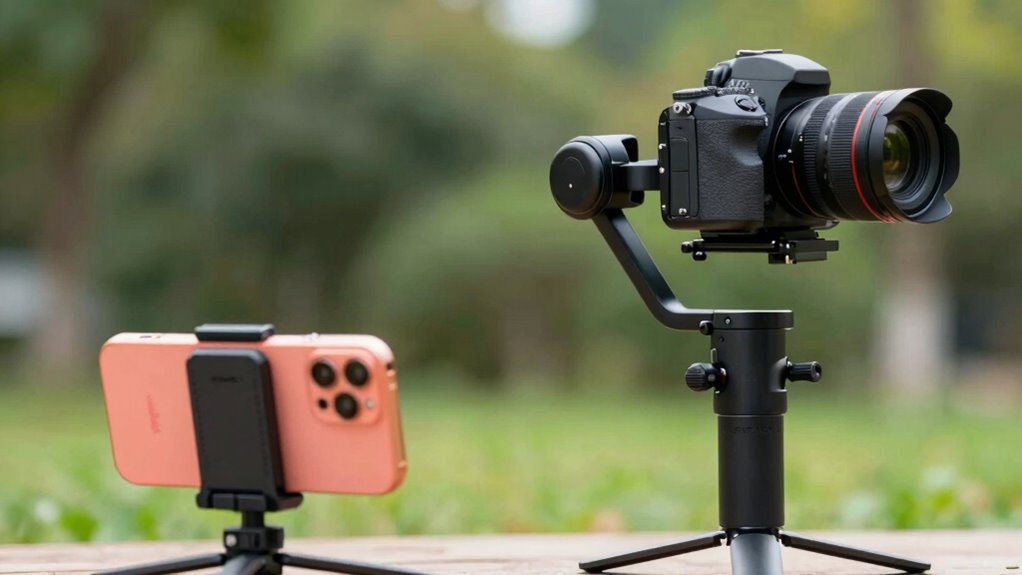
What performance features should you prioritize in a gimbal to guarantee smooth, professional-quality footage? Focus on ergonomics comfort, so you can shoot longer without fatigue, and battery life to keep filming without interruptions. Stability is vital for steady shots, especially during dynamic movements. Quick response and precise control make your footage look polished. Here’s a quick comparison:
| Feature | Why It Matters | How It Impacts Your Workflow |
|---|---|---|
| Ergonomics Comfort | Reduces fatigue, improves stability | Allows longer shoots comfortably |
| Battery Life | Extends shooting sessions | Less downtime, more creative freedom |
| Stability | Ensures smooth footage | Keeps your shots professional-looking |
| Response Speed | Quick adjustments | Adapts to fast-moving scenes |
| Control Precision | Accurate movements | Perfect framing and focus |
Additionally, understanding noise reduction techniques can enhance your footage quality in challenging environments. Proper handling and vibration dampening are also crucial for maintaining stability during complex shots. Improving sensor stabilization can further help achieve cinematic results. Proper maintenance and calibration of your gimbal also contribute to optimal performance.
How to Decide Which Gimbal Fits Your Content Creation Style?
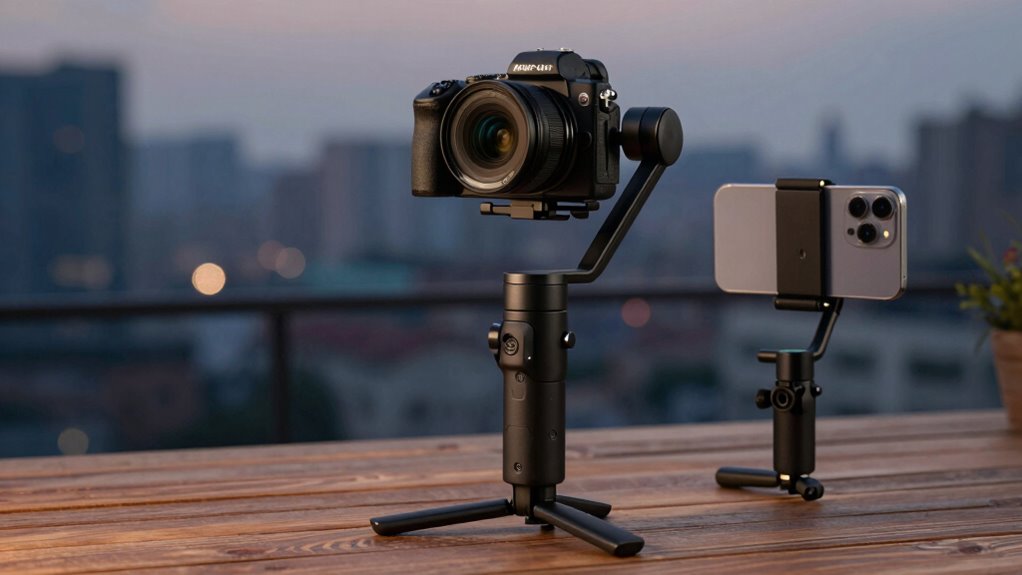
Choosing the right gimbal depends on how you plan to create content and the environments you’ll shoot in. Consider your style and workflow to pick the best fit. If you prioritize quick setup and portability, a phone gimbal with an ergonomic design is ideal. For longer shoots, check the battery life to avoid interruptions. Think about your shooting style:
- Do you need smooth, professional shots or quick, spontaneous clips?
- Will you be shooting in dynamic environments requiring durability?
- Do you prefer a lightweight, ergonomic design for comfort during extended use?
Matching your content creation style with a gimbal that offers the right ergonomic design and battery life ensures seamless shooting sessions. This way, your gear complements how you work and helps you produce better content. Additionally, understanding your overall workflow can help determine if a 16PF personality assessment might be useful in clarifying your creative strengths and preferences.
Frequently Asked Questions
Can I Upgrade My Phone Gimbal to a Professional Camera Gimbal Later?
Yes, you can upgrade your phone gimbal to a professional camera gimbal later, but verify the gimbal compatibility first. Many models offer upgrade options or interchangeable mounts, allowing you to adapt as your equipment needs grow. Keep in mind, some gimbals are designed specifically for phones, so confirm the new camera gimbal supports your camera’s size and weight. Planning ahead helps you make a seamless shift without needing a full replacement.
How Do Battery Life and Charging Impact Gimbal Usage?
Battery life and charging convenience directly impact your gimbal usage by determining how long you can shoot without interruptions. Opt for a gimbal with good battery longevity to ensure extended shoots, especially on location. Quick-charging features help you recharge faster, saving time during busy shoots. Regularly check the battery status and carry spare batteries if possible, so your workflow stays smooth and uninterrupted.
Are There Specific Accessories That Enhance Gimbal Functionality?
Adding a tripod adapter can turn your gimbal into a stable stand for stationary shots, boosting versatility. Lens attachments, like wide-angle or macro lenses, expand creative options for detailed shots. For example, a photographer used a tripod adapter during a wildlife shoot to switch between handheld and static modes seamlessly. These accessories enhance gimbal functionality by allowing more precise control and diverse shot options, making your filming experience more flexible and professional.
What Is the Learning Curve for Mastering Advanced Gimbal Features?
You’ll find that mastering advanced gimbal features involves a moderate learning curve, especially with the user interface. With some user training and practice, you can quickly become comfortable maneuvering controls and customizing settings. The more you experiment, the easier it gets to unlock its full potential. Dedicate time to tutorials or hands-on use, and you’ll gain confidence in using advanced features efficiently, enhancing your filming skills.
How Do Different Gimbal Brands Compare in Durability and Reliability?
While some brands boast a solid reputation for durability, others may cut corners on material quality. You’ll find that established brands like DJI and Zhiyun often deliver reliable, well-built gimbals that withstand frequent use, thanks to premium materials. Conversely, lesser-known brands might save costs but risk durability issues. When choosing, consider brand reputation and material quality to guarantee your gimbal remains dependable during your shoots.
Conclusion
Choosing the right gimbal depends on understanding your shooting style and needs. Whether you opt for a phone or camera gimbal, remember that “the right tool makes all the difference.” Consider your workflow, budget, and desired features to find the perfect fit. When you pick wisely, you’ll turn shaky footage into smooth, professional-looking content, elevating your creations to new heights. Trust your instincts and invest in what truly enhances your storytelling.