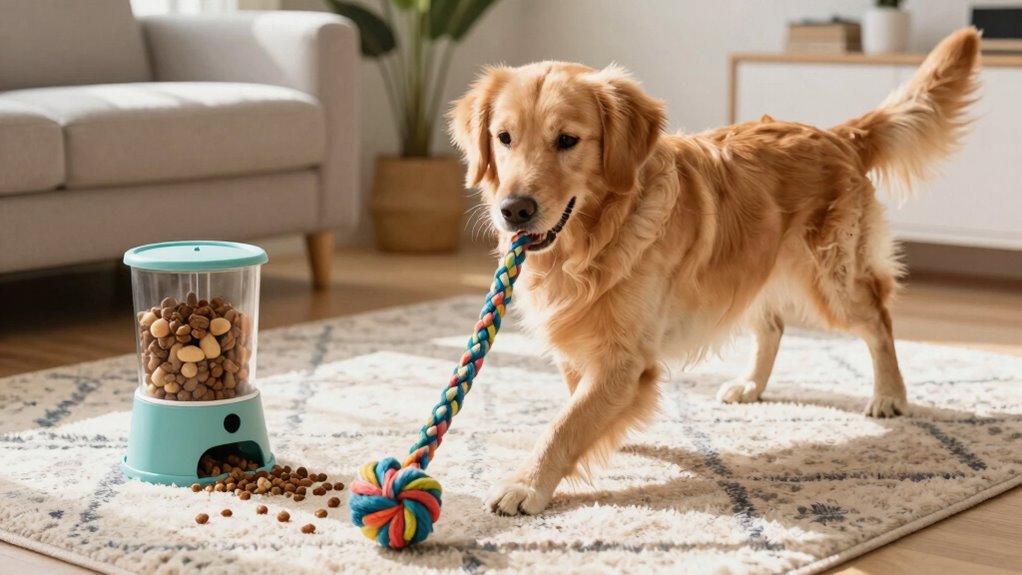

To reduce bad behaviors, make daily enrichment a priority for your dog. Combine mental activities like puzzle feeders, scent games, and obedience exercises with plenty of physical exercise—walks, fetch, and agility. Tailor activities to your dog’s breed and age, switching things up regularly to keep them engaged. Pay attention to signs of boredom to adapt routines accordingly. Keep exploring ways to enrich your dog’s life, and discover how consistent habits transform behavior.
Key Takeaways
- Incorporate daily mental and physical activities like puzzle toys and walks to keep dogs stimulated and reduce boredom-induced bad behaviors.
- Use consistent enrichment routines such as scent work and interactive toys to address root causes of behavioral issues proactively.
- Tailor activities to your dog’s breed, age, and energy level for maximum engagement and effectiveness.
- Combine physical exercise with mental challenges to burn off excess energy and promote calmness.
- Regularly observe and adapt enrichment strategies to maintain interest and prevent the development of destructive habits.
Why Dog Enrichment Is the Key to Better Behavior

Dog enrichment plays a essential role in shaping better behavior because it keeps your pet mentally and physically stimulated. When you provide activities that engage their dog psychological needs, you reduce boredom and frustration. The enrichment benefits help your dog develop problem-solving skills, confidence, and adaptability, which translates into calmer, more focused behavior. Engaging your dog with puzzles, toys, and varied routines satisfies their natural instincts and prevents destructive habits. By investing in enrichment, you’re addressing the root causes of behavioral issues rather than just reacting to symptoms. This proactive approach creates a happier, healthier dog who’s less likely to act out due to boredom or stress. Incorporating mental stimulation into your daily routine can significantly boost your dog’s overall well-being. Additionally, consistent routines can help your dog feel more secure and reduce anxiety. Proper environmental enrichment is also vital in providing a stimulating environment that supports their emotional health. Moreover, consistent training and socialization can enhance their behavioral responses and strengthen your bond. Ultimately, enrichment acts as a foundation for improved obedience and a stronger bond between you and your furry friend.
How to Tell if Your Dog Is Bored or Understimulated

If your dog is constantly barking, whining, or digging, they might be bored or understimulated. Notice if they’re hyperactive or restless even when indoors, which can also indicate a lack of mental or physical engagement. Paying attention to these signs helps you identify when it’s time to offer more enriching activities. Incorporating nutritional information and healthy treats can also support your dog’s overall well-being and reduce boredom. Additionally, providing natural outdoor spaces for your dog to explore can help satisfy their curiosity and innate instincts, leading to fewer behavioral issues. Ensuring your dog receives mental stimulation through puzzle toys or training sessions can make a significant difference, especially considering that engaging toys like puzzle feeders mimic electric power generation with bike generators, providing sustainable mental energy for your pet. Recognizing these behaviors early allows you to adapt your enrichment strategies effectively and prevent the development of bad habits.
Excessive Barking or Whining
Excessive barking or whining often signals that your dog is bored or understimulated, especially when these behaviors persist beyond normal reasons like alerting or seeking attention. When your dog constantly makes noise, it may be trying to communicate frustration or boredom. To address this, consider these steps:
- Use noise mitigation strategies, like calming background sounds or white noise.
- Incorporate training techniques that teach your dog to stay quiet on command.
- Increase mental stimulation with puzzle toys or interactive games.
- Ensure daily physical exercise to tire out excess energy.
Destructive Chewing or Digging
When your dog starts chewing furniture or digging up the yard excessively, it’s often a sign they’re bored or lacking enough mental and physical stimulation. They may be seeking teething relief or trying to explore their environment. To address this, provide engaging toys, puzzle feeders, and regular exercise to reduce their urge to dig or chew destructively. You can also train them with digging solutions like designated digging zones. Recognize these behaviors early to prevent damage and frustration. Use the table below to identify the cause and find effective solutions:
| Behavior | Possible Cause | Solution |
|---|---|---|
| Chewing furniture | Boredom, teething relief | Offer appropriate chews, toys |
| Digging in yard | Understimulation, boredom | Create designated digging areas |
| Excessive digging | Anxiety, curiosity | Increase mental stimulation |
Additionally, incorporating creative storytelling into your training routines can help deepen your bond and motivate your dog to engage in positive behaviors. Recognizing mental stimulation as a key factor can lead to more effective training and happier, more balanced pets. Providing variety in activities can also keep your dog engaged and reduce destructive tendencies. Engaging in training exercises that promote problem-solving can further help diminish these behaviors by keeping their mind occupied. Introducing enrichment activities can boost your dog’s overall well-being and reduce their desire to engage in destructive behaviors.
Hyperactive or Restless Behavior
Hyperactive or restless behavior in dogs often signals that they’re bored or under-stimulated. If your dog seems to be constantly pacing, barking, or unable to settle, they might need more mental or physical engagement. To address this, try these strategies:
- Incorporate calming techniques, like gentle massage or calming music, to help them relax.
- Introduce scent work exercises, which stimulate their mind and provide a rewarding challenge.
- Increase daily physical activity with walks or play sessions to burn off excess energy.
- Provide puzzle toys or interactive feeders that keep their mind occupied.
- Manage their environment with necessary cookies to ensure a secure and comfortable setting.
These approaches help reduce hyperactivity by engaging your dog’s senses and calming their nerves, ultimately promoting a more relaxed and content companion.
Easy Enrichment Activities You Can Do Every Day

Incorporating simple, everyday activities into your dog’s routine can provide meaningful enrichment without requiring extra time or special equipment. Music therapy can soothe your dog and reduce anxiety, especially during stressful moments. Play calming tunes or gentle melodies while relaxing together to create a peaceful environment. Scent work is another easy activity; hide treats or favorite toys around the house and encourage your dog to find them. This taps into their natural sniffing instincts and keeps their mind engaged. Engaging their behavioral instincts through these activities helps foster a stronger bond and promotes mental well-being. Both activities are simple to incorporate into daily life and don’t need special tools—just your attention and a bit of creativity. These small, consistent efforts can considerably reduce boredom and help curb unwanted behaviors. Additionally, understanding emerging trends in sports tech and fan engagement can inspire innovative ways to keep your dog mentally stimulated and socially engaged. Incorporating animal behavior insights can further enhance your ability to design effective enrichment activities tailored to your dog’s needs. Exploring pet enrichment research can also provide new ideas for keeping your dog happy and healthy.
How to Use Food-Dispensing Toys for Mental Engagement

Food-dispensing toys are an excellent way to stimulate your dog’s mind while providing a tasty reward. Puzzle toys and treat dispensers challenge your dog to think and problem-solve, making mealtime more engaging. To get started:
- Choose a puzzle toy suited to your dog’s skill level.
- Fill the toy with healthy treats or kibble.
- Show your dog how to interact with the toy, then let them figure it out.
- Gradually increase difficulty to keep their mind engaged.
Always supervise your dog during initial use to prevent frustration. Using treat dispensers regularly turns mealtime into a mental workout, reducing boredom and bad behaviors. Incorporate this simple routine into your daily enrichment plan for a happier, more stimulated pup.
How to Incorporate Mental Stimulation Into Playtime

After using food-dispensing toys to challenge your dog’s mind during mealtime, you can further boost their mental engagement by adding interactive play moments. Incorporate puzzle toys that require your dog to think and problem-solve, keeping their brain active and engaged. Scent games are another excellent way to stimulate their senses; hide treats around the house or yard and encourage your dog to find them using their nose. These activities turn playtime into mental workouts, reducing boredom and preventing bad behaviors. Keep sessions short but frequent, and always praise your dog for their efforts. Using tracking gear such as GPS or Bluetooth devices can also motivate your dog to explore and stay engaged during outdoor activities. Additionally, exploring urban pursuits in cities like Harrisburg can provide enriching environments that stimulate your dog’s curiosity. Incorporating indoor enrichment ideas, such as safe puzzle feeders and scent trails, can further enhance mental stimulation in your home. To diversify your dog’s mental workouts, consider introducing training challenges that teach new commands or tricks, which can be both fun and stimulating. Engaging in interactive toys designed for mental exercise can significantly improve your dog’s cognitive skills and prevent destructive behaviors. By integrating puzzle toys and scent games into your routine, you create a dynamic environment that encourages mental agility and strengthens your bond.
Creating a Safe, Stimulating Space for Your Dog at Home
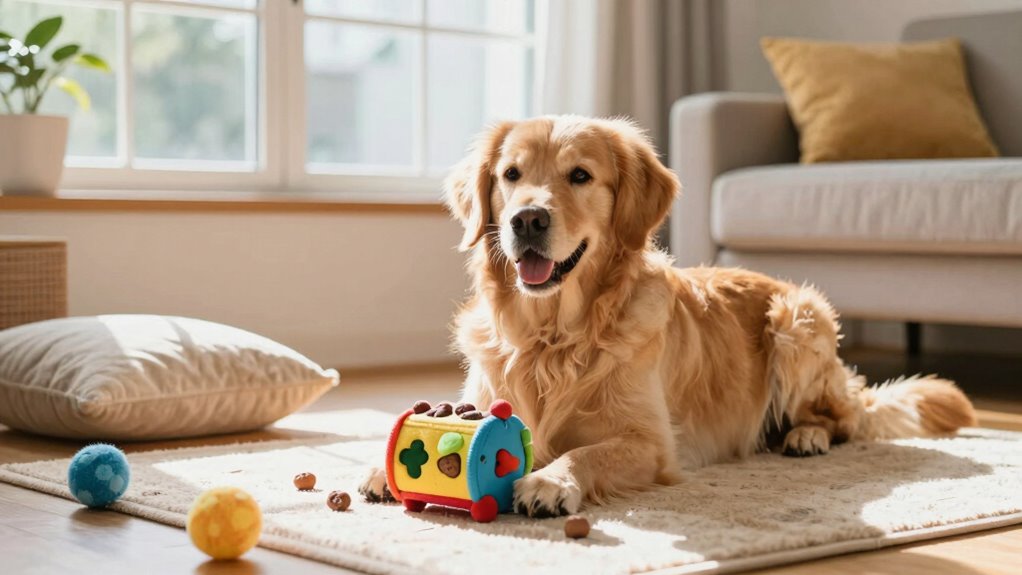
Creating a safe and stimulating space at home starts with designing an environment where your dog feels secure and engaged. To achieve this, set up designated areas with comfortable bedding and remove hazards. Incorporate interactive toys that challenge your dog mentally and physically, encouraging active play. Guarantee your space includes safe spaces where your dog can retreat and relax when needed. Consider these key steps:
- Create a cozy corner with soft bedding and calming elements
- Use interactive toys to promote mental stimulation
- Designate a safe space for resting and retreating
- Keep the environment free of hazards and distractions
Additionally, integrating appropriate pool features can provide a fun and therapeutic environment for your dog, enhancing their overall well-being. Understanding dog enrichment techniques can help you develop a comprehensive plan to reduce “bad behavior” and promote happy, healthy habits.
Why Physical Exercise Complements Enrichment for Better Behavior
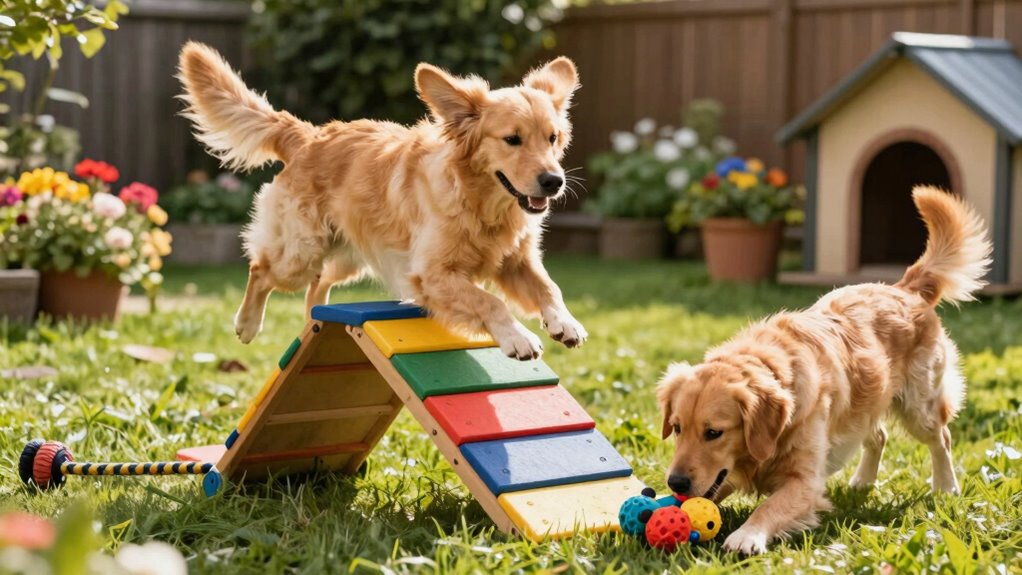
Physical exercise helps your dog burn off excess energy, making them calmer and more focused. It also boosts mental clarity, so they stay alert and engaged with their environment. When combined with enrichment, exercise creates a well-balanced routine that encourages better behavior.
Burns Excess Energy
While enrichment activities stimulate your dog’s mind, they might not be enough to tire them out completely. Physical exercise helps burn off excess energy that can lead to dog boredom or leash pulling. Without enough activity, your dog may become restless or develop bad habits. To effectively burn excess energy, consider these strategies:
- Take daily walks that include brisk pace or varied routes
- Play fetch or tug-of-war to engage their body
- Include off-leash play in safe, enclosed areas
- Incorporate agility or obstacle courses for physical challenge
These activities tire your dog’s body, reducing their need to act out due to pent-up energy. When combined with mental enrichment, physical exercise helps prevent bad behaviors and promotes a calmer, well-balanced pup.
Promotes Mental Clarity
Engaging your dog in physical exercise doesn’t just burn off excess energy; it also clears their mind, setting the stage for better behavior. Regular activity promotes mental clarity, helping your dog focus on commands and routines without distraction. When your dog gets moving, it stimulates their cognitive focus, enhancing their ability to process information and respond appropriately. This mental sharpness reduces anxiety and impulsive actions, making training sessions more effective. Exercise also releases endorphins, which boost mood and calmness, contributing to a more balanced temperament. By combining physical activity with enrichment, you’re supporting both your dog’s body and mind, creating a harmonious environment where good behavior naturally follows. This holistic approach fosters a confident, focused, and well-adjusted companion.
Tailoring Enrichment Activities for Different Breeds and Ages
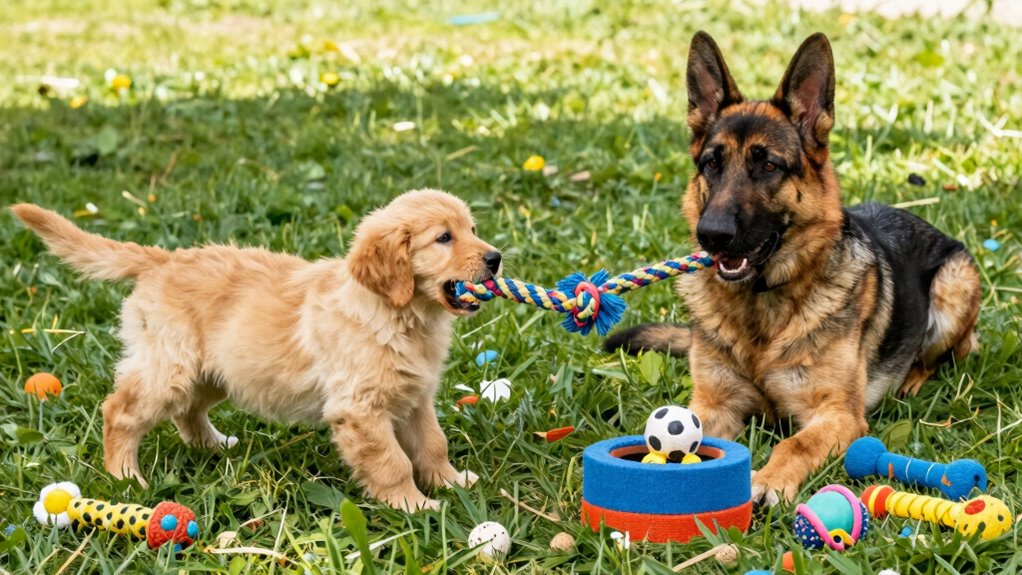
Different breeds and ages have unique needs when it comes to enrichment activities, so tailoring these experiences guarantees your dog stays happy and healthy. For breed-specific activities, focus on what excites your dog’s natural instincts—herding, digging, or scent work. For puppies, choose age-appropriate toys that promote gentle play and teething, like soft rubber chew toys. Older dogs benefit from low-impact activities that support joint health, such as puzzle feeders. Adjust activities based on energy levels and physical capacity. Consider these tips:
- Use breed-specific activities that match your dog’s instincts.
- Select age-appropriate toys to suit developmental stages.
- Incorporate mental challenges tailored to breed traits.
- Vary routines to keep your dog engaged and prevent boredom.
Troubleshooting Common Challenges in Your Enrichment Routine

If your enrichment routine isn’t working as planned, it’s important to identify the obstacles your dog faces. Once you recognize what’s not engaging or causing frustration, you can adjust your strategies accordingly. Making small changes can turn challenges into opportunities for meaningful enrichment.
Identifying Common Obstacles
Even with the best intentions, obstacles can arise when implementing your dog’s enrichment routine. Recognizing these challenges helps you find solutions faster. Common issues include:
- Puppy playfulness leading to destructive behavior if activities aren’t stimulating enough.
- Senior dog needs, like low-impact exercises or gentle toys, being overlooked.
- Boredom from repetitive routines, causing your dog to lose interest.
- Limited space or time, making it hard to provide consistent enrichment.
Adjusting Enrichment Strategies
When you encounter challenges in your dog’s enrichment routine, the key is to adapt and refine your strategies promptly. If your dog seems uninterested in certain toys, consider re-evaluating your toy selection—switch to different textures, sizes, or types to spark curiosity. For outdoor enrichment, if your dog isn’t engaging with activities outside, try adjusting the environment by adding new elements like scent trails or puzzle feeders. Sometimes, shifting the location or timing of outdoor activities can reignite interest. Observe how your dog responds and be ready to modify your approach. Flexibility is essential; what worked yesterday might need tweaking today. By fine-tuning your enrichment strategies, you keep your dog mentally stimulated and prevent boredom-driven behaviors.
How Consistent Enrichment Builds a Stronger Bond and Better Behavior
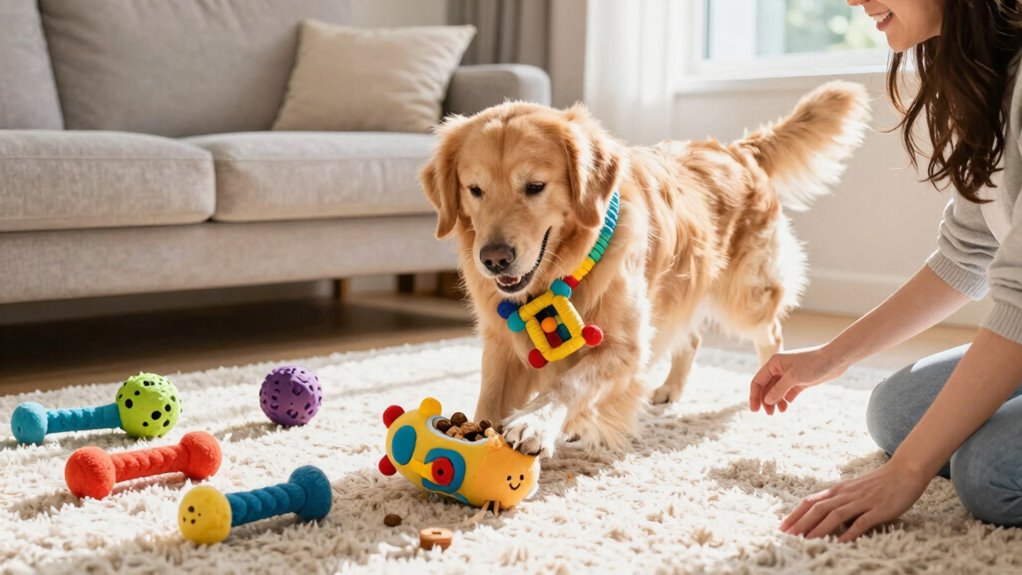
Consistent enrichment activities strengthen the bond between you and your dog while encouraging better behavior. When you regularly engage your dog with mentally stimulating tasks, they learn to trust and connect with you, fostering canine companionship. This consistency also reinforces dog obedience, making commands easier to follow. To build a stronger bond and promote good behavior, try:
Regular enrichment boosts trust, strengthens bonds, and enhances obedience with your dog.
- Scheduling daily play sessions that challenge your dog’s mind
- Rotating toys to keep their interest high and prevent boredom
- Incorporating training into enrichment to reinforce commands naturally
- Observing your dog’s preferences to tailor activities that motivate and engage them
Frequently Asked Questions
How Long Should Daily Enrichment Sessions Last for Optimal Results?
You should aim for daily enrichment sessions lasting about 15 to 30 minutes for ideal results. Follow the duration guidelines to keep your dog engaged without overwhelming them. The key is consistency; shorter, frequent sessions work better than infrequent, lengthy ones. Tailor the enrichment duration to your dog’s age, breed, and energy level, ensuring they remain stimulated and happy while reducing boredom and bad behaviors effectively.
Can Enrichment Activities Replace Regular Exercise Routines?
Enrichment activities can’t substitute regular exercise routines because they serve different purposes. While mental stimulation and sensory engagement keep your dog’s mind sharp and prevent boredom, physical exercise maintains their overall fitness and health. Combining both ensures a well-rounded approach. Think of enrichment as mental workouts and exercise as physical workouts—your dog benefits most when you incorporate both into their daily routine for balanced well-being.
What Are Signs of Overstimulation in My Dog?
You’ll notice signs of overstimulation in your dog through calming signals like yawning, lip licking, or turning away. They might seem restless, pant excessively, or become hypervigilant, indicating sensory overload. If your dog starts pawing at their face, trembling, or avoiding eye contact, these are also signs they need a break. Recognizing these cues helps you calm them down and prevent them from becoming overwhelmed.
How Do I Introduce New Enrichment Activities Safely?
When introducing new enrichment activities, start slowly by introducing toys with safe materials your dog can chew and play with comfortably. Observe their reactions closely and praise them for positive engagement. Begin with short sessions and gradually increase the duration as they become more comfortable. Always supervise your dog during new activities to guarantee safety, and remove or replace any items that cause stress or discomfort.
Are There Specific Enrichment Strategies for Anxious or Shy Dogs?
If you think anxious or shy dogs thrive on loud, chaotic activities, think again. Instead, you should use gentle socialization techniques and calming exercises—think slow, positive exposure and cozy hideouts. These strategies help them build confidence at their pace, reducing stress and bad behaviors. Remember, patience is your best tool—your timid pup’s trust grows with each calming moment, not with overwhelming stimulation.
Conclusion
When you make enrichment a daily habit, you’ll notice your dog’s behavior improves—sometimes in unexpected ways. It’s no coincidence that engaged dogs are happier and less prone to “bad” behaviors. By consistently providing mental and physical stimulation, you strengthen your bond and create a more harmonious life together. Remember, a little effort each day can lead to surprising, positive changes you might not have anticipated—proof that enrichment truly transforms your dog’s world.