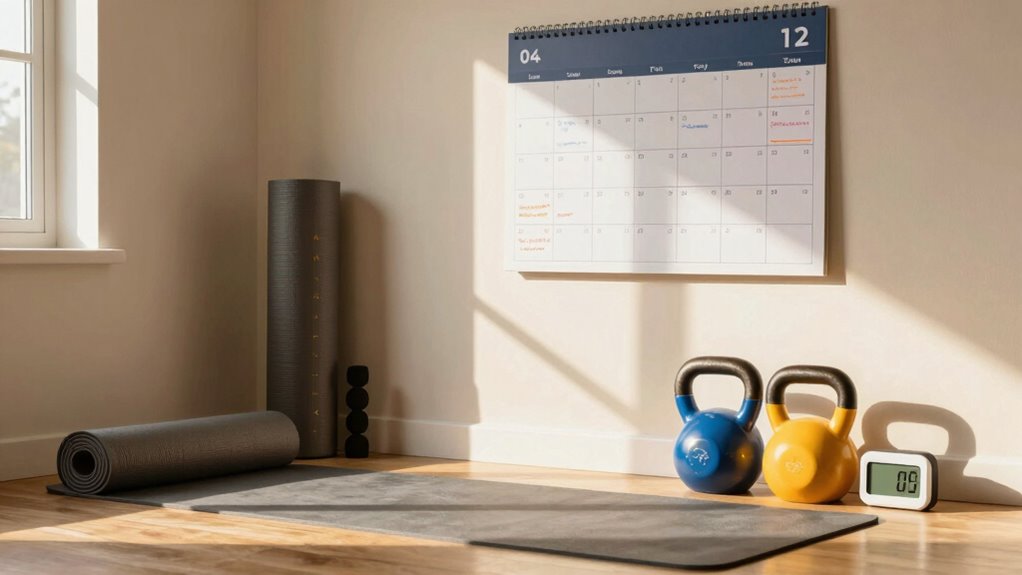

To make workout consistency automatic, establish a fixed schedule and treat it like an unbreakable appointment. By carving out a specific time each day, you create a routine that triggers your exercise effort without hesitation. Repeating this enhances habit formation and reduces the mental effort needed to start. Over time, your workouts become seamlessly integrated into your daily life. Keep going, and you’ll discover how effortlessly consistency can become part of your routine.
Key Takeaways
- Schedule workouts at the same time daily to create a reliable routine that triggers automatic behavior.
- Treat workout times as non-negotiable appointments to reinforce consistency and build habit strength.
- Use calendar reminders or alarms to prompt you and maintain a fixed workout schedule.
- Start with short sessions to make sticking to the schedule easier and prevent overwhelm.
- Repeating the same routine at the same time develops cues that make exercise feel effortless over time.
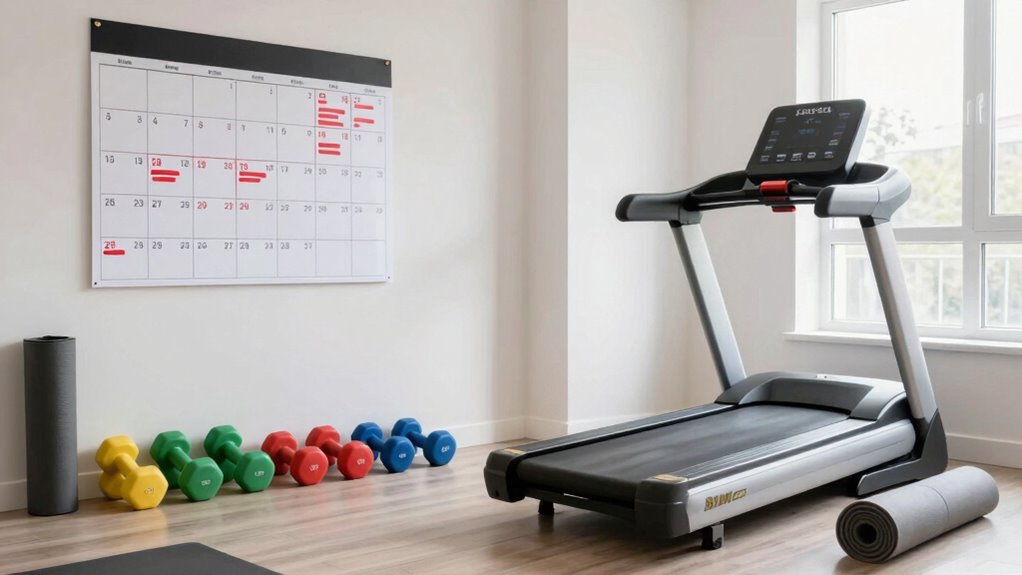
Have you ever wondered why some people see steady progress in their fitness journey while others struggle to stick with it? The secret often lies in how they build workout consistency into their lives. One of the most effective ways to do this is by leveraging habit formation and smart time management. When you make exercise a regular part of your routine, it becomes less of a decision and more of an automatic action. This shift reduces the mental effort needed to get started each day, making consistency feel effortless rather than burdensome. Content formats such as videos, articles, or interactive tools can also enhance engagement and help reinforce these routines. Habit formation is key because it transforms a deliberate activity into an ingrained behavior. Instead of relying on motivation or willpower, you create cues and routines that trigger your workout automatically. For example, if you always hit the gym right after waking up, your brain begins to associate that time with exercise. Over time, this association strengthens, and working out becomes as natural as brushing your teeth. To build this habit, start small and be consistent, even if it’s just a quick 10-minute session. As the habit solidifies, you can gradually increase the intensity and duration without feeling overwhelmed. Time management plays a essential role in solidifying your workout routine. If you don’t carve out specific time slots, it’s easy for workouts to fall by the wayside when other tasks or priorities take over. Block out dedicated workout times in your schedule, treating them as non-negotiable appointments. This way, your brain recognizes that exercise is a priority, just like work meetings or family commitments. Planning ahead also helps you avoid the last-minute scramble to fit in a workout, which often leads to skipping altogether. Use calendar reminders or alarms to keep yourself accountable, and try to stick to the same time each day to reinforce the habit. Combining habit formation with deliberate time management creates a powerful cycle that makes working out feel automatic. As you consistently show up at the same time and follow a routine, your brain begins to associate those moments with activity. Over time, the effort required decreases because your body and mind have adapted to this new norm. The more you reinforce this pattern, the less mental energy you need to get started, and your workouts become a natural, seamless part of your day. This consistency not only improves your physical results but also boosts your confidence, knowing that your efforts are sustainable and ingrained in your lifestyle.
Frequently Asked Questions
How Do I Stay Motivated During Long Workout Streaks?
To stay motivated during long workout streaks, focus on mindset shifts that keep you positive and goal-oriented. Find accountability partners who motivate you and celebrate your progress. Remember, consistency builds momentum, so celebrate small wins along the way. When motivation dips, revisit your reasons for working out and remind yourself of your long-term goals. This mental boost helps you push through tough days and maintain your streak.
What Are the Best Apps to Track Workout Schedules?
You should try apps like MyFitnessPal or Streaks, which help with exercise journaling and habit stacking. These apps let you log workouts, set reminders, and build routines seamlessly. By tracking your progress daily, you stay motivated and make workouts automatic. Habit stacking, combined with consistent logging, guarantees your fitness routine becomes second nature, making it easier to stay committed long-term.
How Can I Adapt My Schedule for Unpredictable Days?
When unpredictable days arise, you can adapt your schedule through flexible planning. Keep emergency routines in mind, so if plans change, you can quickly swap workout times or switch to shorter sessions. Use a workout app that allows easy rescheduling, and set aside buffer periods. This way, you stay consistent without stress, maintaining your progress even during unexpected disruptions. Flexibility keeps your fitness routine resilient and sustainable.
What Should I Do if I Miss a Workout Session?
When you miss a workout, don’t let it derail your momentum—think of it as a detour, not a dead end. Grab your workout gear and reschedule, treating it like a special appointment. Use the time to refine your meal planning for better energy. Remember, one missed session isn’t a failure; it’s a chance to adjust and come back stronger, keeping your fitness journey steady and unstoppable.
How Do I Balance Workout Consistency With Rest Days?
To balance workout consistency with rest days, plan rest days strategically using rest day planning, ensuring you allow recovery without losing momentum. Incorporate workout variation to keep routines interesting and prevent burnout. Listen to your body; if you feel fatigued, take an extra rest day. Consistency is key, but rest is essential for progress, so schedule it intentionally and vary your workouts to stay motivated and avoid injury.
Conclusion
By sticking to a set schedule, you’ll find workout consistency becomes second nature. For example, Sarah started hitting the gym every Monday and Wednesday morning, and now it’s just part of her routine—she doesn’t even think about it. When you treat workouts like a non-negotiable appointment, they become automatic. Before long, you’ll notice progress without even trying, all because you’ve made fitness a natural part of your day.