Your elliptical’s stride length is a key factor in ensuring comfort and a smooth workout. It affects how naturally your body moves and can prevent discomfort or injury. An appropriate stride matches your height and movement style, making exercises more effective and enjoyable. Too short or too long can cause strain or fatigue. Stay tuned to discover how to find the perfect stride length for your body and workout goals.
Key Takeaways
- Proper stride length ensures natural movement, reducing joint strain and enhancing workout comfort.
- Adjustable stride lengths allow customization for individual body sizes and fitness goals.
- An improper stride can cause discomfort, fatigue, and potential injury, decreasing workout effectiveness.
- Longer strides mimic natural walking or running, promoting better muscle engagement and efficiency.
- Recognizing signs of incorrect stride length helps optimize comfort and prevent long-term joint issues.
What Is Elliptical Stride Length: and Why Does It Matter?
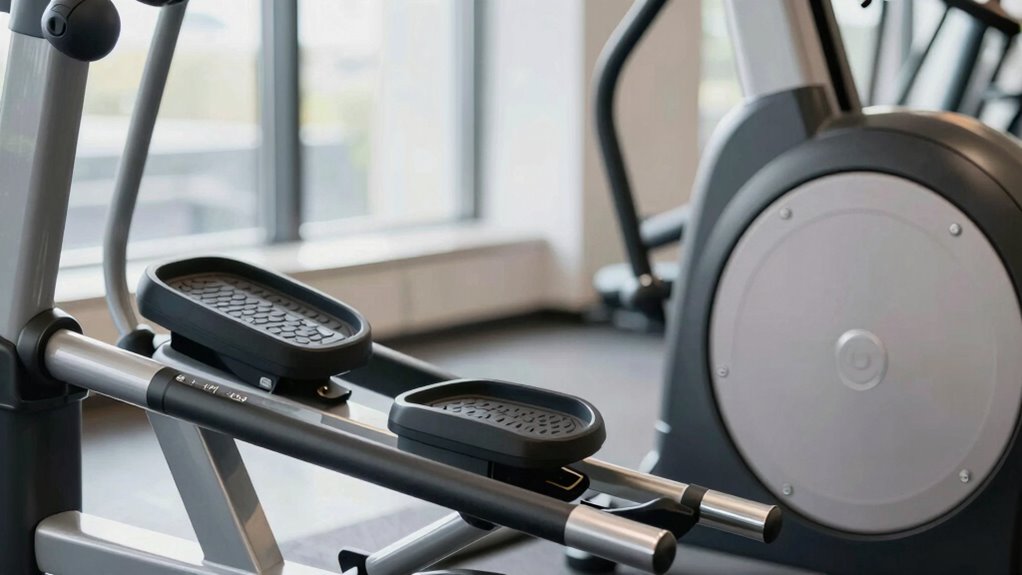
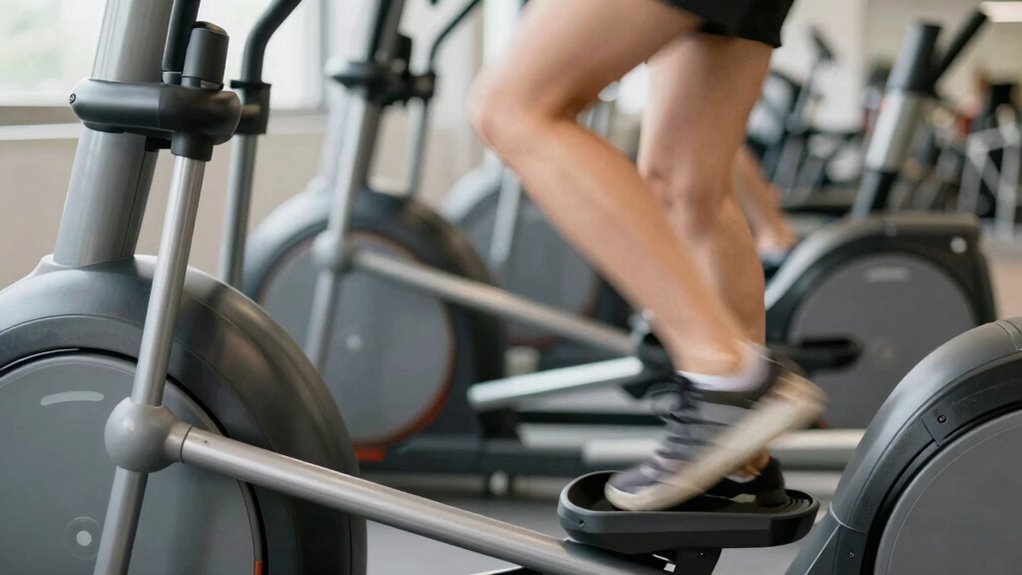
Elliptical stride length refers to the distance your feet travel with each step on an elliptical machine. It plays a vital role in gait biomechanics, influencing how smoothly and efficiently you move. A longer stride can mimic natural walking or running, engaging muscles more fully, while a shorter stride may limit your range of motion. Stride variability, or how much your stride length changes during a workout, also impacts your comfort and performance. Consistent stride length helps maintain proper gait biomechanics, reducing strain and the risk of injury. Understanding your stride length allows you to tailor your elliptical workout for better efficiency and comfort, making each session more effective and enjoyable. Additionally, stride length can affect the overall intensity of your workout, helping you achieve your fitness goals more effectively.
How Your Stride Length Affects Workout Comfort and Effectiveness
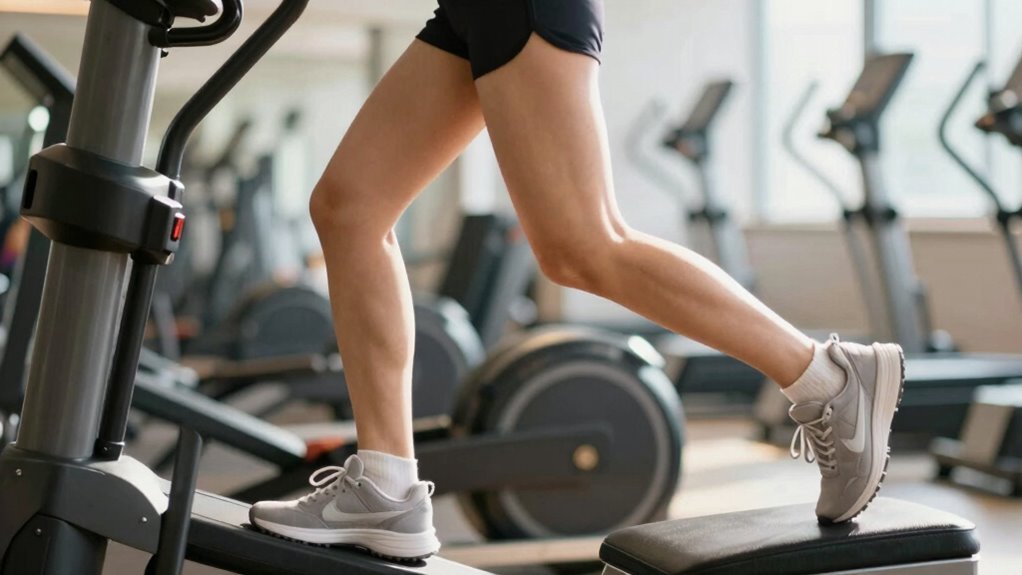
Your stride length directly impacts how comfortable and effective your workout feels. When you adjust it correctly, you’ll move more naturally and reduce the risk of strain. Finding the right fit for your body helps maximize benefits and keeps you motivated. Additionally, using proper gear upgrades can enhance your exercise experience and support optimal performance. Understanding biomechanical alignment can further improve your stride efficiency and reduce discomfort during activity. Incorporating contrast ratio knowledge from projectors can inspire you to fine-tune your form for clearer, more comfortable movement, especially in low-light environments. Developing net+ certification benefits can also help you gain a structured approach to optimizing your workout techniques, ensuring continuous improvement. Incorporating mind-body awareness techniques from yoga can also help you develop better control and comfort during exercise.
Proper Stride Length Benefits
When you choose the right stride length, you’ll notice a significant boost in both comfort and workout effectiveness. Proper stride length promotes stride consistency, helping you maintain a smooth, natural motion that reduces fatigue. This consistency ensures you engage the right muscles without overextending or straining, which can lead to discomfort or injury. An elliptical with an ergonomic design supports your natural gait, allowing you to find a stride length that feels comfortable and efficient. When your stride matches your body’s needs, you’ll experience better joint alignment and less stress on your knees and hips. Additionally, understanding the importance of a well-designed insulated jacket can help you stay comfortable and dry during outdoor workouts in winter conditions. Recognizing the role of ergonomic design in exercise equipment can further enhance your workout experience by reducing unnecessary strain. Incorporating sound therapy principles into your routine, such as listening to calming music during workouts, can also improve your mood and motivation, making sessions more enjoyable. Paying attention to physical activity levels and ensuring they match your fitness goals can prevent overexertion and promote sustained progress. Being mindful of your workout environment and choosing appropriate gear can ultimately improve your overall exercise safety and satisfaction. Overall, selecting the proper stride length maximizes your workout benefits while minimizing discomfort, making your exercise sessions more enjoyable and sustainable over time.
Adjusting for Personal Comfort
Adjusting your stride length to suit personal comfort can considerably improve how effective and enjoyable your workout feels. With proper stride customization, you can optimize the elliptical’s ergonomic design to reduce strain and increase comfort. Consider these key points:
- Find a stride length that allows your hips and knees to move naturally without overextending.
- Adjust the handlebars and pedal positioning to align with your body’s proportions.
- Pay attention to how your muscles feel during exercise; discomfort signals you need to tweak the stride.
- When designing or selecting a workout space, consider stair proportions and other architectural details to create an environment that supports your movement needs. Additionally, understanding ergonomic design principles can help you set up your workout area to enhance comfort and efficiency. Incorporating adjustable features in your equipment can also promote better body alignment for prolonged comfort during workouts. Recognizing ergonomic principles can further assist in customizing your exercise environment to maximize comfort and reduce fatigue. Being aware of movement biomechanics can help you make precise adjustments for optimal performance and comfort.
How to Find the Right Elliptical Stride Length for Your Body
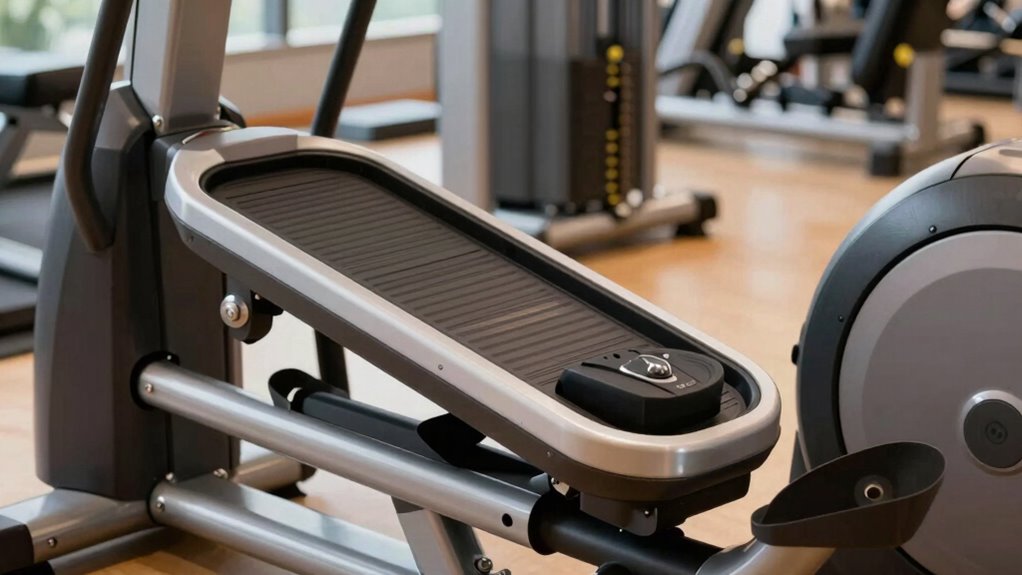
To find the right elliptical stride length, start by measuring your inseam to get a baseline. Then, adjust the stride length based on your height to make certain your natural motion feels smooth and unrestricted. Additionally, consider your overall body proportions to fine-tune the stride for optimal comfort. Incorporating ergonomics principles can help you achieve a setup that minimizes strain and maximizes efficiency. Understanding proper exercise ergonomics can also help prevent injury and enhance workout effectiveness. Moreover, paying attention to support networks for new fathers can provide additional motivation and encouragement as you adapt your workout routine. Finally, test the setup to see if your natural motion feels smooth and unrestricted. Remember, burnout prevention involves maintaining proper exercise ergonomics to avoid overexertion.
Measure Your Inseam Length
Finding the right elliptical stride length starts with measuring your inseam accurately. To do this:
- Stand straight against a wall with your shoes on, feet shoulder-width apart.
- Place a book or ruler between your legs, from your crotch to the floor, ensuring it’s snug but not tight.
- Mark the measurement and note it in inches or centimeters.
- Remember, security surveillance technologies often utilize precise measurements to monitor and analyze movement patterns.
Knowing your inseam helps you select an elliptical with proper stride length, supporting shoe fitting and posture alignment. A correct inseam measurement prevents overextending or feeling cramped during workouts. Additionally, understanding your physical measurements can help you choose equipment that aligns with your body mechanics for optimized performance. When selecting a machine, consider the ergonomic design features that accommodate your specific inseam and stride needs for maximum comfort. Recognizing how body measurements influence equipment choice can also prevent discomfort and reduce injury risk during use. Keep in mind, your inseam isn’t just a number—it’s the foundation for comfort and efficiency, ensuring your elliptical stride complements your body’s natural movement.
Adjust According To Height
Your height plays a significant role in choosing the right elliptical stride length because it directly influences how comfortably you can move during your workout. Taller individuals usually need a longer stride to prevent strain and maximize comfort, while shorter users benefit from a shorter stride for better control. When adjusting your elliptical, consider your natural stride based on your height to stay motivated and avoid discomfort. Remember, the elliptical’s history shows that machines with adjustable stride lengths cater to diverse body types, promoting better fitness motivation and consistent use. Finding the right fit isn’t just about comfort; it’s about creating a sustainable workout routine. Proper adjustment guarantees you stay engaged and prevent injury, making your elliptical experience more effective and enjoyable.
Test For Natural Movement
How can you determine if an elliptical stride length feels natural? Focus on your natural gait and movement fluidity during your workout. If your stride feels awkward or causes you to lean forward or backward, it’s too long or short. To test this:
- Start slow and walk naturally on the elliptical, paying attention to how your legs move.
- Observe your posture—are you maintaining a relaxed, upright position without straining?
- Check your stride—does it feel smooth and effortless, mimicking your natural gait?
If you notice stiffness or uneven movement, adjust the stride length. The goal is to find a setting that promotes fluid motion, aligning with your body’s natural gait for ideal comfort and reduced fatigue.
Signs Your Elliptical Stride Length Isn’t the Right Fit?
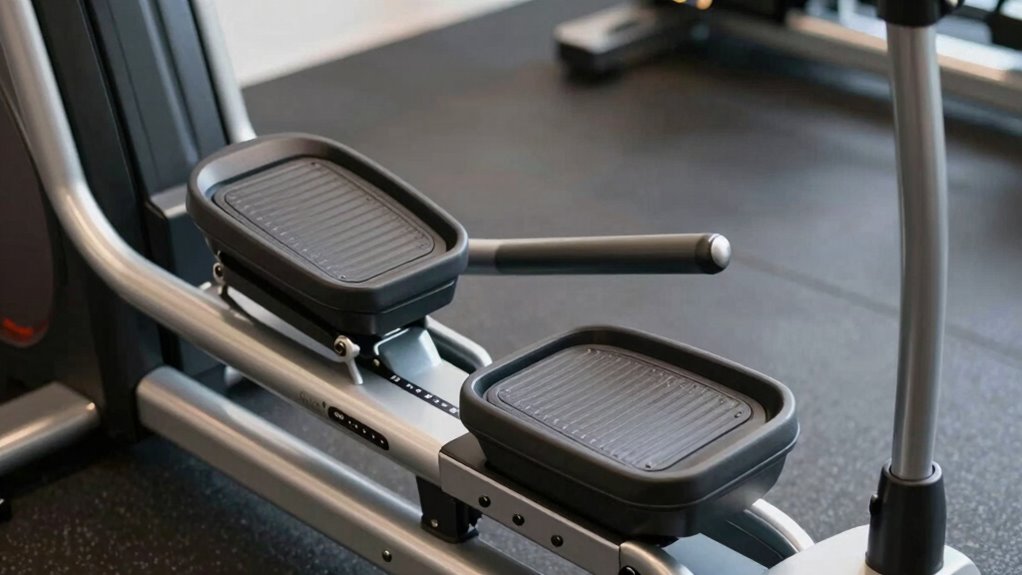
Even if you feel like you’re getting a good workout, an elliptical stride length that’s too long or too short can cause discomfort and hinder your progress. One sign is persistent knee, hip, or lower back pain, which indicates your ergonomic design isn’t supporting natural movement. You might also notice fatigue in your legs or uneven stride patterns, suggesting your stride customization isn’t ideal. If you feel cramped or overly extended during workouts, your stride length may be off. Additionally, difficulty maintaining proper posture or feeling unstable can point to mismatched stride length. These signs highlight the importance of choosing an elliptical with adjustable or well-designed stride options, ensuring the ergonomic design supports your body’s natural motion and enhances comfort during every workout.
Short, Standard, or Long: Which Elliptical Stride Length Suits You?
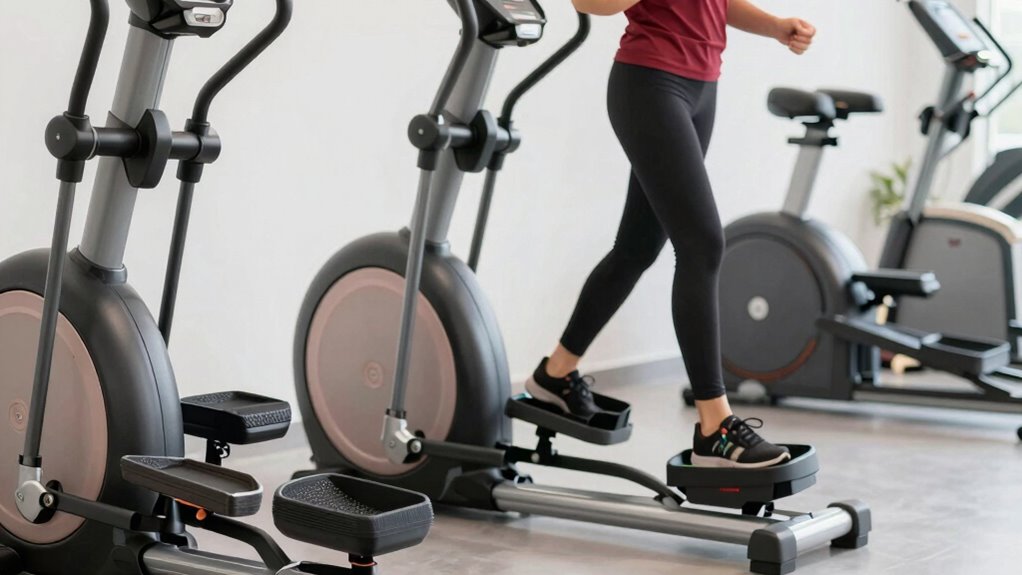
Choosing the right elliptical stride length depends on your height, leg length, and fitness goals. A shorter stride (around 16-18 inches) offers a comfortable, ergonomic design ideal for beginners or those with limited space. A standard stride (20-22 inches) balances comfort and effective workout potential, suitable for most users. A longer stride (24 inches or more) mimics natural walking or running, perfect for taller individuals or those seeking higher-intensity cardio. Keep in mind, stride customization allows you to adapt the elliptical to your body, enhancing comfort and reducing strain. When selecting, consider how each length aligns with your body mechanics and workout preferences to optimize your exercise experience. Ultimately, choosing the right length guarantees ergonomic benefits and a more effective, comfortable workout.
How Adjustable Stride Lengths Improve Your Elliptical Workouts
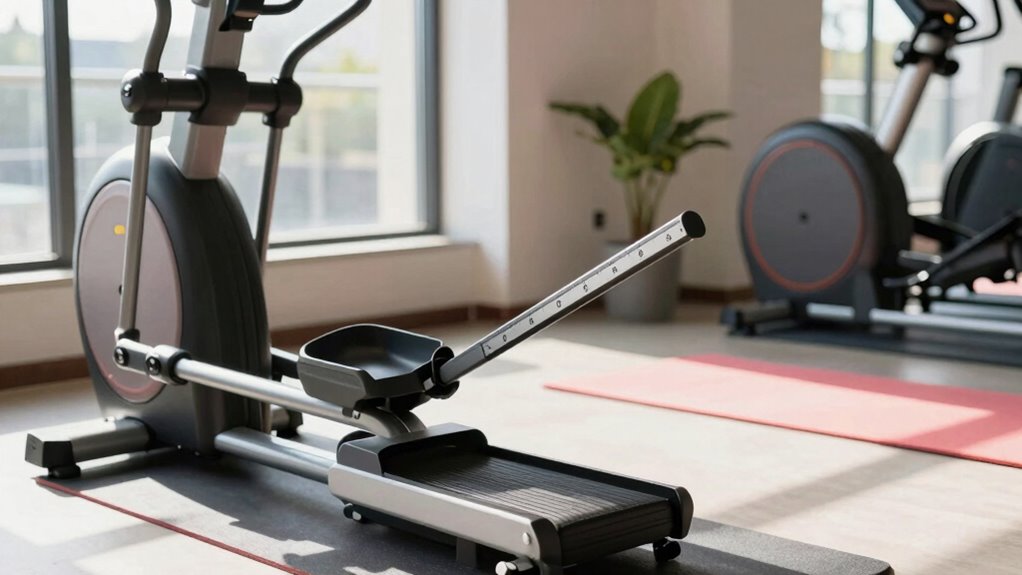
Adjustable stride lengths let you customize your workout to match your fitness level and goals, making each session more effective. By tailoring the stride, you can focus on different muscle groups and increase comfort. Plus, this flexibility helps reduce your risk of injury by preventing overextension or strain.
Customized Workout Experience
When you can customize your elliptical stride length, you gain a more tailored workout experience that better matches your fitness goals and comfort level. This flexibility enhances the ergonomic design of your machine, ensuring natural movement and reducing strain. With stride variability, you can:
- Adjust the stride length to target different muscle groups, like glutes or calves.
- Switch between longer strides for a cardio-heavy session or shorter ones for a low-impact workout.
- Personalize your workout for varying intensity levels, making sessions more comfortable and effective.
This customization makes each workout feel more natural and engaging, helping you stay motivated. It also allows you to align your workout with your unique body mechanics, maximizing comfort and results.
Reduced Risk of Injury
Since improper movement can lead to strain or injury, having the ability to customize your elliptical stride length helps you maintain proper alignment and form. When you adjust your stride, you reduce unnecessary stress on your joints, supporting better joint health over time. Proper stride length encourages correct posture, preventing slouching or overextending, which can cause long-term issues. This customization minimizes the risk of muscle imbalances and joint pain by allowing you to adapt the workout to your body’s needs. When your posture is correct and your joints are aligned, you’re less likely to experience discomfort or injury. Overall, adjustable stride lengths promote safer, more sustainable workouts, helping you train comfortably without compromising your joint health or posture.
How Stride Length Influences Muscle Engagement and Calories Burned
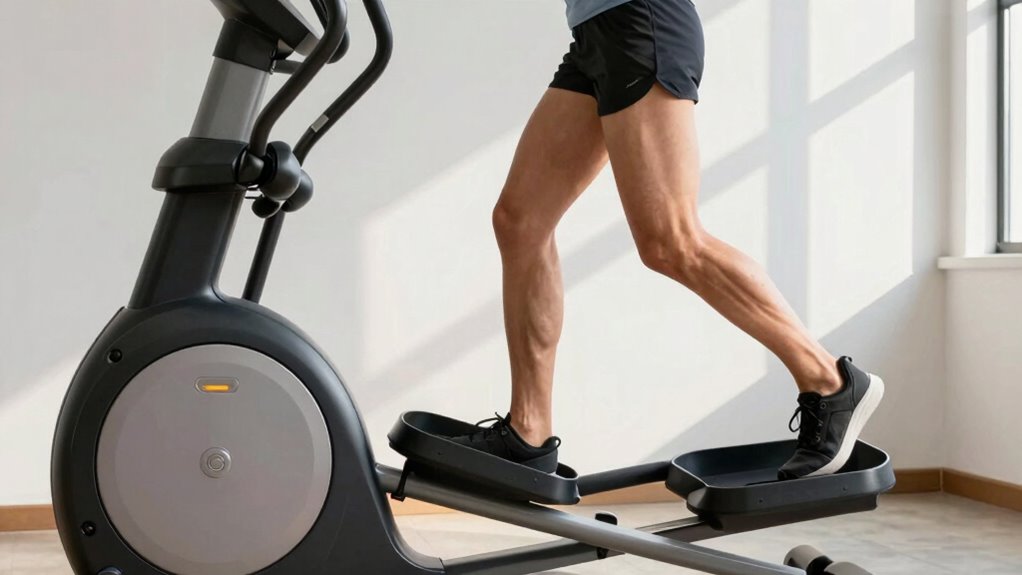
A longer stride length on an elliptical can substantially increase muscle engagement and boost calorie burn. When you adjust your stride, your gait analysis becomes more dynamic, activating different muscles. Greater stride variability means you recruit more muscle groups, such as your glutes, hamstrings, and calves. This results in:
- Increased activation of lower body muscles, leading to a more effective workout.
- Higher calorie expenditure due to sustained muscle effort.
- Improved overall engagement, preventing plateauing and encouraging progress.
Common Mistakes When Choosing Your Elliptical’s Stride Length
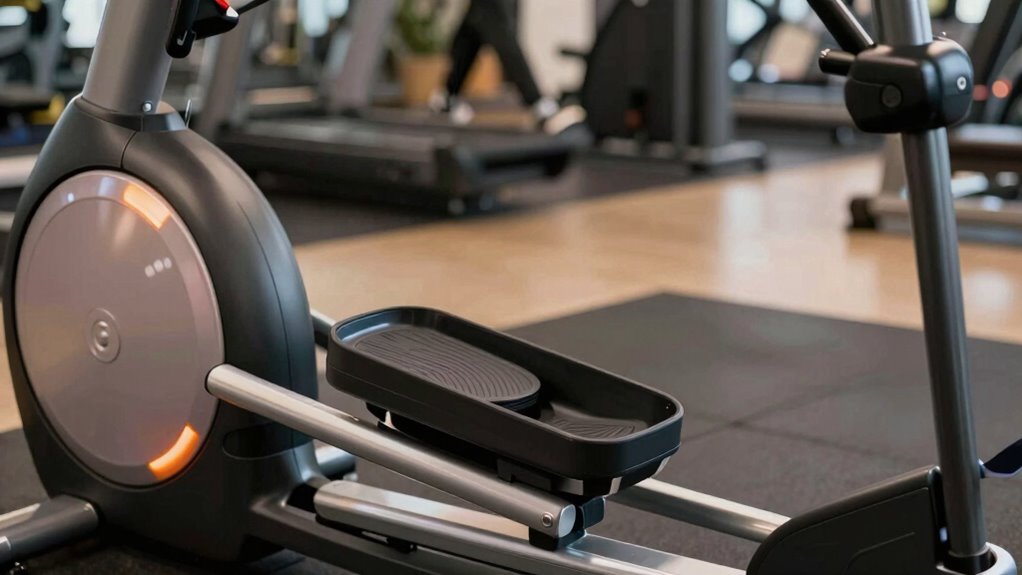
Choosing the wrong stride length on an elliptical can hinder your workout rather than enhance it. A common mistake is ignoring the importance of ergonomic design, which affects how comfortable and natural your stride feels. When your stride is too short or too long, it can cause discomfort, strain, or inefficient movement. Another mistake is overlooking stride variability; opting for a fixed stride length limits your workout versatility and may lead to poor posture or joint stress. Always assess whether the elliptical’s design accommodates your height and natural movement. Avoid choosing a machine based solely on features or price—focus on how well the stride length matches your body. Proper alignment and comfort are essential for effective, enjoyable workouts.
Upgrading to an Elliptical With Longer or Adjustable Stride Lengths
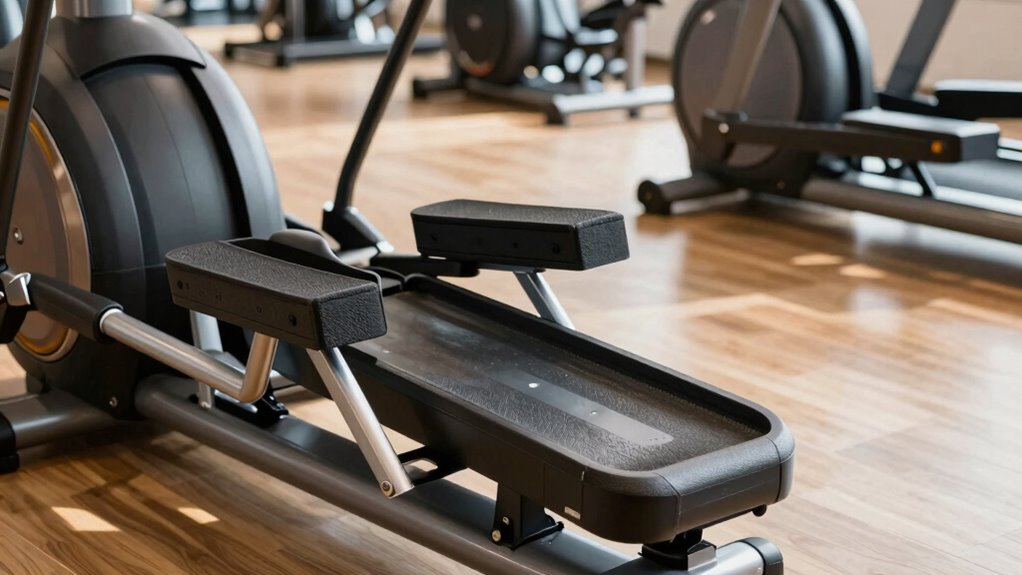
Upgrading to an elliptical with longer or adjustable stride lengths can considerably enhance your workout experience. With improved stride flexibility, you’ll move more naturally, reducing joint strain and increasing comfort. Consider these benefits:
- Ergonomic Design: A longer or adjustable stride adapts to your body’s needs, preventing awkward positions and promoting proper alignment.
- Versatile Workouts: You can switch between different stride lengths for varied routines, targeting different muscle groups effortlessly.
- Enhanced Comfort: Customizable stride lengths mean you won’t feel restricted, making longer sessions more enjoyable and sustainable.
This upgrade ensures your elliptical offers better ergonomic support, accommodating your body’s unique movements and boosting overall workout effectiveness.
Tips for Picking the Best Elliptical Based on Your Goals and Body Size
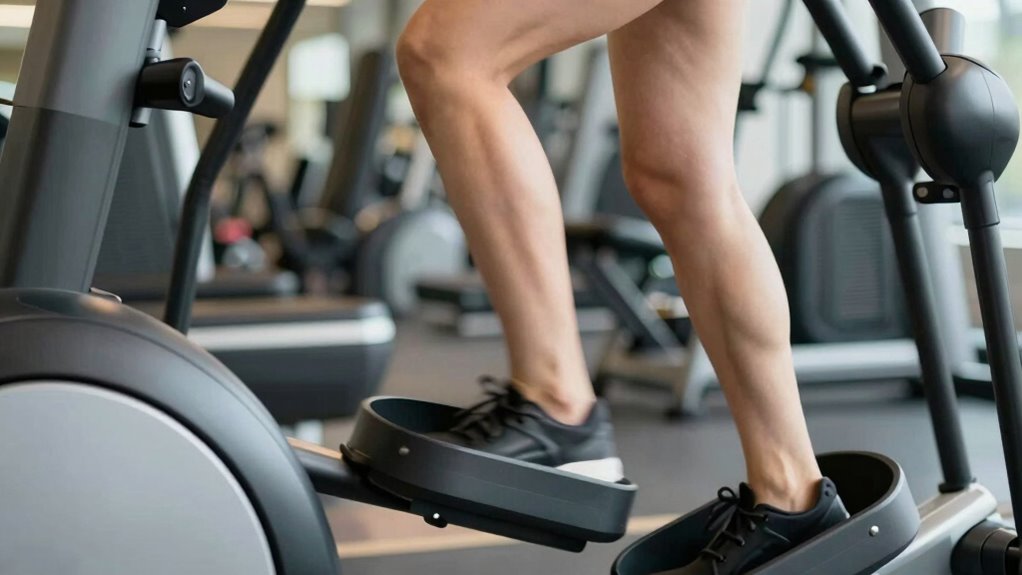
Selecting the right elliptical involves considering your specific fitness goals and body size to guarantee ideal comfort and effectiveness. Focus on elliptical ergonomics, especially stride length, to ensure proper movement and reduce discomfort. Don’t fall for stride length myths that bigger isn’t always better; instead, choose an elliptical that matches your height and stride preferences. If you’re shorter, look for models with adjustable stride lengths to customize your workout. For taller users, longer stride options provide better comfort and natural movement. Remember, an elliptical that fits your body reduces strain and improves workout efficiency. Prioritizing ergonomic design and dispelling stride length myths helps you select equipment that promotes a comfortable, effective exercise experience tailored to your goals.
Frequently Asked Questions
Can Stride Length Affect Elliptical Machine Durability?
Yes, stride length can affect elliptical machine durability. When you customize your stride length, you’re less likely to put undue stress on the machine’s components, reducing wear and tear. Regular elliptical machine maintenance helps keep everything in top shape, preventing issues caused by improper use. By adjusting your stride length to match your comfort level, you also guarantee smoother operation and extend the lifespan of your elliptical.
Is a Longer Stride Always Better for Taller Users?
A longer stride isn’t always better for taller users, despite common stride length myths. You should prioritize user comfort over just maximum stride length, as an overly long stride can cause discomfort or strain. Taller users often benefit from a stride length that matches their natural gait, ensuring smooth, comfortable motion. Focus on how the elliptical feels during exercise, rather than just the advertised stride length, for the best workout experience.
How Does Stride Length Impact Joint Stress During Exercise?
Your stride length directly affects joint stress during exercise by influencing stride biomechanics and joint alignment. A proper stride promotes smooth, natural movement, reducing strain on knees, hips, and ankles. If your stride is too long or too short, it can cause misalignment, leading to increased joint stress and discomfort. Ensuring the right stride length helps maintain ideal joint positioning, making your workout safer and more comfortable.
Are There Specific Stride Lengths Recommended for Rehabilitation?
Think of your elliptical as a gentle river guiding your healing journey. For rehabilitation, you should customize your stride length to match your comfort and recovery needs. Shorter strides often reduce joint stress, making movements smoother and safer. This tailored approach maximizes rehabilitation benefits, helping you regain strength without overexertion. By adjusting your stride length, you create a personalized flow that supports healing and restores your confidence in movement.
Can I Change My Stride Length on Any Elliptical Model?
You can often change your stride length on many elliptical models through a simple stride adjustment feature. Check if your elliptical offers easy customization options for elliptical customization, as some models have manual or digital controls to modify stride length. This allows you to tailor your workout for comfort or rehabilitation needs. However, not all ellipticals have this feature, so review your machine’s specifications to verify it supports stride adjustment.
Conclusion
Choosing the right elliptical stride length is like finding the perfect dance partner—when it fits, your workout flows smoothly and comfortably. Don’t settle for a size that feels off; it can turn your exercise into a chore instead of a joy. By paying attention to your body and the machine’s features, you’ll set yourself up for a more effective, enjoyable workout. Think of it as tuning a instrument—when everything’s aligned, your fitness melody sounds just right.