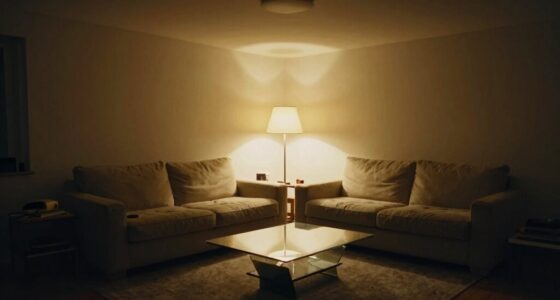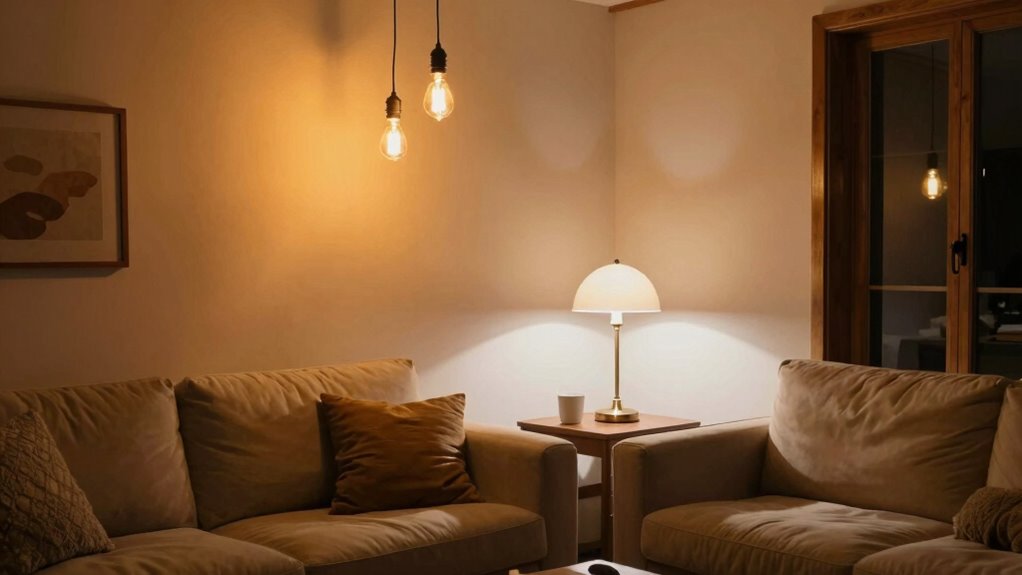

Choosing the right light temperature can turn your room into a calm, cozy space. Warm bulbs (2700K-3000K) create relaxing atmospheres perfect for unwinding, while cooler lights (4000K-5000K) boost alertness and focus. Layering different temperatures with dimmable or smart bulbs helps you adjust mood easily. Avoid harsh lighting or uneven placement to keep your space inviting. Keep exploring how different settings can transform your home into a peaceful retreat.
Key Takeaways
- Warm light (2700K-3000K) creates a cozy, relaxing atmosphere ideal for calming rooms.
- Cooler light (4000K-5000K) energizes spaces but can be adjusted for a balanced, calming environment.
- Dimmable bulbs allow you to soften lighting intensity, enhancing tranquility.
- Layering warm and cool lights strategically boosts comfort without harshness.
- Proper placement and diffusing fixtures prevent glare, fostering a calm, inviting space.
Why Light Temperature Sets the Mood in Your Room
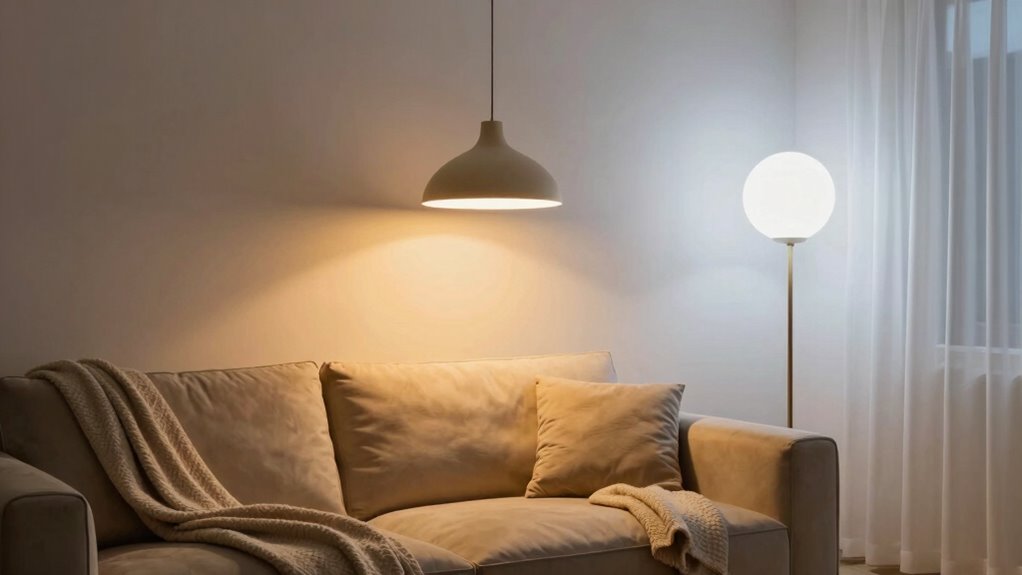
The color temperature of your lighting can dramatically influence the atmosphere in your room. Choosing the right decorative fixtures helps set the mood, whether you want a cozy, warm glow or a bright, energetic feel. Warm light, with lower color temperatures, creates inviting spaces perfect for relaxing or entertaining indoors. Meanwhile, outdoor lighting with cooler tones can make your yard feel more lively and welcoming at night. The right light temperature enhances the ambiance and complements your decor. It also affects how colors appear and how comfortable you feel in your space. Additionally, selecting appropriate light bulbs can help optimize indoor air quality by reducing heat output and minimizing the release of harmful substances. Proper lighting choices also contribute to better energy efficiency and safety within your home. For example, choosing energy-efficient bulbs can significantly reduce electricity consumption and enhance your home’s sustainability. Incorporating culturally inspired elements like Indonesian decor masks can also add to the overall aesthetic appeal and ambiance of your space. Being mindful of lighting design can further improve your environment’s comfort and functionality. By selecting appropriate fixtures and outdoor lighting, you control the mood effortlessly, making your environment more pleasant and functional.
What Are Light Bulb Color Temperatures and How Do They Work?
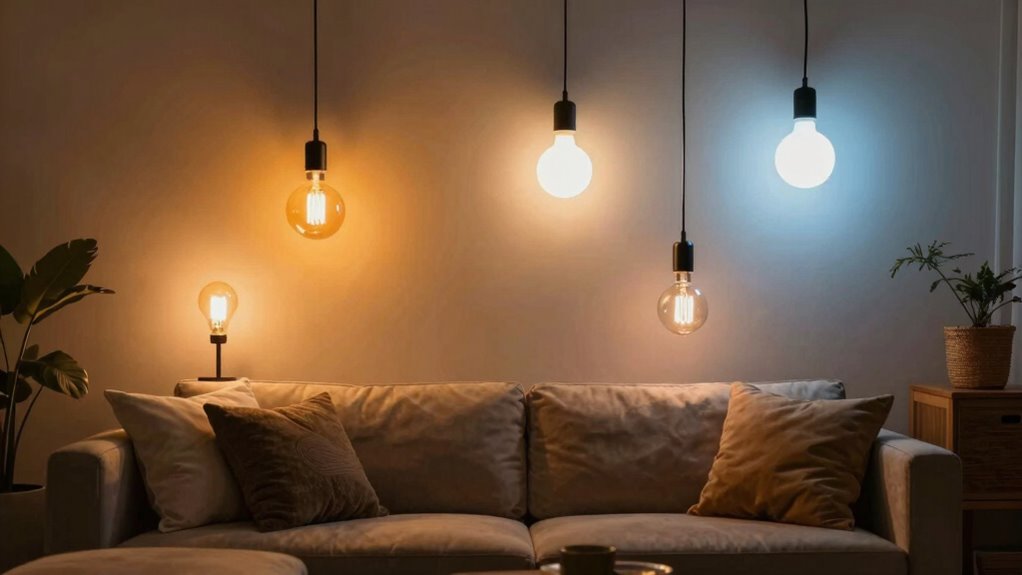
Light bulb color temperatures are measured in Kelvins, which describe the color spectrum they emit. Lower Kelvin values produce warm, yellowish light, while higher ones give off cool, bluish tones. Your choice of color temperature can considerably influence the mood and ambiance of your space. Additionally, selecting the appropriate lighting temperature can enhance your overall comfort and well-being. Understanding lighting effects and how different temperatures impact your environment can help you make more informed decisions for your lighting needs. Incorporating curiosity about lighting can also lead to discovering new ways to optimize your home’s atmosphere. For example, the color temperature can also affect your sleep quality by influencing melatonin production at night. Recognizing the impact of ambient light on daily routines can further improve your living environment and overall health.
Color Spectrum Explanation
Understanding light bulb color temperatures helps you choose the right ambiance for any space. The color spectrum represents how our eyes perceive different light wavelengths, which influences color perception in a room. Shorter wavelengths (around 400-500 nm) produce bluish, cooler light, while longer wavelengths (around 600-700 nm) create warmer, yellowish tones. This variation affects how you see colors and the mood a room evokes. Additionally, lighting temperature plays a crucial role in energy efficiency and bulb lifespan. The color temperature of a bulb can also impact your sleep quality, as warmer lights are generally better for relaxing environments. Here’s a quick overview:
| Wavelength Range | Typical Color Appearance |
|---|---|
| 400-500 nm | Cool, bluish light |
| 500-600 nm | Neutral, balanced light |
| 600-700 nm | Warm, yellowish light |
| 700+ nm | Deep red, cozy glow |
Kelvin Scale Details
A light bulb’s color temperature is measured in Kelvins (K), which indicates whether the emitted light appears warm or cool to your eyes. Lower Kelvin values, around 2700K to 3000K, produce warm, yellowish light that creates a cozy atmosphere. Higher Kelvin values, from 5000K to 6500K, emit cool, bluish light suitable for task-oriented spaces. Understanding the Kelvin scale helps you choose bulbs that enhance your room’s ambiance. LED bulbs, which often feature a long lifespan, come in a wide range of Kelvin temperatures and are highly energy-efficient. Selecting the right color temperature can improve your space’s mood while also saving energy and reducing replacement costs. This makes Kelvin scale details essential for creating a calming, functional environment. Properly choosing light bulb settings based on heat pump features can also contribute to overall home comfort and efficiency. Additionally, considering lighting temperature can help you establish a more relaxing or energizing environment depending on your needs. Being aware of the light spectrum helps in optimizing light for specific activities and times of day. Moreover, understanding color rendering index values can help you select bulbs that display colors more naturally and vividly in your space. Recognizing the impact on mood of different color temperatures can further assist in creating the desired atmosphere.
Impact on Mood
The color temperature of your bulbs directly influences your mood and how you feel in a space. Light with warm tones (around 2700K-3000K) can create a calming, cozy atmosphere that promotes relaxation and comfort, aligning with positive color psychology. In contrast, cooler light (4000K-5000K) tends to energize you, boosting alertness and focus, but it may feel sterile or impersonal if overused. Your emotional response to different Kelvin levels impacts your overall well-being and productivity. By choosing the right color temperature, you can intentionally shape your environment to foster the mood you desire—whether it’s tranquility or motivation. Understanding this connection helps you harness lighting as a simple tool to influence your emotional state intentionally. Color psychology also plays a role in how different light temperatures can evoke specific feelings and behaviors. Additionally, being mindful of indoor lighting choices can help optimize your space for better mental health and comfort. Recognizing how lighting quality affects your environment can further enhance your mood and overall experience. Moreover, selecting appropriate lighting can support your emotional well-being, creating an ambiance that aligns with your personal needs.
How Warm Light Creates a Calm and Cozy Atmosphere
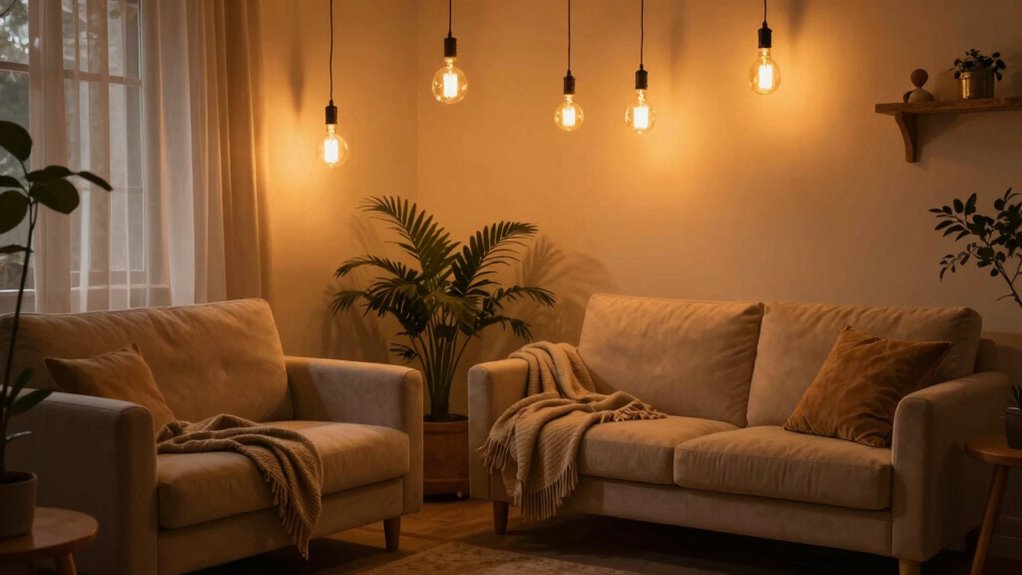
Warm light instantly sets a relaxed and inviting tone in any space, making it easier for you to unwind. It creates mood lighting that fosters a cozy ambiance, perfect for winding down. To enhance this effect, consider these tips:
- Use dimmable warm white bulbs to adjust brightness and maintain a calming atmosphere.
- Place lamps at different heights for layered lighting that feels natural and welcoming.
- Incorporate candles or string lights for soft, flickering warmth.
- Choose warm tones for wall paint and decor to complement the light and deepen the cozy vibe.
- Incorporating ergonomic lighting practices can help reduce eye strain and improve overall comfort in your space, especially when selecting appropriate bulb settings for different activities. Additionally, selecting energy-efficient bulbs not only supports sustainability but also ensures consistent, comfortable lighting without increased electricity costs. Paying attention to light temperature can further refine your cozy environment, creating an ideal space for relaxation and wellness.
The Benefits of Using Soft White and Warm White Bulbs
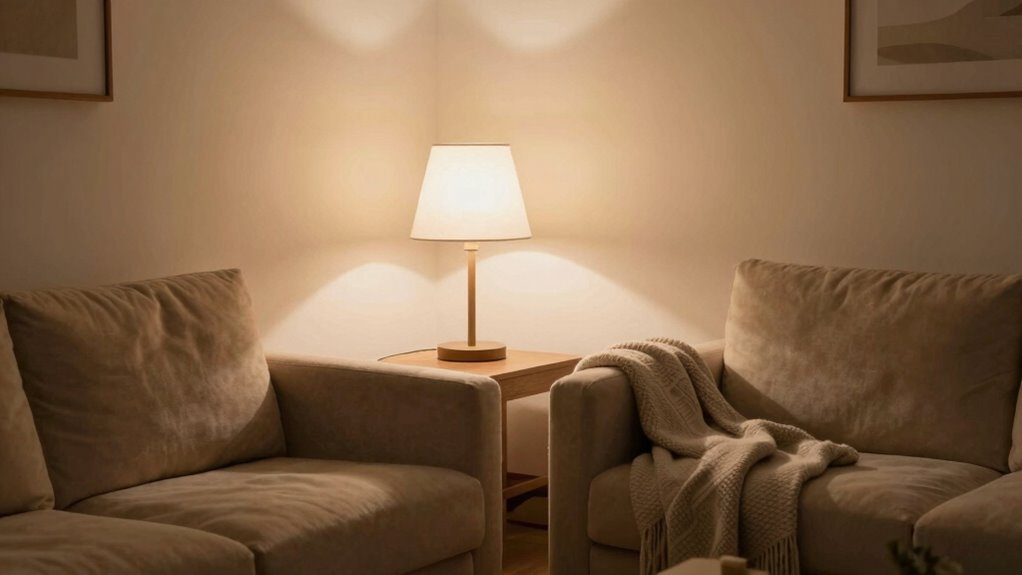
Using soft white and warm white bulbs can considerably enhance the comfort and ambiance of your space, as they emit a gentle, inviting glow that’s easy on the eyes. These bulbs typically have high color rendering, which means they show colors more accurately and naturally, making your environment feel more welcoming and cozy. Additionally, they often have a long bulb lifespan, reducing the need for frequent replacements and saving you money over time. This combination of pleasing light quality and durability makes them ideal for creating a calm, relaxing atmosphere in living rooms, bedrooms, or dining areas. By choosing soft white and warm white bulbs, you guarantee your space maintains a warm, inviting feel while benefiting from practical, long-lasting lighting.
When to Use Cooler Light Temperatures for Focus and Energy?
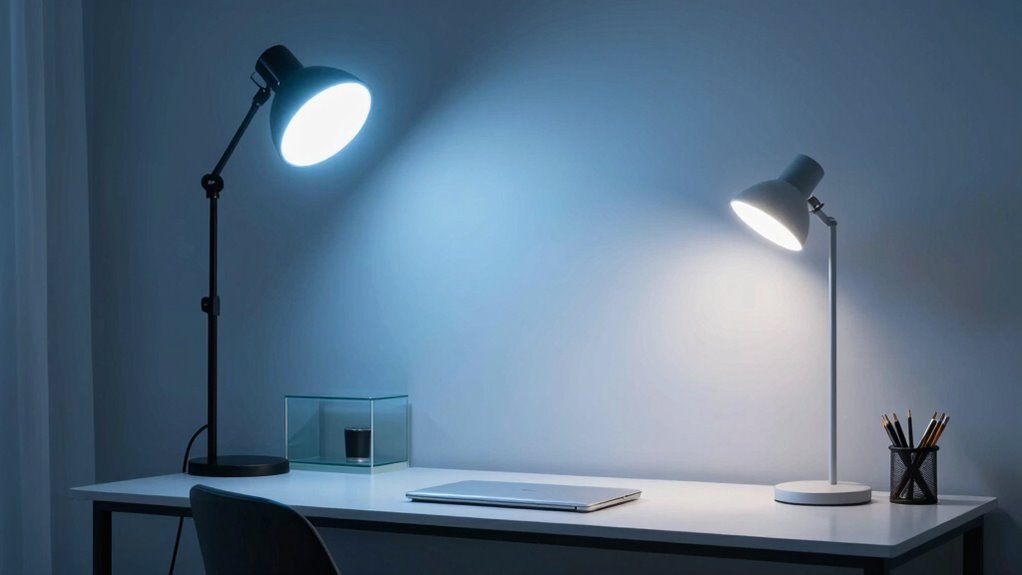
When you need to stay sharp and alert, cooler light temperatures can make a big difference. They help boost concentration, wake you up faster in the morning, and keep you energized throughout the workday. Using cooler lighting at the right times can enhance your focus and productivity.
Enhances Concentration and Alertness
Cooler light temperatures can markedly boost your focus and alertness, especially during tasks that demand sustained concentration. Using ambient lighting with a cooler tone activates your brain’s alertness, aligning with color psychology principles that associate blue and white hues with productivity. To maximize this effect:
- Set your workspace lighting to around 5000K-6500K for clarity.
- Use cooler bulbs during late mornings or early afternoons when focus peaks.
- Avoid warm tones that promote relaxation, which can hinder concentration.
- Combine cooler lighting with natural light to enhance energy levels.
Accelerates Morning Wakefulness
Since mornings often leave you feeling sluggish, incorporating cooler light temperatures early in the day can considerably boost your wakefulness and energy levels. Cooler lights, with higher color contrast, mimic natural daylight, helping your body recognize it’s time to be alert. This light temperature influences your mood, making you feel more focused and ready to tackle the day. By activating your circadian rhythm, cooler bulbs reduce grogginess and promote faster mornings. They also sharpen visual clarity, making it easier to see details and stay engaged. Using these lighting settings in the morning sends a clear signal to your brain that it’s time to wake up, energizing you and setting a productive tone for the hours ahead.
Boosts Productivity in Workspaces
To maximize focus and energy during work hours, it’s essential to use cooler light temperatures strategically throughout the day. Cooler lights, which mimic daylight, leverage color psychology by boosting alertness and concentration. They also serve as a form of light therapy, helping reset your circadian rhythm and improve mental clarity. Use cooler lighting when:
- You need to tackle complex tasks or problem-solving.
- During morning work sessions to jump-start your productivity.
- When feeling sluggish or fatigued to invigorate your focus.
- In areas designated for tasks requiring high attention to detail.
How to Choose the Right Light Temperature for Any Room
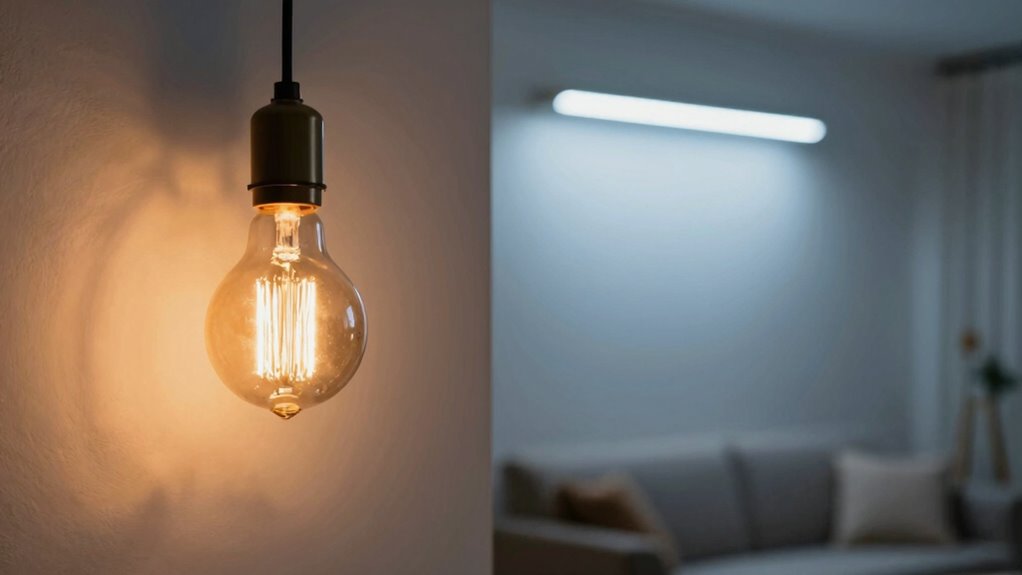
Choosing the right light temperature for any room depends on how you want the space to feel and function. For areas like kitchens or workspaces, opt for a cooler light (around 4000K to 5000K) that enhances visibility and boosts LED longevity while providing excellent color rendering. In contrast, warmer tones (2700K to 3000K) create cozy, relaxing atmospheres perfect for bedrooms or living rooms. Consider how the light’s color impacts mood and activity. Good color rendering ensures natural-looking colors, making your space feel more inviting. Selecting the right balance between warmth and coolness helps you achieve the desired ambiance without compromising bulb performance or longevity. Ultimately, matching your light temperature to the room’s purpose ensures comfort, efficiency, and a pleasing environment.
How to Adjust Light Temperature With Dimmable and Smart Bulbs
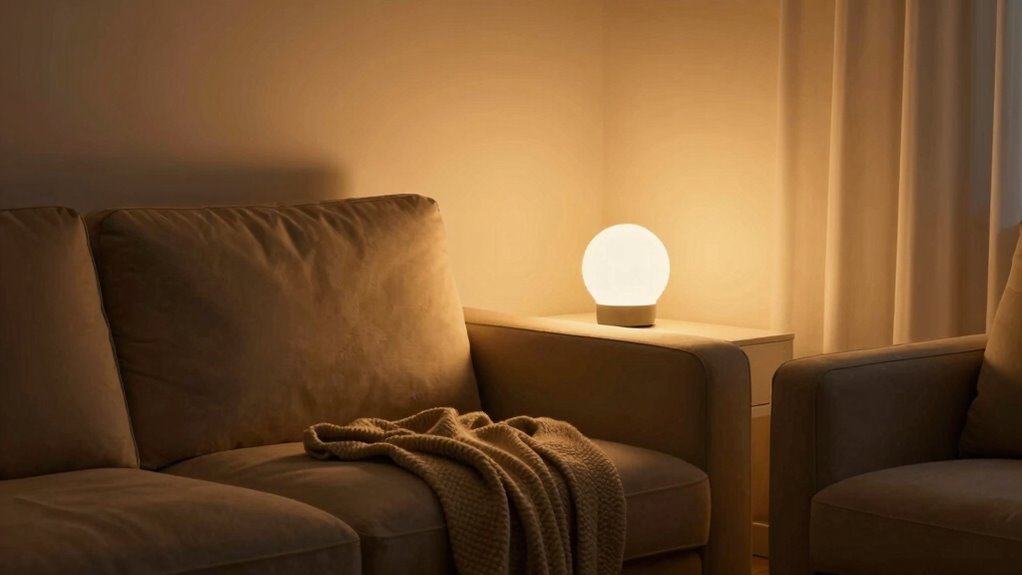
Adjusting light temperature with dimmable and smart bulbs is easier than you might think, thanks to their versatile features. With these bulbs, you can fine-tune your lighting design to create a calming atmosphere effortlessly. Here’s how:
Easily create a calming atmosphere by adjusting your smart and dimmable bulbs to suit your mood and time of day.
- Use your smart app or switch to select warm or cool settings, depending on your mood.
- Adjust the brightness levels to complement the color temperature, enhancing relaxation.
- Set schedules to automatically shift light warmth during different times of day.
- Regularly dim or brighten your bulbs to optimize bulb longevity while maintaining the desired ambiance.
These adjustments help you customize your space without sacrificing bulb lifespan, making your lighting both functional and soothing.
Common Mistakes That Make Rooms Feel Less Relaxing
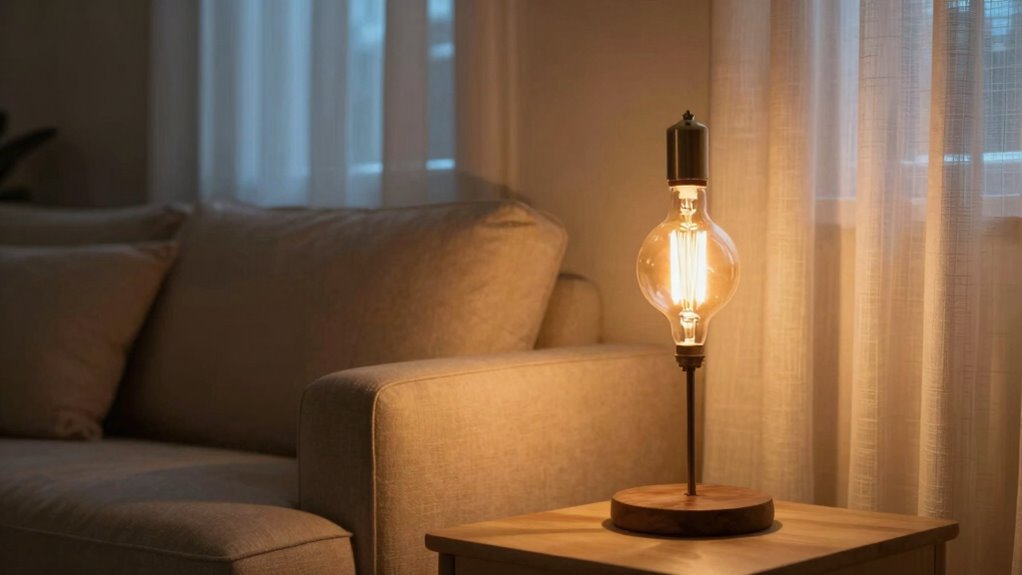
Using too much bright white light can make your space feel harsh rather than calming. Ignoring how light temperature impacts mood can lead to less relaxing rooms. Additionally, improper bulb placement can create uneven lighting that disrupts the atmosphere you want to achieve.
Overuse of Bright White
While bright white lighting might seem like a practical choice, overdoing it can make your space feel harsh and uninviting. Excessive use of bright white bulbs can disrupt color psychology, making rooms feel sterile rather than cozy. It also contributes to light pollution, interfering with the natural ambiance. To avoid this:
- Limit bright white bulbs in relaxing areas like bedrooms and living rooms.
- Use warmer tones to create a calming atmosphere that encourages unwinding.
- Mix different light temperatures to prevent the feeling of clinical brightness.
- Be mindful of how light pollution impacts your home’s overall serenity and your well-being.
Balancing light temperature helps foster a sense of calm, making your space more inviting and less overstimulating.
Ignoring Light Temperature Effects
Many people overlook how light temperature influences the overall feel of a room, even when they carefully select their bulbs. They focus on brightness and forget that the color warmth of the light affects relaxation. Ignoring this can lead to harsh or uninviting spaces, regardless of the lighting fixtures used. For example, using high wattage bulbs in cool-toned settings can create a cold, unwelcoming atmosphere. Conversely, low wattage bulbs with warm tones foster coziness, but only if paired correctly. It’s essential to match bulb wattage and light temperature to your room’s purpose. Overlooking these factors can make your space feel less calming, even if you’ve invested in quality fixtures. Paying attention to light temperature ensures your lighting enhances relaxation rather than detracts from it.
Improper Bulb Placement
Poor bulb placement can instantly undermine your efforts to create a relaxing atmosphere. When bulbs are poorly positioned, your decor and outdoor lighting can feel harsh or unbalanced. Here are common mistakes:
- Placing bulbs in decorative fixtures that cast uneven or overly bright light.
- Ignoring the importance of layering light sources—using only ceiling lights instead of combining ambient, task, and accent lighting.
- Positioning outdoor lighting too close or too far from seating areas, creating glare or shadows.
- Overlooking the effect of bulb placement on mood—placing bulbs directly in sightline can cause discomfort.
Correct placement, such as diffusing light through fixtures or strategically positioning outdoor lights, helps create a calm, inviting space. Proper placement enhances relaxation and balances your lighting scheme.
Tips for Mixing Light Temperatures Safely and Effectively
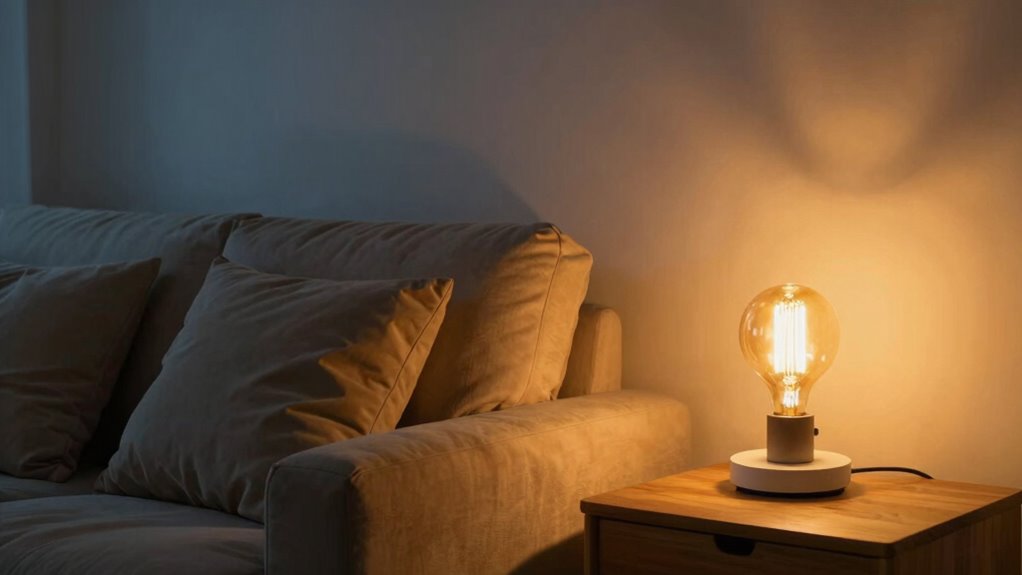
Mixing different light temperatures can enhance your space’s ambiance, but it’s important to do so safely and effectively. To achieve this, start by considering the lighting color you want to create—the balance between warm and cool tones affects the mood. Always check bulb compatibility to ensure your fixtures support multiple light temperatures without flickering or damage. Use bulbs with similar brightness levels to avoid uneven lighting. When combining different lighting temperatures, keep the overall scheme cohesive by sticking to a consistent color palette. Avoid mixing incompatible bulbs that could cause safety issues or reduce bulb lifespan. By paying attention to lighting color and bulb compatibility, you’ll create a harmonious environment that feels both inviting and well-designed.
How Choosing the Perfect Bulb Enhances Your Home’s Comfort
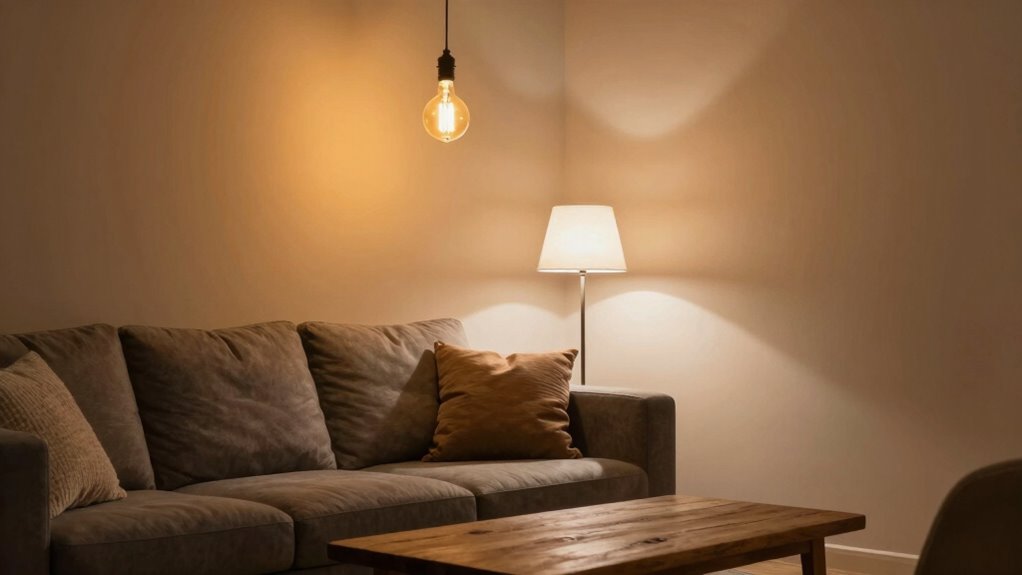
Choosing the right bulb can considerably boost your home’s comfort by creating the ideal atmosphere for each space. When selecting bulbs, consider how they enhance both decorative fixtures and outdoor lighting. Here are four ways to improve your home’s comfort:
- Use warm-toned bulbs in living areas for a cozy, welcoming feel.
- Opt for bright, cool light in workspaces to boost focus and alertness.
- Select softer bulbs for decorative fixtures to add ambiance without glare.
- Choose weather-appropriate outdoor lighting with the right color temperature to make outdoor spaces inviting and relaxing.
Frequently Asked Questions
How Does Light Temperature Influence Sleep Quality?
You might notice that warmer light in your room helps improve your sleep quality. Cooler, blue-toned light can disrupt your sleep cycle by suppressing melatonin production, making it harder to fall asleep. To promote better rest, use warmer bulbs in the evening, which aligns with your body’s natural melatonin release and supports a healthier sleep cycle. This small change can lead to more restful nights and easier mornings.
Can Different Light Temperatures Affect Mood and Productivity?
Imagine walking into a room where soft, warm light wraps around you like a cozy blanket—your mood lifts, and focus sharpens. Different light temperatures influence your emotions and productivity through color psychology and ambiance creation. Cooler, bluish lights boost alertness, perfect for work, while warmer tones promote relaxation. By choosing the right bulb settings, you can create an environment that energizes or calms, shaping your daily experience effortlessly.
Are There Health Risks Associated With Certain Bulb Color Temperatures?
Yes, certain bulb color temperatures can pose health risks. You might experience circadian disruption if you use blue-rich, cool white bulbs late at night, affecting your sleep. Additionally, prolonged exposure to harsh, bright lighting can cause eye strain and discomfort. To protect your health, opt for warmer tones in the evening and limit exposure to high-intensity, cool bulbs, especially before bedtime.
How Do I Transition Between Different Light Temperatures Seamlessly?
You can shift between different light temperatures seamlessly by using smart lighting systems with dimming techniques. These systems allow you to adjust brightness and color temperature gradually, creating smooth changes that suit your mood or activity. Set schedules or use voice commands to tweak lighting effortlessly. This way, you’ll enjoy a comfortable ambiance without abrupt shifts, promoting a calming environment tailored to your preferences.
What Are the Energy Implications of Choosing Warmer Versus Cooler Bulbs?
Choosing warmer bulbs typically reduces energy consumption by about 10-15% compared to cooler bulbs, making them more energy-efficient long-term. Warmer bulbs also tend to have a longer lifespan, saving you replacement costs. Imagine your home’s ambiance becoming more inviting while saving money and energy — that’s the power of selecting the right bulb temperature. So, opt for warm lighting to enjoy lower energy bills and a cozy atmosphere.
Conclusion
By understanding how light temperature influences your mood, you can craft the perfect ambiance for any space. But the true secret lies in knowing when to switch from cozy warmth to energizing coolness—sometimes without even realizing it. Are you ready to open the full potential of your lighting? With a few simple adjustments, you might discover a whole new level of comfort and focus you never knew was possible. The choice is yours—will you take it?