
To achieve restaurant-quality results at home, start with a reliable immersion circulator, a heat-safe container, and resealable bags or a vacuum sealer. Focus on proper sealing, precise temperature control, and accurate timing for proteins or vegetables. Keep water circulating and monitor the temperature closely. With the right setup and techniques, you’ll reveal deep flavors and perfect textures. Keep exploring, and you’ll discover how to master sous vide even further.
Key Takeaways
- Use a reliable immersion circulator and a large, insulated water bath for precise temperature control.
- Seal food airtight with a vacuum sealer or resealable bags to prevent leaks and water ingress.
- Maintain consistent water temperature with accurate thermometers and proper equipment calibration.
- Season or marinate ingredients thoroughly before sealing for deep flavor infusion.
- Follow precise timing and cooking guidelines based on food thickness for restaurant-quality results.
Understanding Sous Vide: Why Home Chefs Love It
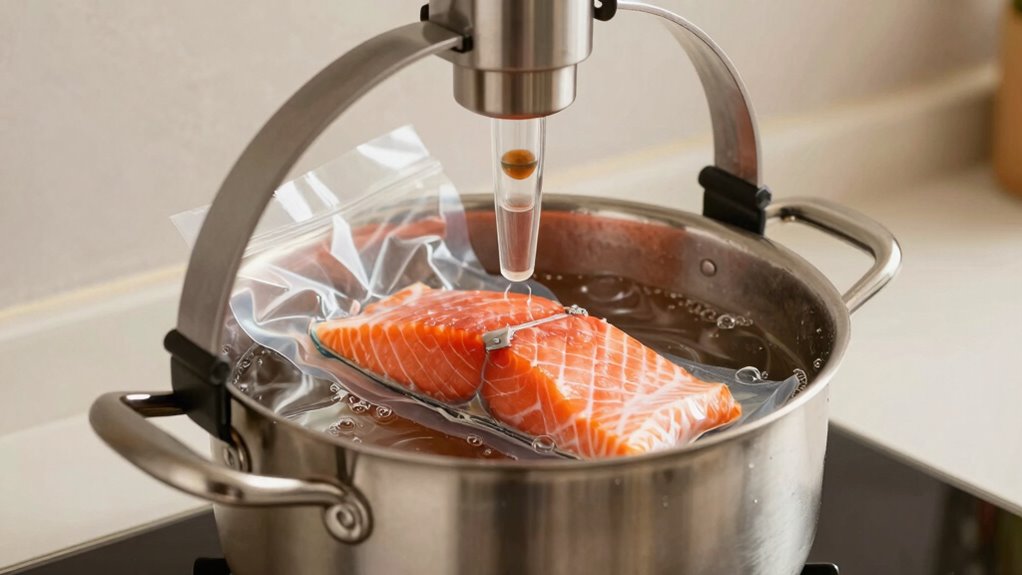
Ever wonder why so many home chefs are turning to sous vide? It’s because this technique *unlocks* incredible flavor infusion and texture enhancement. When you cook food in a precisely controlled water bath, flavors meld deeply into the ingredients, creating a richer taste. Plus, the gentle heat preserves the integrity of delicate textures, ensuring your meat remains tender and juicy or vegetables stay perfectly firm yet flavorful. Unlike traditional methods, sous vide minimizes the risk of overcooking, giving you consistent results every time. The process allows you to infuse herbs, spices, or marinades directly into your dishes, elevating your cooking game. Additionally, digital concepts like precise temperature control and timing are fundamental to achieving perfect results with sous vide. The use of accurate temperature control ensures that your food is cooked to the exact degree needed, which is critical for consistent quality. Employing vetted cooking tools like immersion circulators further guarantees reliable and safe cooking outcomes. Incorporating sound science principles can also enhance your understanding of heat transfer and improve your technique. For instance, understanding heat transfer mechanisms can help you optimize your cooking process and troubleshoot issues. Overall, sous vide transforms simple ingredients into restaurant-quality meals, making it a favorite among home chefs seeking precision, flavor, and perfect texture every time.
Essential Equipment for Your First Sous Vide Setup
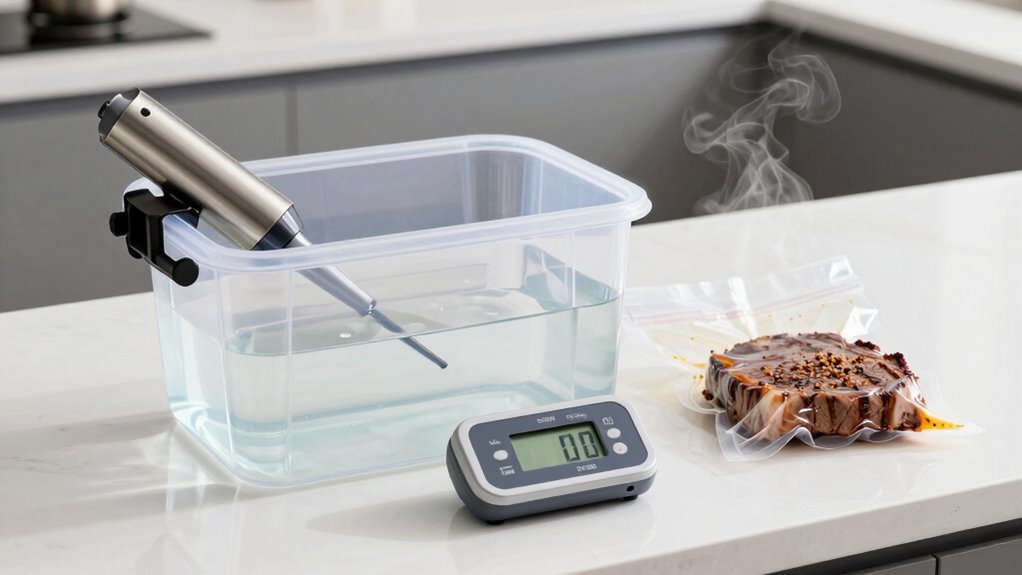
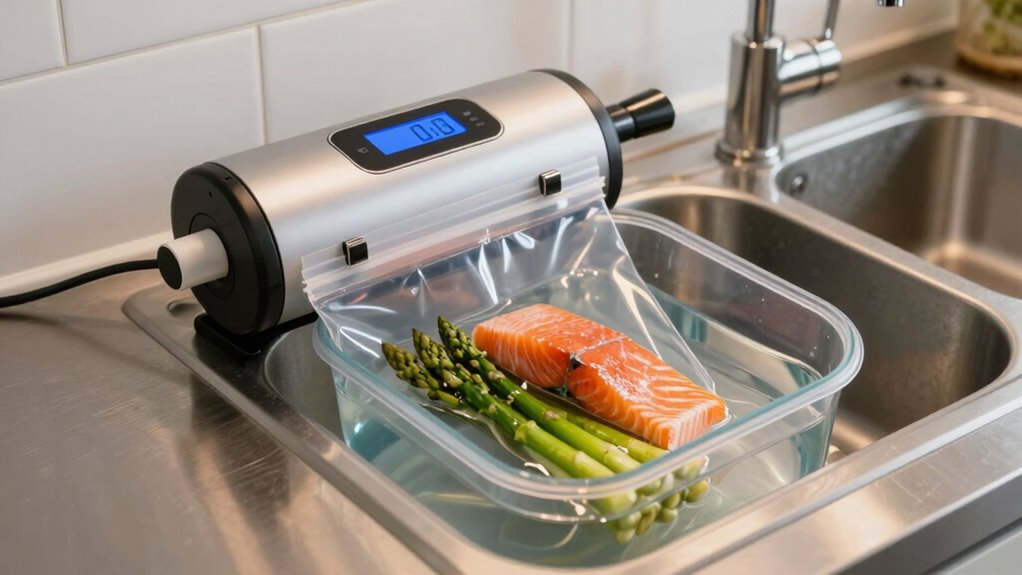
Getting started with sous vide requires some basic equipment, including a reliable immersion circulator and a vacuum sealer or resealable bags. You don’t have to spend a fortune—there are budget-friendly options that work well for beginners. Prioritize quality and durability to make sure your equipment lasts and provides consistent results. Additionally, choosing regional flavors and experimenting with different ingredients can elevate your culinary creations. Keeping your equipment well-maintained and understanding water temperature control can also significantly improve your cooking outcomes. To ensure precise temperature management, investing in accurate temperature probes can be highly beneficial. Investing in proper insulation can help maintain stable water temperatures and improve energy efficiency during your sous vide sessions. Moreover, understanding cooking time accuracy can further enhance the quality and consistency of your dishes.
Essential Equipment List
To start your first sous vide setup, you’ll need a few essential pieces of equipment. These tools guarantee safe cooking and ease equipment maintenance over time. First, a reliable immersion circulator is crucial for precise temperature control. Second, a large, heat-safe container or cooler serves as your water bath. Third, vacuum sealers or resealable bags help keep food sealed properly, maintaining safety and flavor. Remember, consistent equipment maintenance is key to safe cooking; regularly clean your devices and monitor water quality. Proper setup minimizes risks and ensures even results. Investing in quality equipment now will simplify your process and improve your dishes. Additionally, choosing equipment with energy efficiency ratings can help reduce ongoing costs. Ensuring your equipment is easy to clean and maintain will help sustain consistent performance over time. Being aware of piercing care and hygiene can also ensure your equipment remains free of bacteria and contaminants, which is especially important if your setup involves any reusable accessories. Regularly inspecting your equipment for wear and tear can prevent unexpected failures and safety hazards. These essentials lay the foundation for safe, effective sous vide cooking at home.
Budget-Friendly Options
Starting your sous vide journey doesn’t require expensive equipment. Budget shopping can help you find reliable immersion circulators at a fraction of the cost of high-end models. Look for used or refurbished units online to save even more. You can also get creative with DIY modifications, such as repurposing a slow cooker or a temperature-controlled water bath from household items. Insulating your setup with inexpensive materials helps maintain consistent temperature without breaking the bank. Additionally, reusable silicone bags or zipper-lock bags can substitute for pricier vacuum sealers. These budget-friendly options allow you to experiment and learn without a hefty investment upfront. With a little research and resourcefulness, you can achieve great sous vide results while keeping costs low. Considering Essential Equipment can also help you organize and preserve your recipes and techniques safely.
Quality and Durability
Choosing quality and durable equipment is essential for your first sous vide setup because reliable tools guarantee consistent cooking results and safety. When selecting equipment, focus on material quality to ensure resistance to heat, moisture, and regular use. High-quality materials improve equipment longevity, meaning your investment lasts longer and performs better over time. Additionally, opting for Free Floating systems can simplify setup and maintenance, making your cooking experience more seamless. Incorporating connected kitchen devices can further enhance your precision and control during cooking. Furthermore, selecting equipment with temperature stability features ensures accurate and safe cooking outcomes. Investing in robust construction can also reduce the risk of equipment failure during critical cooking phases.
Preparing and Sealing Food for Sous Vide
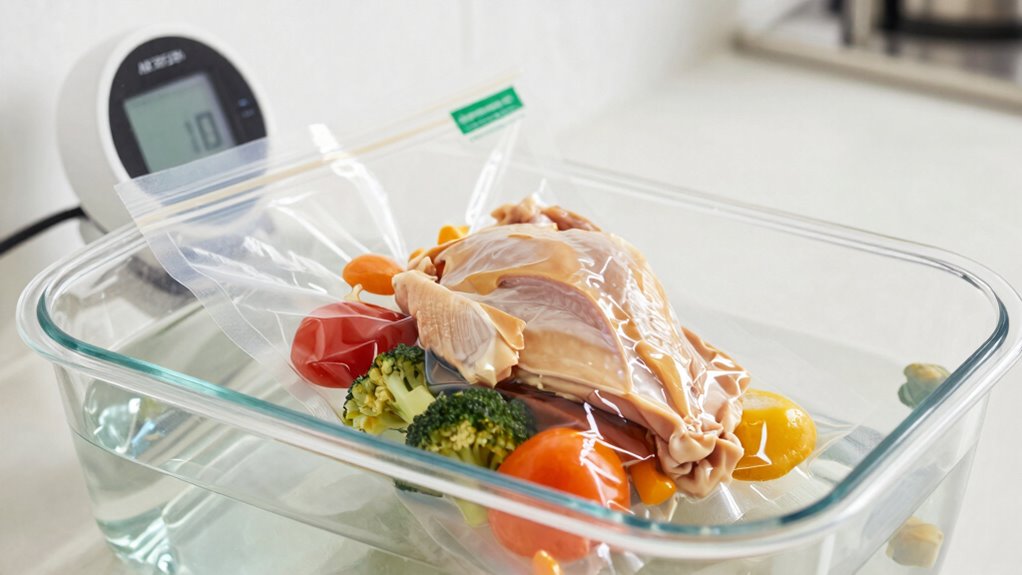
To get started, you’ll want to master vacuum sealing techniques to guarantee your food stays airtight during cooking. Proper seasoning and marinades not only enhance flavor but also help ingredients absorb flavors evenly. When preparing and sealing, pay attention to these details for the best sous vide results. Additionally, understanding the different types of vacuum sealers can help you choose the right equipment for your needs. Ensuring the airtight seal is secure prevents water from entering the bag and compromising your food. For optimal results, familiarize yourself with vacuum sealing techniques to avoid leaks and ensure longevity of your sealed packages. Incorporating knowledge of dog breeds can help you select the best treats or ingredients for your pup’s special meals, ensuring they enjoy healthy, flavorful food.
Vacuum Sealing Techniques
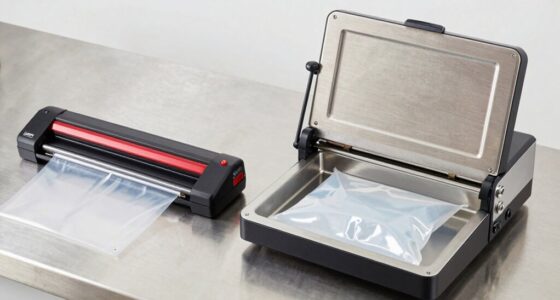
Vacuum sealing is a essential step in preparing food for sous vide because it guarantees the food is tightly enclosed, preventing water from seeping in and maintaining an even temperature. Using a vacuum sealer correctly ensures the bag is airtight, which is critical for consistent results. Focus on sealing techniques like removing excess air, avoiding wrinkles, and creating a secure seal. These practices help prevent water ingress and ensure even heat transfer. For best results, consider these tips:
- Use the correct bag size to minimize air pockets
- Double-check for leaks before submerging
- Keep the open edge of the bag above water during sealing
Mastering these vacuum sealing techniques enhances your sous vide experience, leading to perfectly cooked, restaurant-quality dishes at home.
Proper Seasoning and Marinades
Proper seasoning and marinades are essential steps before sealing your food for sous vide, as they infuse flavor and enhance texture during cooking. Experiment with seasoning variations, such as herbs, spices, and aromatics, to match your desired taste profile. When using marinades, consider the marinade timing; some flavors develop quickly, while others benefit from longer marinating periods. For delicate proteins like fish, a brief marinade is best to prevent overpowering the natural flavor. For meats, marinating overnight can deepen the taste. Always ensure your seasonings are evenly distributed to promote uniform flavor infusion. Once seasoned or marinated, seal your food tightly to prevent leaks, ensuring the flavors stay locked in during the sous vide process.
Getting Your Water Bath Ready: Temperature & Time Tips
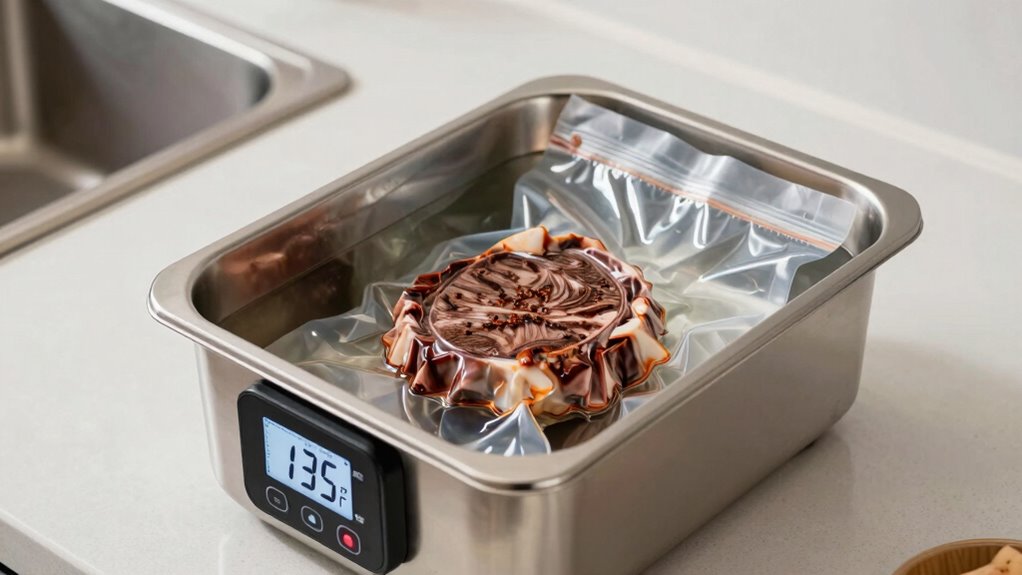
Before you start cooking, it’s essential to set the right water temperature and time for your sous vide bath. Accurate water temperature guarantees your food reaches the desired doneness without overcooking, while precise timing guarantees consistent results. To master this, keep in mind:
- Use a reliable thermometer to monitor water temperature constantly.
- Adjust the time based on the thickness and type of food for ideal tenderness.
- Remember that timing precision is key—small deviations can affect texture and juiciness.
Getting these elements right helps you achieve restaurant-quality results at home. It’s about controlling the environment to guarantee your dish is cooked evenly and perfectly every time. Once your water bath is set, you’re ready for the next step in your sous vide journey.
Simple Recipes and Techniques for Restaurant-Quality Results
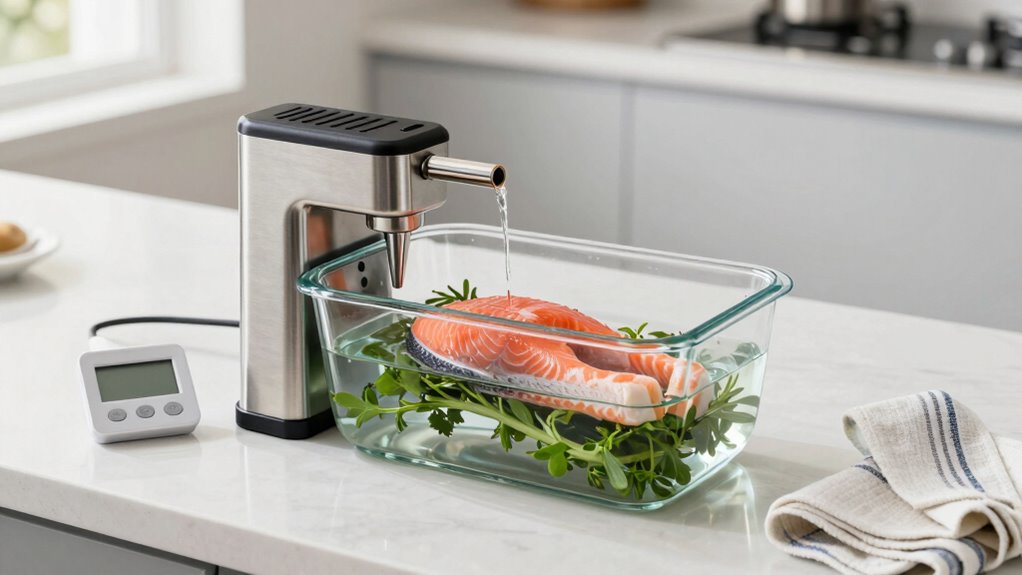
Achieving restaurant-quality results with your sous vide setup is simpler than you might think by focusing on straightforward recipes and techniques. Start with basic proteins like chicken breasts or salmon fillets, which cook evenly at precise temperatures. Sous vide safety is essential, so always use fresh ingredients and properly seal your bags to prevent contamination. When planning your sous vide meal, consider timing and temperature to ensure perfect doneness without overcooking. Use simple seasonings or marinades to enhance flavors without complicating the process. Consistency is key, so keep your water bath at the right temperature and avoid unnecessary variables. These techniques allow you to produce restaurant-quality dishes at home, making each meal both impressive and reliable.
Troubleshooting Common Sous Vide Problems
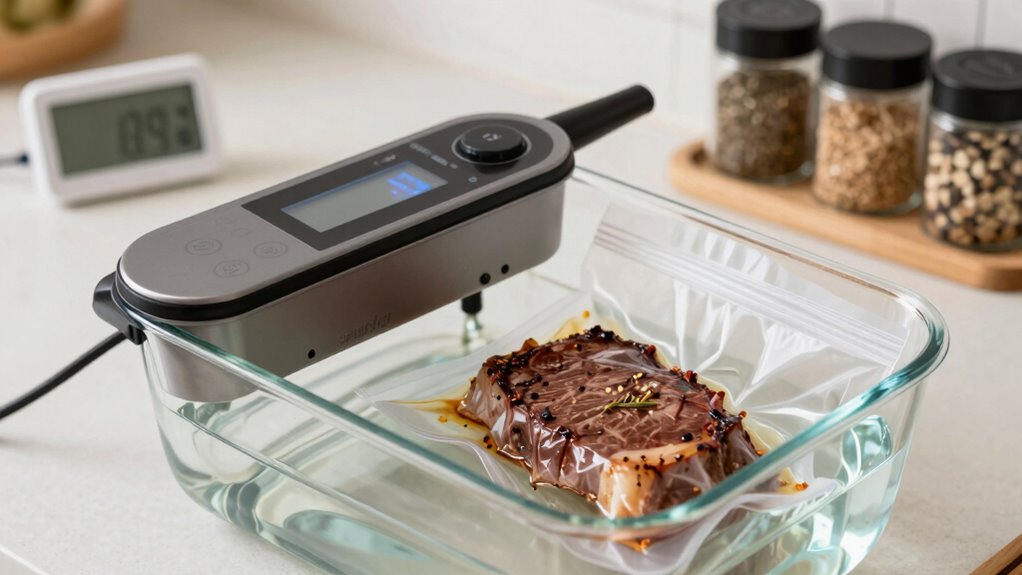
Even with careful planning, sous vide cooking can sometimes present issues that affect your results. Common problems include temperature fluctuations, sealing leaks, and inconsistent textures. To troubleshoot:
- Check your immersion circulator’s calibration regularly to prevent temperature fluctuations.
- Ensure your bags are sealed tightly, with no leaks, to avoid water seepage and contamination.
- Use a reliable vacuum sealer or double-bag delicate items for extra security.
Addressing these issues helps maintain even cooking temperatures and prevents water from entering the bag. By monitoring your equipment and securing your bags properly, you’ll minimize errors and achieve restaurant-quality results every time. Troubleshooting quickly keeps your sous vide experience smooth, so you can focus on perfecting your dishes.
Frequently Asked Questions
Can I Use a Regular Oven Instead of Sous Vide Equipment?
You can’t achieve the same precise results with a regular oven as you can with dedicated sous vide equipment. Oven alternatives can be tricky because they don’t provide the even, controlled temperature needed for perfect sous vide cooking. However, you can create a DIY water bath using a large container and a thermometer, but it requires careful monitoring. For consistent, restaurant-quality results, investing in a sous vide device is your best bet.
How Do I Reheat Sous Vide-Cooked Food Safely?
Reheating sous vide-cooked food is like reviving a delicate flower—gentle and precise. To guarantee food safety, keep the temperature at 130°F to 140°F, reheating in a water bath or sous vide device. Avoid microwave reheating, which can cause uneven warming. Use a thermometer to check the internal temperature, ensuring it reaches at least 165°F if you prefer traditional reheating methods, to keep your food safe and delicious.
What’s the Best Way to Store Sous Vide Leftovers?
For leftover storage, vacuum seal your sous vide leftovers to keep them fresh and prevent freezer burns. Label the packages with the date to track freshness. Store them in the refrigerator if you plan to eat within a few days, or freeze for longer storage. Vacuum sealing minimizes air exposure, which helps preserve flavor and texture, making reheating safe and hassle-free when you’re ready to enjoy your leftovers.
Are There Health Risks With Undercooking Sous Vide Dishes?
There are health risks with undercooking sous vide dishes if you don’t prioritize food safety and temperature control. You might bacteria survive if the temperature isn’t high enough or cooking time isn’t long enough. Always follow recommended temperature guidelines for different foods, and use a reliable thermometer to guarantee proper doneness. Proper temperature control kills harmful pathogens, making your sous vide meals safe and delicious.
How Do I Adjust Recipes for Different Sous Vide Machines?
You can adjust recipes for different sous vide machines by tweaking temperature adjustments and cooking time. Check your device’s temperature accuracy and calibration, then modify the temperature settings to match the recipe’s target. Keep in mind that some machines heat more efficiently, so you might need slightly less time. Always monitor the first few attempts to fine-tune your settings for perfect results with your specific sous vide machine.
Conclusion
Once you see how precise temperature control transforms your cooking, you’ll believe sous vide truly rivals restaurant quality. Many claim it’s just a fancy method, but science shows that maintaining exact temps locks in flavors and tenderness. So, give it a try—you’ll discover that consistent results aren’t just a myth. Embrace this technique, and you’ll impress every time, proving that home cooking can reach professional standards with a little patience and the right setup.