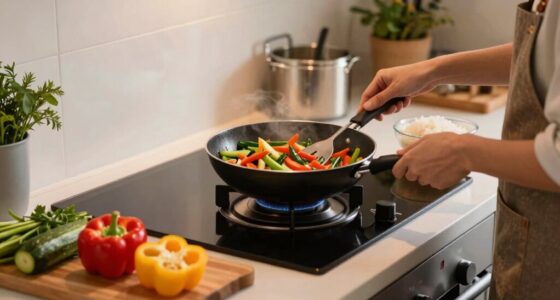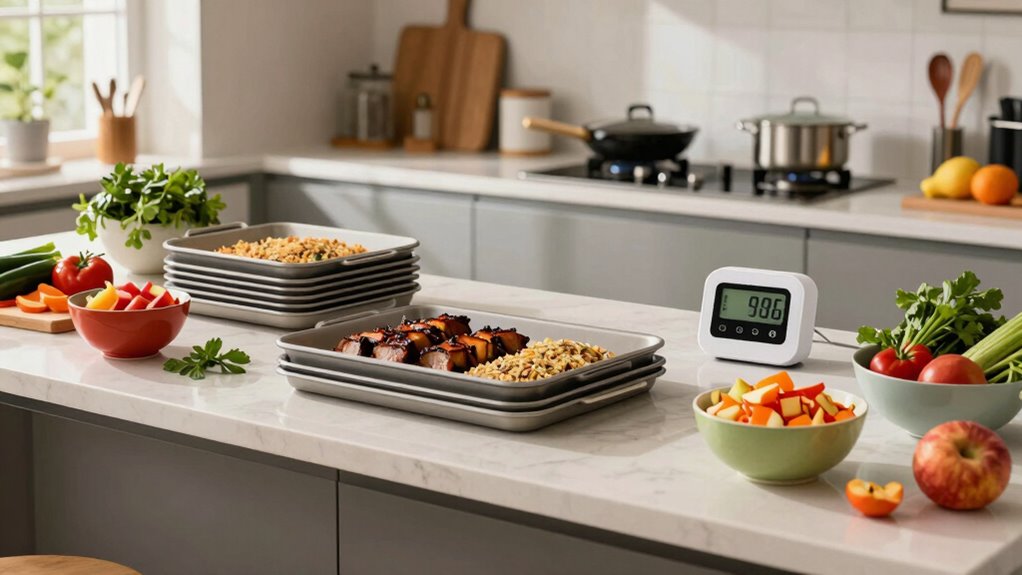

To prevent burnout, streamline your weekly batch cooking into a focused 90-minute system using smart planning, simple recipes, and multitasking. Prep ingredients in advance, choose versatile dishes, and organize tools efficiently to save time. Focus on flavor with quick techniques like fresh herbs and bold seasonings. Keep it fun by playing music or mixing up routines. Staying flexible and organized helps you enjoy meal prep without stress—continue here to discover how to make it work for you.
Key Takeaways
- Plan simple, versatile recipes with shared ingredients to maximize efficiency within the 90-minute window.
- Prep ingredients and organize tools beforehand to streamline workflow and reduce downtime.
- Use quick cooking techniques like searing and fresh flavor boosts to save time and keep meals exciting.
- Incorporate variety and small recipe tweaks to prevent boredom and sustain motivation.
- Maintain a positive mindset, incorporate breaks, and involve others to make batch cooking enjoyable and sustainable.
Why Batch Cooking Saves Time and Reduces Kitchen Stress
Batch cooking can dramatically cut down your time in the kitchen and help you avoid daily stress. By preparing multiple meals at once, you eliminate the need to cook from scratch every day, freeing up your schedule. It also allows you to experiment with flavor variations, so your meals stay exciting without extra effort. If a recipe calls for certain ingredients, ingredient substitutions can easily be made to suit your preferences or pantry stock, making cooking more flexible and less stressful. This approach reduces decision fatigue and prevents last-minute meal dilemmas. Over time, you’ll find it easier to stick to healthy eating habits because your meals are prepped and ready to go. Additionally, incorporating electric kitchen appliances can further speed up the cooking process and enhance efficiency. Being aware of home appliance technology can help you choose the most effective tools for your batch cooking sessions. Using automatic timers can also ensure your meals are cooked perfectly without constant supervision. Overall, batch cooking streamlines your routine while keeping your meals tasty and varied.
How to Plan Your Weekly Batch Cooking in Just 90 Minutes
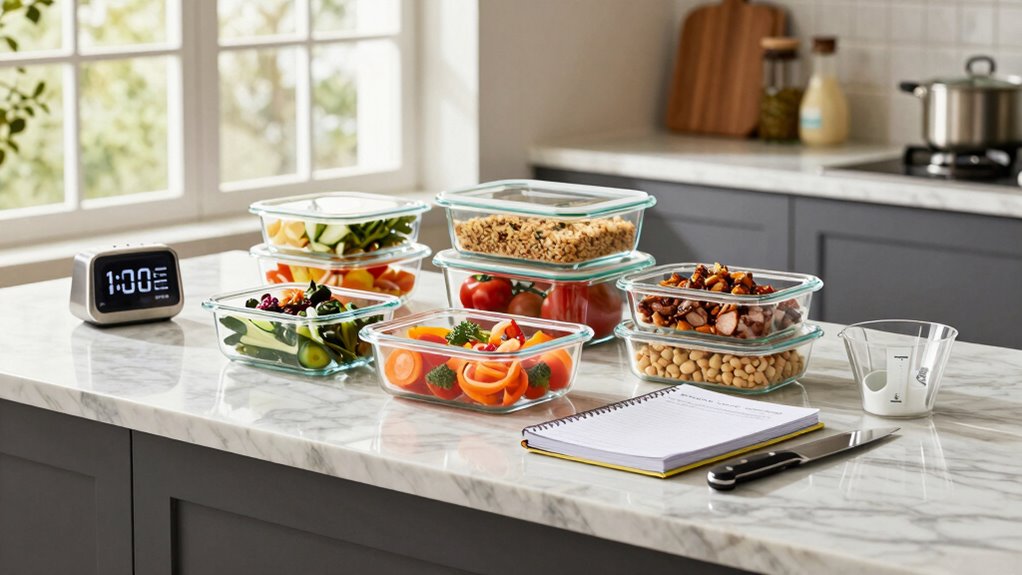
To plan your weekly batch cooking in just 90 minutes, start by setting aside a dedicated block of time and gathering all your ingredients and tools beforehand. Create a simple meal plan with versatile recipes that can easily incorporate ingredient substitutions to keep flavors interesting. This flexibility allows you to adapt based on what’s available or on sale. Prioritize recipes that benefit from flavor enhancements like herbs, spices, or citrus—these small additions can elevate your dishes without extra prep time. Organizing your ingredients in prep bowls or sections to streamline cooking can also help you stay efficient. Having a clear plan and ready ingredients reduces decision fatigue and keeps your session productive. Incorporating meal prep techniques and household organization tips can further optimize your kitchen setup, making your batch cooking sessions smoother. Employing smart kitchen tools can help you track ingredients and cooking times more effectively, saving you even more time. Additionally, understanding efficient kitchen workflows can help you minimize movement and maximize efficiency during your cooking session. Being familiar with time-saving kitchen habits can also contribute to a more streamlined process. With this approach, you’ll maximize your limited time and enjoy delicious, varied meals all week.
Picking Recipes That Make Batch Cooking Faster and Easier
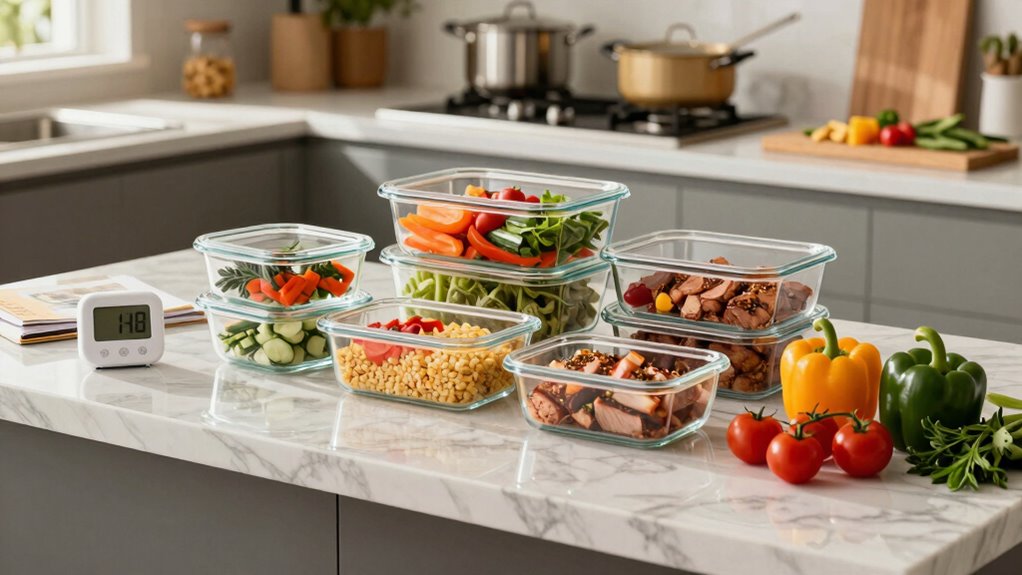
Choosing the right recipes can considerably speed up your batch cooking sessions. Focus on dishes with simple prep steps and versatile ingredients. Look for recipes that lend themselves to recipe variations, so you can create different flavor combinations without extra effort. Selecting meals that share ingredients saves time and minimizes shopping. Incorporating auditory processing techniques can also help streamline your planning and execution process, making batch cooking more efficient. Utilizing meal prep strategies can further enhance your workflow, reducing stress and preventing burnout. Additionally, choosing recipes that emphasize minimal equipment can reduce prep and cleanup time, further increasing your efficiency. Emphasizing streamlined workflows ensures you stay organized and maintain momentum during your cooking sessions. Incorporating efficient planning methods can help you stay on track and avoid unnecessary delays, ultimately making your batch cooking more enjoyable and sustainable.
Essential Tools and Containers for Seamless Meal Prep

Having the right tools and containers is essential for making meal prep smooth and efficient. Invest in quality kitchen gadgets like sharp knives, cutting boards, and silicone spatulas to streamline prep work. These tools help you chop, stir, and assemble ingredients quickly and safely. Storage containers are equally important; opt for BPA-free, leak-proof options that come in various sizes. Use clear containers so you can easily see your prepped meals, and choose stackable designs to save space in your fridge or freezer. Good containers also ensure freshness and prevent spills. Keep your tools organized in a dedicated drawer or caddy, so everything’s within reach during your prep session. Additionally, selecting multi-unit setups can help you efficiently manage larger quantities of prepped ingredients for the week. Regularly checking and exfoliating your containers can also maintain the quality of your ingredients and keep your kitchen organized. Incorporating storage best practices can further optimize your meal prep efficiency and keep your kitchen clutter-free. Proper storage techniques, including exfoliation, can also maintain the quality of your ingredients and keep your kitchen organized. Using ergonomic tools can reduce fatigue and improve your overall comfort during prep. With reliable gadgets and containers, you’ll prep smarter, faster, and with less stress.
Step-by-Step: Prepping Ingredients Quickly and Efficiently
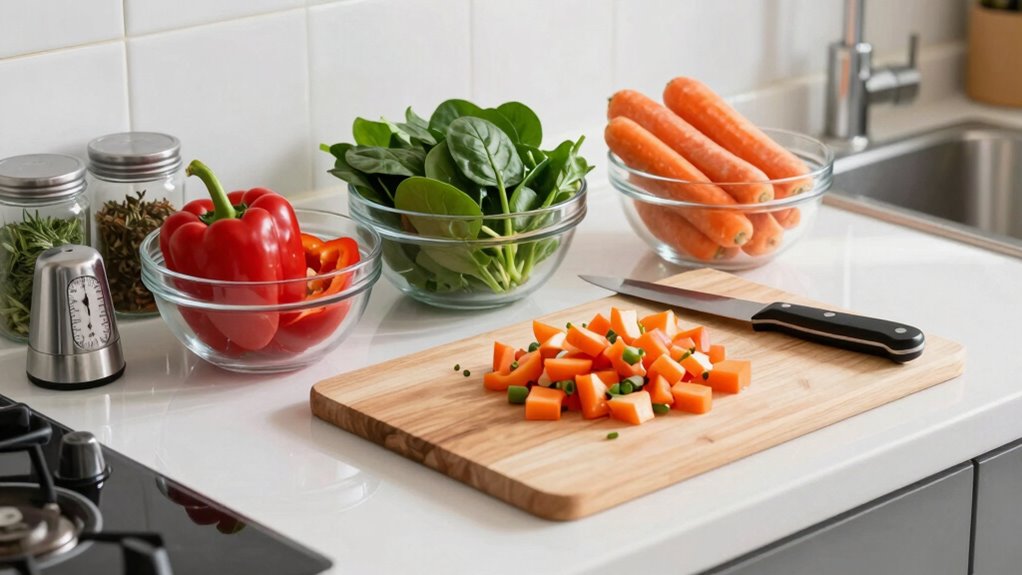
To prep ingredients quickly, start by streamlining your selection process to avoid unnecessary steps. Use efficient tools like sharp knives and versatile cutting boards to speed up your work. Organize your workspace with dedicated prep stations to keep everything accessible and maintain a smooth workflow.
Streamline Ingredient Selection
Streamlining your ingredient selection starts with organized planning. By defining your menu ahead of time, you can focus on choosing the right ingredients efficiently. Consider the importance of ingredient variety to keep meals interesting, while also exploring sourcing options that fit your budget and convenience. To simplify this process, keep these tips in mind:
- Create a master shopping list to avoid multiple trips.
- Choose versatile ingredients that can be used in various recipes.
- Opt for local or bulk sourcing options to save time and money.
- Incorporate natural and sustainable ingredients to support eco-friendly practices and enhance the healthfulness of your meals.
- Additionally, researching precious metals dealer reviews can help ensure you select reliable sources for any supplements or special ingredients you might need, saving you time and avoiding potential pitfalls.
- When sourcing ingredients, always prioritize quality and authenticity, as this reflects craftsmanship and heritage in your cooking.
- Implementing efficient sourcing strategies can further streamline your ingredient gathering process and reduce overall prep time.
- Utilizing organized inventory management can help you keep track of what you have and what needs replenishing, making the shopping process even more efficient.
This approach minimizes decision fatigue and helps you gather everything needed in one efficient shopping trip. When your ingredients are well-organized, prepping and cooking become faster, smoother, and more enjoyable.
Use Efficient Tools
Using the right tools can markedly speed up your prep work and make it more efficient. Invest in kitchen gadgets like sharp knives, mandoline slicers, and peelers to reduce prep time. These tools help you cut, slice, and dice ingredients quickly and uniformly. Consider shopping shortcuts such as pre-washed greens, pre-cut vegetables, and bagged herbs to save time during shopping and prep. A good set of measuring cups and a digital scale can streamline portioning. Using efficient tools minimizes the effort and time spent on basic tasks, allowing you to focus on assembling and cooking ingredients. Keep your tools organized and accessible to avoid delays. With the right gadgets and smart shopping shortcuts, you’ll prep ingredients faster and with less frustration. Additionally, understanding ear wax odor can help you identify underlying health issues that might affect your overall wellness during meal prep or daily routines. Incorporating smart kitchen appliances can further enhance your efficiency by automating routine tasks and maintaining optimal cooking conditions.
Furthermore, choosing ergonomic tools can help reduce fatigue during prolonged prep sessions, making the process more comfortable.
Organize With Prep Stations
Setting up dedicated prep stations in your kitchen helps you work more efficiently and reduces clutter. By organizing stations for chopping, mixing, and storing, you streamline your workflow. This setup allows you to quickly make ingredient substitutions if needed, keeping your meal prep flexible. It also encourages flavor enhancements, like adding fresh herbs or spices at the right moment. Keep these principles in mind:
- Assign specific areas for different tasks to minimize movement and save time
- Use clear containers for pre-measured ingredients to speed up assembly
- Label stations for quick identification of tools and ingredients, enabling swift swaps or adjustments
With these prep stations, you’ll prep ingredients faster, adapt recipes easily, and maintain an organized, stress-free kitchen during your batch cooking sessions.
Cooking Strategies to Maximize Flavor and Minimize Time

To maximize flavor while saving time, focus on techniques that enhance taste quickly and efficiently. Use high-heat searing to develop rich, complex flavors in meats and vegetables, giving dishes depth without lengthy cooking. Incorporate flavor enhancement methods like adding fresh herbs, citrus, or a splash of vinegar at the end of cooking to brighten dishes instantly. Prioritize ingredient freshness—fresh herbs, ripe produce, and quality proteins—to naturally boost flavor without extra effort. Quick marinades or spice rubs can infuse ingredients with maximum taste in minutes, saving time compared to lengthy slow-cooking. Finally, use flavorful broth or stock as a cooking base to deepen flavors rapidly. These strategies help you create vibrant, satisfying meals without sacrificing efficiency.
How to Organize and Store Your Meals for the Week
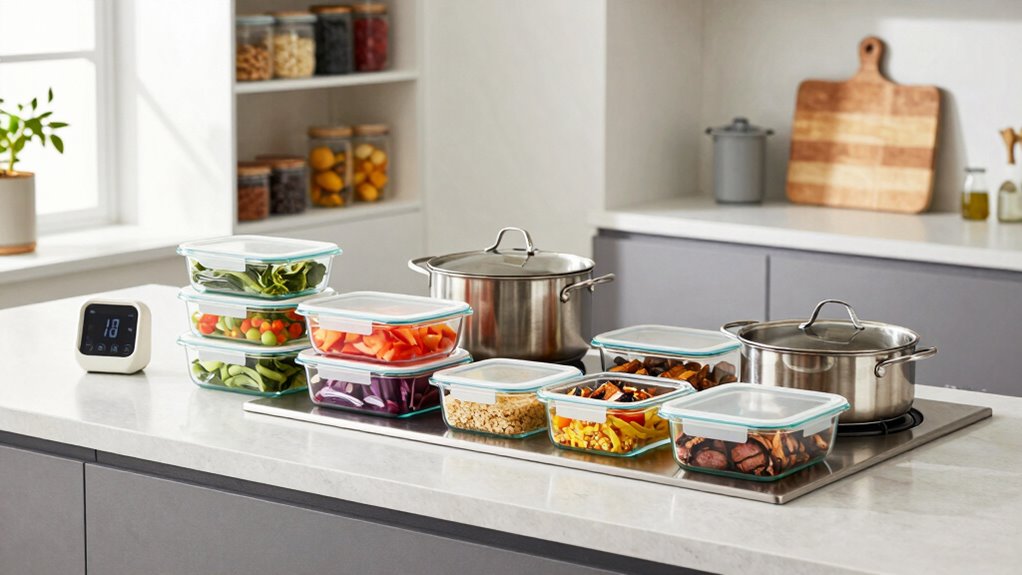
Organizing and storing your meals properly can save you time and reduce stress during the week. Using the right storage containers and labeling your prep helps keep everything fresh and easy to find. With a solid system in place, you’ll stay on top of your meal plan without feeling overwhelmed.
Meal Storage Solutions
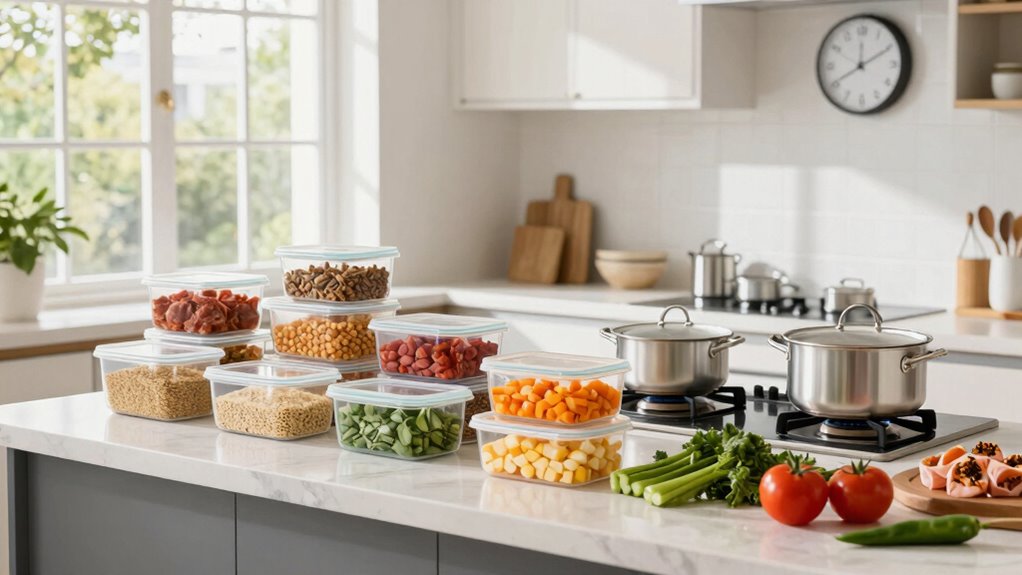
Ever wonder how to keep your prepped meals fresh and accessible throughout the week? The key is choosing the right container types for food preservation. Opt for airtight containers that prevent leaks and maintain freshness, like glass or BPA-free plastic options. Proper storage not only extends shelf life but also makes meal retrieval quick and easy. To maximize efficiency, consider these tips:
- Use stackable containers to save space in your fridge and freezer
- Label each container with dates to track freshness
- Separate sauces or condiments to avoid sogginess
Organizing Your Meal Prep
Having a clear system for organizing your meal prep guarantees you can easily find what you need throughout the week. Use labeled containers to separate different meals and ingredients, making it simple to grab what you need quickly. Group similar items together to streamline your shopping and reheating process. To add variety, prepare recipe variations using the same base ingredients, which keeps meals interesting without extra effort. Store sauces and flavor enhancements separately to customize dishes at mealtime. Invest in stackable, airtight containers to maximize space and maintain freshness. Keep an inventory list of your prepped meals and ingredients to avoid duplicates and ensure everything stays organized. With a well-structured system, you’ll save time, reduce stress, and enjoy flavorful, varied meals all week long.
Tips for Batch Cooking Without Burnout: Keep It Fun and Stress-Free
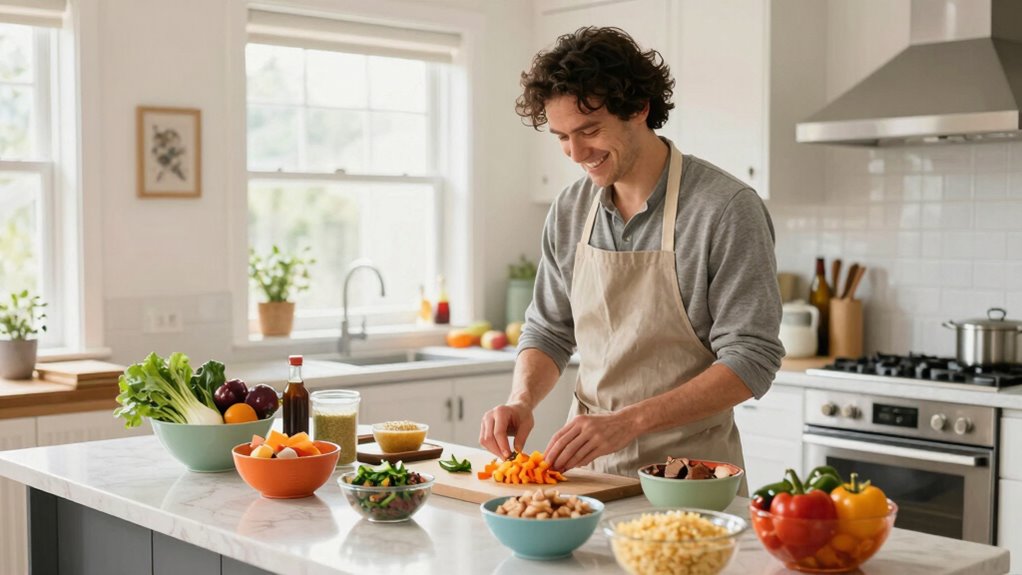
To keep batch cooking enjoyable and avoid burnout, it’s essential to approach the task with a positive mindset and practical strategies. Incorporate fun kitchen hacks to make meal prep more engaging, like using colorful utensils or playing upbeat music. Remember to take breaks and practice stress relief techniques—stretch, breathe deeply, or step outside for fresh air. These small actions keep your energy high and your mind clear. To maintain the fun and ease, consider:
- Turning cooking into a game or challenge
- Listening to your favorite playlist
- Sharing the experience with family or friends
Customizing Your Batch Cooking System for Your Family’s Needs

Customizing your batch cooking system guarantees it fits your family’s unique routines and preferences. Consider your family’s preferences and dietary restrictions to create meals that everyone enjoys and can eat safely. Tailor portion sizes, ingredient choices, and cooking methods accordingly. This personalized approach makes mealtime easier and more satisfying. Use the following table to reflect your family’s needs:
| Family Preferences | Dietary Restrictions | Favorite Flavors/Textures |
|---|---|---|
| Spicy foods | Gluten-free | Crispy textures |
| Vegetarian options | Nut allergies | Comfort foods |
| Quick dinners | Dairy-free | Savory or sweet flavors |
| Balanced meals | Low-sodium diets | Family-approved favorites |
Troubleshooting Common Challenges in Batch Cooking

Batch cooking can come with challenges like tight schedules, meal fatigue, or missing ingredients. When time is limited, you need quick prep strategies, and to prevent burnout, it helps to rotate recipes and keep things fresh. Handling shortages requires flexible plans and creative substitutions to keep your meal plan on track.
Managing Time Constraints
Managing time constraints can be one of the biggest hurdles in batch cooking, but with some strategic planning, you can stay on track. Effective time management increases kitchen efficiency and helps prevent last-minute stress. To optimize your cooking session, consider:
- Setting a clear, realistic timeline for each task to avoid rushing.
- Preparing ingredients in advance to streamline the process.
- Limiting distractions by turning off notifications and focusing solely on cooking.
These steps help you maximize your 90-minute window, reduce downtime, and keep your workflow smooth. Staying organized and disciplined ensures you stick to your schedule, making batch cooking manageable even with tight time constraints. Remember, efficient use of your time makes all the difference in maintaining a sustainable routine.
Preventing Meal Burnout
Even when you plan carefully, it’s easy to experience meal burnout if you don’t vary your recipes and routines. Relying on the same dishes can make mealtime feel monotonous, reducing your enthusiasm for batch cooking. To prevent this, prioritize meal variety by rotating different proteins, grains, and vegetables each week. Incorporate flavor enhancement techniques, like fresh herbs, spices, and zesty dressings, to keep dishes exciting without extra effort. You can also experiment with new cuisines or ingredient combinations to maintain your interest. Remember, small tweaks to your core recipes can make a big difference, helping you stay motivated and engaged. By intentionally diversifying your meals, you’ll avoid burnout and keep batch cooking a sustainable, enjoyable part of your routine.
Handling Ingredient Shortages
When ingredient shortages occur, it’s important to stay flexible and adapt your recipes on the spot. You can use ingredient substitutions to keep your meal plans on track without sacrificing flavor or nutrition. Understanding your pantry and fridge allows you to make quick swaps, saving time and reducing stress. Keep in mind that supply chain disruptions might limit your options, so having a list of versatile ingredients helps.
- Use pantry staples as replacements for fresh ingredients
- Think creatively with herbs, spices, and condiments to enhance flavors
- Shop locally or in bulk to reduce reliance on fragile supply chains
Adapting on the fly ensures you maintain your batch cooking schedule without burnout. Embrace flexibility, and your meals will stay delicious, even when faced with unexpected shortages.
Frequently Asked Questions
How Can I Adapt Batch Cooking for Special Dietary Needs?
To adapt batch cooking for special dietary needs, start by identifying your specific restrictions. Use gluten-free modifications like almond flour or rice noodles, and swap vegan ingredients such as tofu or lentils for meat. Plan your meals around these ingredients, prepping in advance. This way, you enjoy nutritious, customized dishes without hassle, saving time and ensuring your dietary needs are consistently met during your weekly cooking sessions.
What Are Some Quick Cleanup Tips After Batch Cooking?
After batch cooking, quickly wipe counters to keep your space tidy, rinse utensils to prevent stains, and prep containers for storage to save time later. You can also organize ingredients and tools, so cleanup feels less overwhelming. By keeping a steady pace with quick wipe routines, container prep, and dish rinsing, you make cleanup efficient and stress-free, allowing you to enjoy your prepared meals without lingering messes.
How Do I Prevent Meal Boredom With Batch Prepped Foods?
To prevent meal boredom with batch prepped foods, you should focus on variety enhancement and flavor variety. Mix up your seasonings, sauces, and herbs regularly to keep flavors exciting. Incorporate different grains, proteins, and vegetables throughout the week. You can also repurpose ingredients into new dishes or add fresh toppings. This way, your meals stay interesting and delicious, encouraging you to enjoy your batch cooking routine without feeling stuck in a rut.
Can Batch Cooking Be Scaled for Larger Families or Groups?
Yes, batch cooking can be scaled for larger families or groups, turning your meal prep into a well-oiled machine. Think of it as expanding your family meal planning army, where bulk shopping strategies save time and money. You’ll need bigger pots, more containers, and a detailed plan to keep everything organized. With a little extra effort, you can serve everyone delicious, home-cooked meals without feeling overwhelmed.
What Are Eco-Friendly Options for Meal Storage Containers?
You can choose eco-friendly meal storage options like reusable silicone containers, which are durable and flexible. Additionally, consider compostable materials such as plant-based or biodegradable containers for one-time use. These options reduce waste and help protect the environment. By switching to reusable silicone and compostable containers, you’re making a simple but impactful choice for sustainable meal storage.
Conclusion
Imagine your week running smoother, with meals ready in a flash—like a well-oiled machine. With this 90-minute system, you’ll reclaim your time and reduce kitchen stress, turning batch cooking into a joy rather than a chore. Remember, it’s not just about saving minutes; it’s about creating a rhythm that fits your life. So, embrace the process, enjoy the journey, and watch how your kitchen transforms into a haven of efficiency and ease.