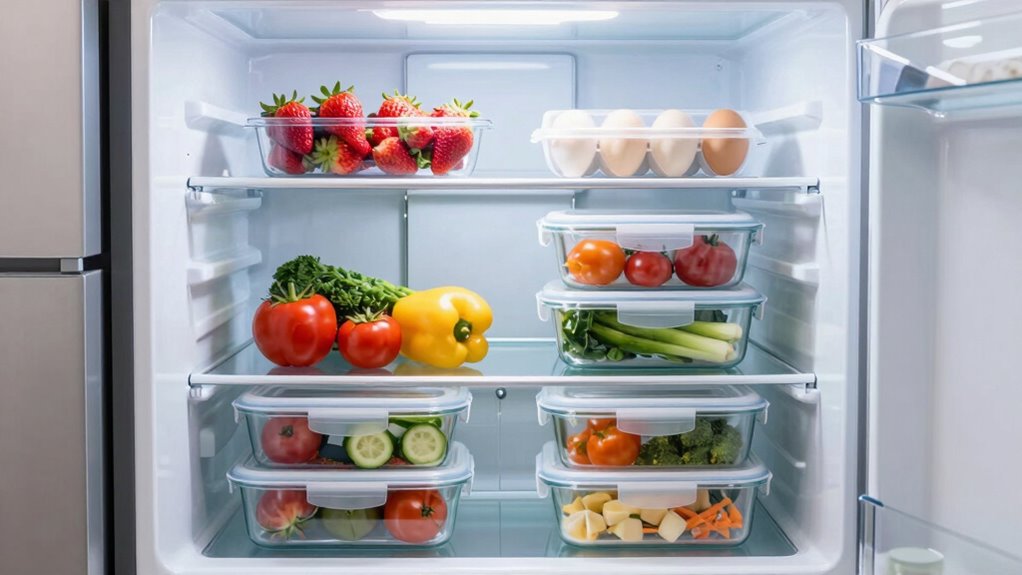

To keep your food fresh and safe, know that most leftovers last 2-3 days in the fridge, while cooked meats can stay good for 3-4 days. Dairy like cheese stays fresh for about a week, and fruits or vegetables typically last 3-7 days depending on the type. Use airtight containers and label everything with dates to track storage times. Continuing on will help you master proper food shelf life and prevent waste or spoilage.

Get health and wellness essentials delivered free with Prime
- Fast, free delivery on millions of items
- Prime Video, Amazon Music and more included
- Member-only deals all year
Key Takeaways
- Most perishable foods like cooked leftovers last 2 to 3 days in the fridge.
- Raw meats and seafood should be used within 1 to 2 days for safety.
- Dairy products like cheese and milk typically last 1 to 2 weeks in the fridge.
- Fruits and vegetables generally stay fresh 3 to 7 days, depending on the type.
- Proper packaging and consistent refrigeration help extend food freshness and prevent spoilage.

Have you ever wondered how to keep your food fresh and safe for as long as possible? It’s a common concern, especially when you want to avoid waste and protect your health. Understanding expiration dates and following proper freezer guidelines can make a big difference. Expiration dates, often labeled as “sell by,” “use by,” or “best before,” aren’t just suggestions—they’re helpful indicators of when food is at its peak quality and safe to consume. However, they aren’t foolproof. For perishable items like dairy, meats, and cooked leftovers, it’s best to rely on your senses and proper storage times rather than dates alone.
Understanding expiration dates helps ensure food safety and reduce waste.
When it comes to freezing, your freezer guidelines play an essential role in extending the life of your food. Most foods can be kept safely frozen for several months if stored correctly, but many don’t need to stay frozen forever. For example, raw meats like chicken or beef generally last 9 to 12 months in the freezer, while cooked leftovers are best used within 2 to 3 months. To guarantee your food stays fresh and safe, always label packages with the date you froze them, so you know exactly how long they’ve been stored. Proper packaging is vital too—use airtight containers or freezer bags to prevent freezer burn and contamination, which can compromise quality.
You should also be aware that not all foods have the same freezer lifespan. Fruits and vegetables may last 8 to 12 months, but their texture and flavor could diminish over time. Dairy products like cheese can last up to 6 months in the freezer, but their consistency may change once thawed. Meat and seafood are more sensitive; they’ll stay safe longer if kept at consistent freezing temperatures below 0°F (-18°C). Following freezer guidelines helps prevent accidental spoilage and guarantees you’re consuming food at its best quality. Additionally, understanding the contrast ratio of your projector can significantly enhance your viewing experience by providing better depth and clarity in dark scenes.
airtight food storage containers
As an affiliate, we earn on qualifying purchases.
As an affiliate, we earn on qualifying purchases.
Frequently Asked Questions
Can I Eat Leftovers After the Expiration Date?
You shouldn’t eat leftovers after the expiration date, as it can compromise food safety. Expiration dates are guidelines for freshness and safety, but they aren’t set in stone. Check for signs of spoilage like bad smell, mold, or sliminess before deciding. Trust your senses—if anything seems off, it’s better to discard leftovers to avoid foodborne illnesses. When in doubt, it’s safer to throw them out.
How Can I Tell if Dairy Has Spoiled?
You can tell if dairy has spoiled by smelling it; a strong, sour smell indicates spoilage. Check for visible spoilage signs like mold, discoloration, or a slimy texture. If the dairy smells off or shows any of these signs, it’s safest to discard it. Trust your senses—if something seems unusual, don’t risk eating it. When in doubt, it’s better to be safe than sorry.
Is It Safe to Freeze Cooked Leftovers?
Yes, you can freeze cooked leftovers safely, turning your fridge into a fortress of freshness. Just guarantee you store them in airtight containers, label with dates, and follow freezer safety guidelines. When reheating leftovers, make sure they reach an internal temperature of 165°F to kill bacteria. Freezing extends their lifespan, so you can enjoy your meals later without worry, keeping your food safe and flavorful.
Do Different Fridge Temperatures Affect Food Longevity?
Yes, different fridge temperatures influence food longevity. If your fridge experiences temperature fluctuations, it can diminish refrigeration efficiency, causing foods to spoil faster. Keep your fridge consistently at or below 40°F (4°C) to maximize freshness and safety. Proper temperature control prevents bacteria growth and extends the life of perishable items. Regularly check your fridge thermometer to guarantee it maintains an ideal temperature for safe food storage.
How Can I Prevent Cross-Contamination in the Fridge?
Did you know that cross-contamination causes up to 48 million illnesses annually? To prevent it in your fridge, always practice separate storage by keeping raw meats on the bottom shelf and ready-to-eat foods above. Use proper labeling to identify items quickly and avoid accidental mix-ups. Regularly clean shelves and containers to eliminate bacteria, and never reuse marinades or utensils that touched raw meat without washing thoroughly.
food label maker for expiration dates
As an affiliate, we earn on qualifying purchases.
As an affiliate, we earn on qualifying purchases.
Conclusion
Now that you know how long different foods last in your fridge, you can avoid throwing out good eats and prevent spoilage. Sticking to these storage rules keeps your meals fresh and your kitchen running smoothly. Remember, a stitch in time saves nine—it’s better to be safe than sorry with food safety. Keep an eye on expiry dates and storage times, and you’ll be all set to enjoy your groceries without any surprises.
freezer storage bags for meat and leftovers
As an affiliate, we earn on qualifying purchases.
As an affiliate, we earn on qualifying purchases.
food safety refrigerator thermometer
As an affiliate, we earn on qualifying purchases.
As an affiliate, we earn on qualifying purchases.
Cold & flu season Picks
humidifiers
As an affiliate, we earn on qualifying purchases.