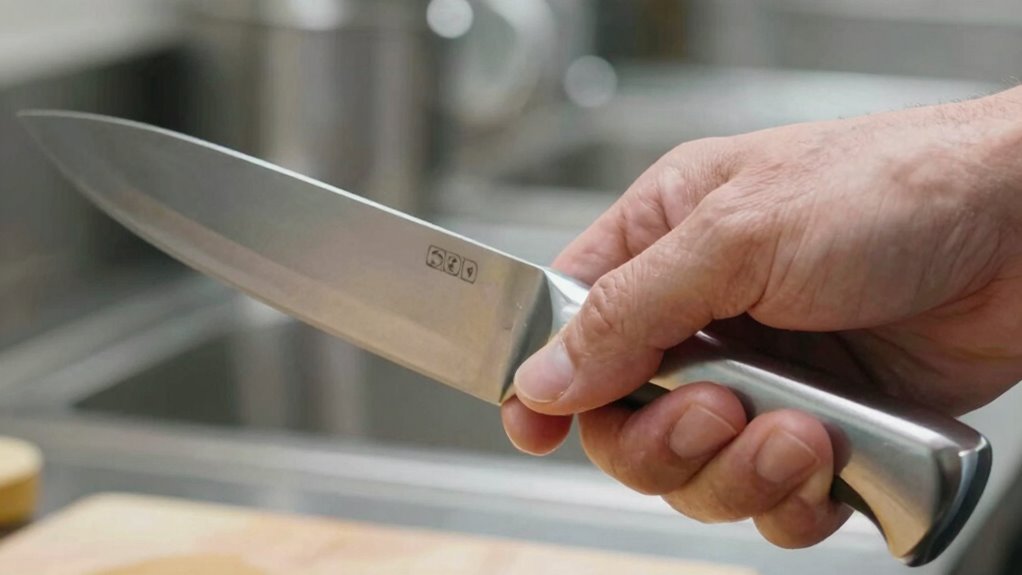

To prevent accidents while using a kitchen knife, you should adopt a proper grip by pinching the blade’s base between your thumb and forefinger, then wrapping your remaining fingers around the handle. This technique offers better control and reduces the chance of slipping. Maintaining a relaxed grip, combined with the correct cutting technique, makes your cuts safer and more precise. Keep handling your knife this way, and you’ll discover more tips to improve safety and skills.
Key Takeaways
- Adopt a pinch grip by gripping the blade’s base with your thumb and forefinger for better control.
- Keep fingers curled inward on the handle to protect fingertips from slipping.
- Maintain a relaxed yet firm hold to prevent fatigue and maintain precision.
- Use a rocking cutting motion with the tip of the knife on the surface to improve stability.
- Regularly sharpen knives to reduce excessive force and improve grip safety during cutting.
Have you ever wondered how to prevent cuts and injuries while using kitchen knives? One of the most effective ways is by changing how you grip your knife. A proper grip not only improves your control but also minimizes the risk of slipping, which is often the cause of cuts. When you focus on your grip, you also set the foundation for better cutting techniques, making your prep work safer and more efficient. Many home cooks overlook this simple adjustment, but it can considerably reduce accidents in the kitchen.
The first step is to guarantee your knife is well-sharpened. Dull knives require more force to cut through food, increasing the chance of slipping and mishandling. Regular knife sharpening keeps the edge crisp, so you can cut smoothly with less effort. When your knife is sharp, you can focus more on your cutting technique rather than fighting to get through ingredients. Proper sharpening also helps you maintain better control, which is essential for safe handling.
Now, let’s talk about your grip. Instead of holding the knife handle tightly with your entire hand, try gripping it with a firm but relaxed hold. Place your thumb and forefinger on either side of the blade’s base, just above the handle, creating a pinched grip. This grip gives you more precision and control, allowing for delicate cuts and reducing the risk of the knife slipping. Your remaining fingers should wrap around the handle securely, but without gripping too tightly. This way, you maintain a balance between control and flexibility.
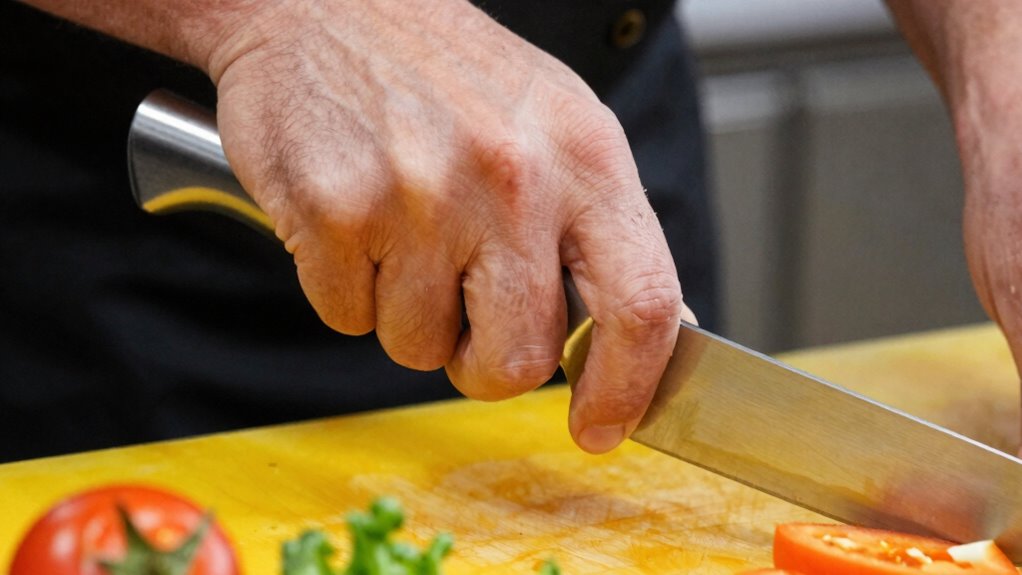
In addition to your grip, paying attention to your cutting techniques is vital. Use a rocking motion, keeping the tip of the knife on the cutting board and lifting the handle to cut through ingredients. This method offers better control and reduces the chance of your hand slipping onto the blade. When you cut, keep your fingers curled inward, using your knuckles as a guide. This “claw grip” helps protect your fingertips from accidental cuts. Combining this technique with your proper grip on the knife creates a safer cutting environment.
Practicing these steps can make a huge difference. Remember, a sharp knife combined with a secure grip and good cutting techniques can prevent many common kitchen accidents. Take the time to sharpen your knives regularly and focus on how you hold and maneuver them. Proper grip and technique are essential components of safe knife handling. With consistent practice, you’ll develop safer habits that keep your fingers intact and your cooking experience more enjoyable. Making these small adjustments isn’t just about better technique — it’s about protecting yourself while you create delicious meals.
Frequently Asked Questions
What Are the Signs of a Dull Kitchen Knife?
You’ll notice a dull kitchen knife struggles to cut through foods, requiring more force and causing jagged edges. The blade maintenance becomes essential here, as a dull knife can be dangerous. To keep your knife sharp, use proper sharpening techniques regularly. If you feel resistance or need extra effort, it’s time to sharpen your blade. Maintaining a sharp edge reduces accidents and makes your cooking safer and more efficient.
How Often Should I Replace My Kitchen Knives?
You should replace your kitchen knives every 1 to 2 years, depending on knife maintenance and blade materials. If your blades become dull despite proper care, or if they chip or crack, it’s time for a new set. Regularly sharpening and honing extend their lifespan, but high-quality materials like stainless steel or ceramic can last longer. Trust your cutting performance and safety to decide when it’s time for replacement.
Can a Proper Grip Improve Cutting Efficiency?
Your knife grip is the steering wheel of your cooking journey, guiding your cuts smoothly and precisely. Using proper knife grip techniques sharpens your cutting efficiency tips, turning every slice into a ballet of control and accuracy. When you hold your knife correctly, you reduce fatigue and increase speed, making prep work feel effortless. A confident grip transforms chopping from a chore into a skillful dance, elevating your culinary game effortlessly.
Are There Specific Knives Better for Safety?
Yes, some knives are better for safety due to their handle ergonomics and safety knife materials. Look for knives with non-slip, cushioned handles that fit comfortably in your hand to prevent slipping. Safety knife materials like reinforced plastics or rubberized grips enhance control. These features help you maintain a secure grip, reducing accidents. Choosing a knife designed with safety in mind makes your cutting tasks safer and more efficient.
How Do I Safely Store My Kitchen Knives?
You should store your kitchen knives safely by using knife storage options like knife blocks, magnetic strips, or knife sheaths. These methods keep blades protected and prevent accidental cuts. When using knife sheaths, slide the blades in carefully and make sure they’re secure. Avoid tossing knives in drawers, as this increases the risk of injury. Proper knife storage helps maintain sharpness and keeps your kitchen safe for everyone.
Conclusion
By simply adjusting your grip, you might just prevent a kitchen accident before it happens. It’s funny how a small change can make such a big difference, isn’t it? When you’re chopping away, remember that your safety is in your hands—literally. So, next time you reach for your knife, think about your grip. Sometimes, the smallest tweak can turn a potential mishap into a safe, smooth cooking experience.