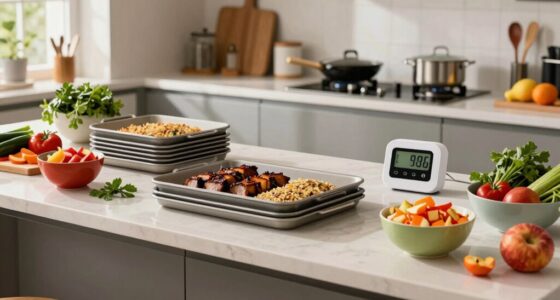
Many people make common mistakes with leftovers, like not cooling food promptly, overpacking containers, or forgetting to label them with dates. These habits can lead to bacteria growth, food spoilage, or waste. Reheating unevenly or storing leftovers at unsafe temperatures worsens the risk of foodborne illness. If you want to avoid these pitfalls and keep your leftovers safe longer, there’s more to learn about proper storage and handling techniques.
Key Takeaways
- Failing to cool leftovers quickly and properly, which allows bacteria to grow during unsafe temperature windows.
- Ignoring signs of spoilage like bad odors, mold, or slimy textures instead of discarding questionable leftovers.
- Not labeling leftovers with dates, leading to consumption of spoiled or unsafe food beyond recommended storage times.
- Reheating leftovers unevenly or insufficiently, risking cold spots where bacteria can survive.
- Overstuffing containers or storing large portions in deep containers, which delays cooling and promotes spoilage.
Common Mistakes When Storing Leftovers Safely
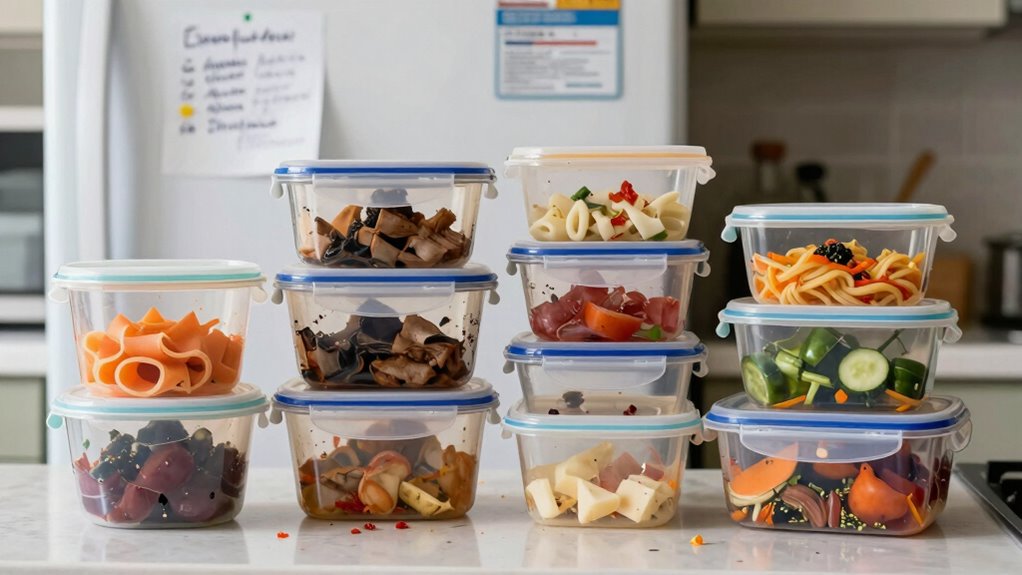
Storing leftovers improperly can quickly lead to foodborne illnesses, so it’s important to handle them correctly. One common mistake is not practicing proper portion control; stuffing too much food into a single container can trap heat and hinder cooling. Use smaller containers or divide large portions to promote even temperature control, which is essential for safety. When leftovers are stored in overly large portions, they take longer to cool to safe temperatures, increasing bacteria growth risk. Always divide hot food into shallow, airtight containers to help it cool quickly and evenly. This method also helps maximize cooling efficiency and reduces the risk of spoilage. Additionally, understanding the contrast ratio of your storage environment can influence how quickly leftovers cool and how well they are preserved. Proper portion control and temperature management are key to preserving leftovers safely and preventing health hazards. Additionally, using air circulation techniques can help facilitate more uniform cooling around stored food. Implementing these practices can significantly reduce the likelihood of foodborne pathogens developing in your leftovers. Furthermore, paying attention to the humidity levels within your storage area can help prevent condensation that promotes bacterial growth.
How to Cool and Portion Leftovers for Freshness

To keep your leftovers fresh, use shallow containers to speed up cooling. Make sure to cover them tightly and portion appropriately to prevent spoilage. Label each container so you know what’s inside and when it needs to be eaten. Proper flavor preservation techniques also help maintain the original taste and aroma of your leftovers. Additionally, employing food safety practices such as avoiding cross-contamination can further extend the freshness and safety of your stored food. To maximize safety, regularly check your storage gear for cleanliness and proper function. Incorporating Free Floating principles, like ensuring your storage areas are well-ventilated, can also help maintain optimal conditions for leftovers. Using impact investing strategies to support sustainable packaging options can further reduce environmental impact in your food storage.
Use Shallow Containers
Using shallow containers is one of the best ways to cool and store leftovers quickly and safely. They allow heat to dissipate faster, reducing bacteria growth. When choosing containers, consider these tips:
- Use shallow containers to promote even cooling.
- Select container material like glass or BPA-free plastic for durability and safety.
- Stack containers properly to maximize fridge space, but avoid overpacking to prevent uneven cooling.
- Fill containers only halfway to avoid spillage and guarantee enough air circulation.
- Proper food storage techniques using shallow containers can also help maintain the quality and nutritional value of leftovers.
Cool Quickly, Cover Tight
Cooling leftovers quickly is key to maintaining their freshness and safety. To do this, transfer hot food into shallow containers made of metal or glass, which help food cool faster by increasing surface area. Use containers with tight-fitting lids to prevent contamination and moisture loss. Once the leftovers are in the container, place them in the refrigerator promptly, aiming to reduce the food temperature below 40°F within two hours. Avoid leaving leftovers in large, deep containers, as they trap heat and slow cooling. Cover the container tightly before refrigeration to maintain quality and prevent odors from spreading. Proper cooling and covering ensure leftovers stay safe to eat and retain their flavor and texture longer. Incorporating proper storage techniques can further extend the freshness of leftovers and prevent spoilage. Additionally, organizing leftovers in the refrigerator by temperature zones can help keep perishable foods safer and fresher for longer. Ensuring proper recycling practices for kitchen gear like pots and pans also contribute to eco-friendly disposal and sustainable living. To enhance food safety, regularly cleaning refrigerator shelves and avoiding cross-contamination can prevent bacteria transfer between foods. Proper refrigerator organization not only helps with safety but also makes meal prep more efficient.
Portion Appropriately, Label
Properly portioning leftovers helps prevent waste and keeps food safe to eat. Use portion control to divide large amounts into smaller, manageable servings that cool quickly and evenly. Proper labeling is essential—write the date and contents on each container to track freshness and avoid foodborne illness. Here are some tips:
- Divide leftovers into shallow containers for faster cooling.
- Use single-serving sizes to make reheating easier.
- Label each container with the date and type of food.
- Store leftovers promptly in the fridge or freezer to prevent bacterial growth.
- Consider using environmentally-friendly craft patterns to repurpose food containers or packaging, reducing waste and supporting sustainability. Additionally, understanding proper sound quality techniques can help ensure your food stays fresh longer by maintaining optimal storage conditions. Incorporating knowledge of water safety practices can further enhance your food storage methods, preventing spoilage and contamination. Implementing these practices can improve topical authority on food safety and help maintain optimal food quality.
How Long Are Leftovers Safe to Eat? Key Guidelines
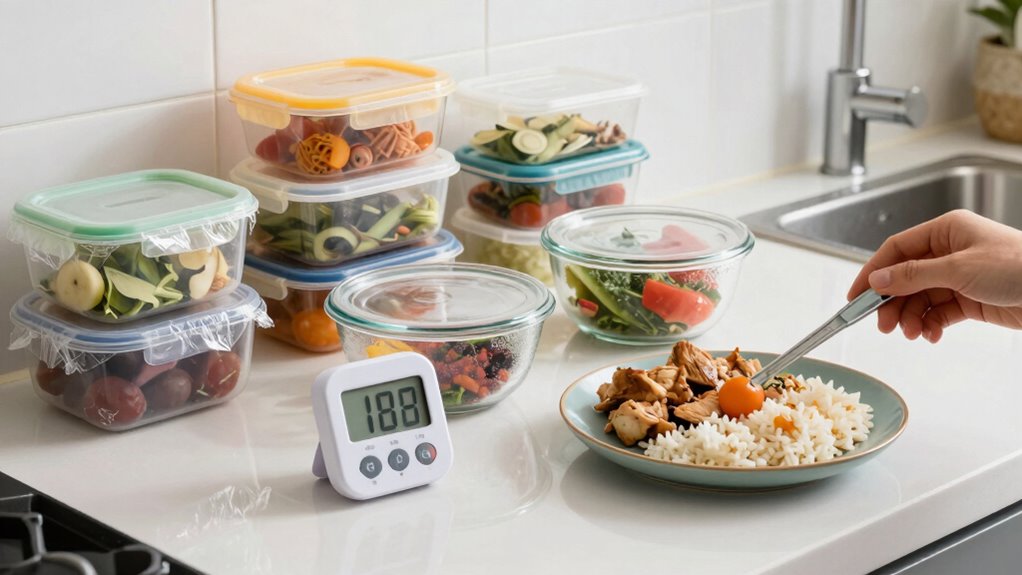
Leftovers can be a convenient way to save time and reduce waste, but knowing how long they stay safe to eat is essential. Generally, cooked leftovers are safe for about 3 to 4 days when stored properly in airtight storage containers. After this period, the risk of foodborne illnesses increases, even if the food looks and smells fine. Proper storage containers help maintain freshness and prevent cross-contamination, but they don’t extend safety beyond recommended timelines. If leftovers have been left out at room temperature for more than two hours, discard them to avoid potential bacteria growth. Always label containers with the date you cooked or stored the food, so you can easily track how long it’s been in your fridge. Food safety guidelines emphasize that consuming leftovers beyond recommended durations can be risky. Additionally, awareness of foodborne pathogens helps you recognize when leftovers might pose health risks. Proper storage practices are vital to maintaining food safety. For example, understanding temperature control can help prevent bacterial growth and extend the safety of leftovers. When in doubt, it’s safer to toss leftovers than risk foodborne illnesses.
How to Tell If Leftovers Have Gone Bad
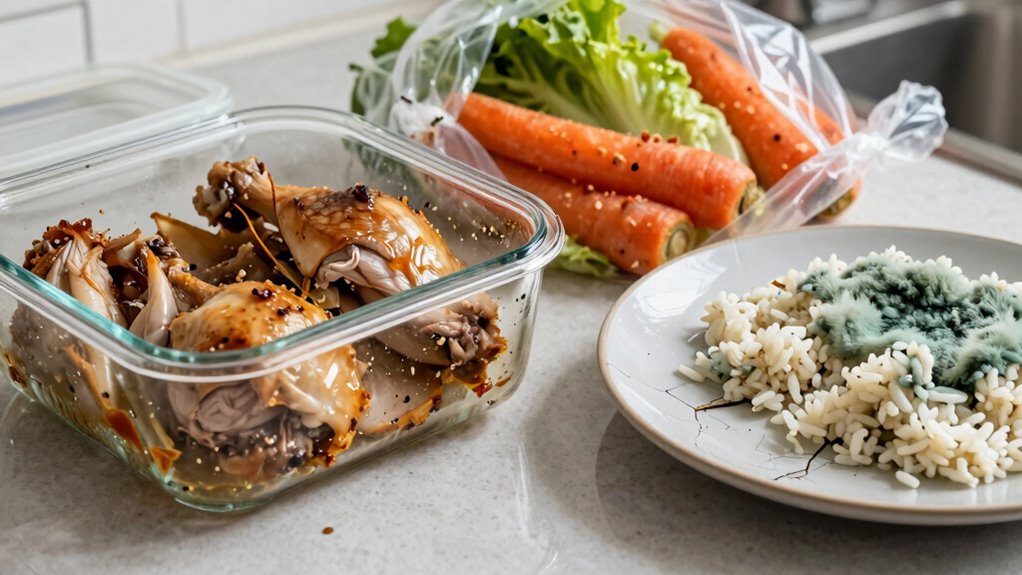
Even if leftovers look and smell okay, they can still be unsafe to eat. Recognizing spoilage indicators is vital to avoid food poisoning. Here are four ways to tell if your leftovers have gone bad:
- Unusual smell: A sour, rancid, or off odor signals spoilage.
- Change in appearance: Slimy textures, mold, or discoloration indicate bacterial growth.
- Off taste: If it tastes strange or different, discard it immediately.
- Extended storage: If leftovers have been in the fridge beyond recommended times, they’re more likely to be unsafe. Additionally, understanding food safety principles can help prevent illness from spoiled leftovers.
Always trust your senses and when in doubt, throw it out. Consuming spoiled leftovers can lead to food poisoning, so being cautious is essential.
Reheating Leftovers Safely: Tips and Techniques
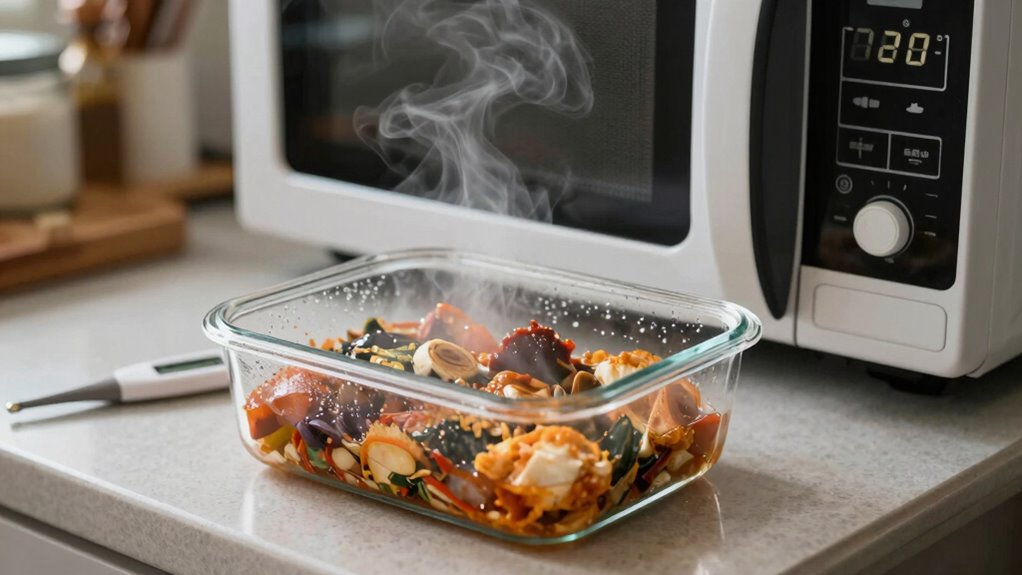
Reheating leftovers safely is crucial to prevent foodborne illness and guarantee your meal remains delicious. When using microwave reheating, stir the food halfway through to ensure even heat distribution and avoid cold spots where bacteria can survive. Use a microwave-safe cover to trap steam and promote uniform heating. For oven warming, set your oven to at least 165°F (74°C), and place leftovers in an oven-safe dish covered with foil. Heating thoroughly is essential; use a food thermometer to check that the internal temperature reaches this safe level. Avoid reheating multiple times, as repeated heating can increase bacteria growth. By following these tips, you ensure leftovers are both safe and tasty for your next meal.
Why Airtight Containers Prevent Food Contamination
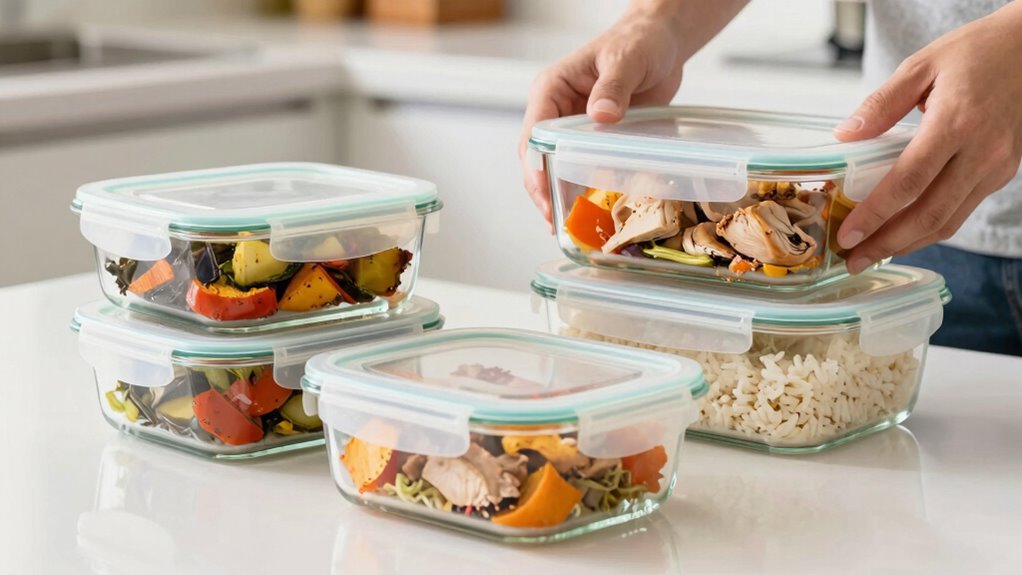
Airtight containers play a crucial role in preventing food contamination by creating a sealed environment that keeps out bacteria, mold, and other harmful microorganisms. By sealing your leftovers properly, you reduce exposure to air and moisture, which are key factors in spoilage. Here are four reasons why airtight containers are essential:
- They block airborne bacteria and mold spores from entering.
- They prevent moisture loss or absorption that can lead to spoilage.
- They inhibit cross-contamination between different foods stored together.
- They maintain peak freshness, reducing the risk of foodborne illnesses.
Using airtight containers ensures your leftovers stay safe and uncontaminated longer. When you prioritize these containers, you’re actively reducing the chance of food contamination and extending the shelf life of your food. Proper storage is a simple yet effective step toward better food safety.
Signs Your Leftovers Are Spoiled and Should Be Discarded
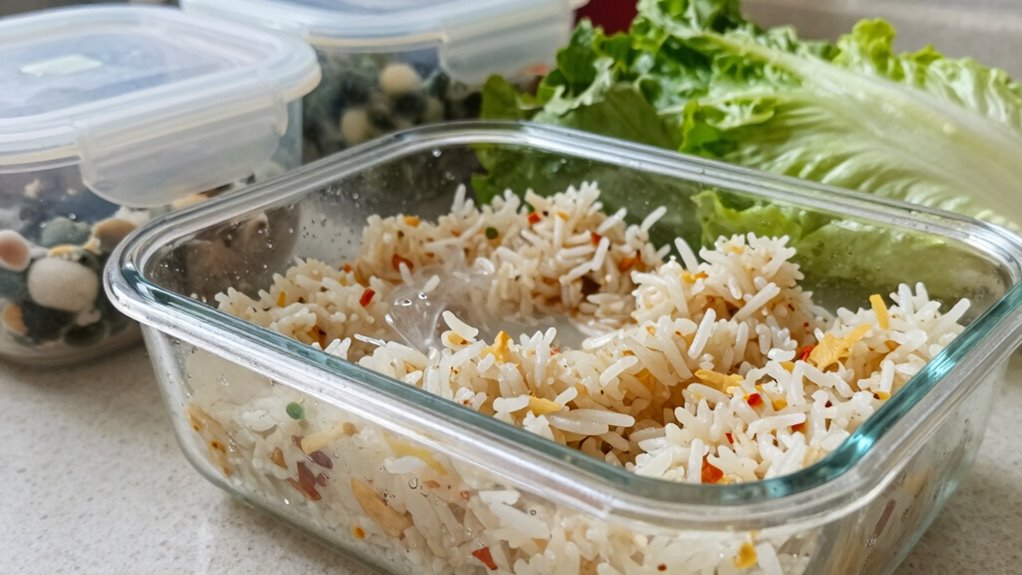
You should always check your leftovers before eating them, as spoiled food can be harmful. Look for unusual odors, off-colors, or slimy textures that don’t belong. If you notice mold or excess moisture, it’s safest to throw the leftovers away.
Unusual Odors or Off-Colors
Unusual odors or off-colors are clear indicators that leftovers may no longer be safe to eat. If your food smells sour, rancid, or just off, don’t take the risk. Similarly, off colors like gray, green, or slimy appearances signal spoilage. Here are four signs to watch for:
- Unpleasant, strange odors that weren’t there before
- Discoloration, such as a dull or faded look
- Green or gray patches indicating mold growth
- Slimy or sticky textures that shouldn’t be present
Trust your senses—if anything seems off, it’s best to discard the leftovers. Consuming spoiled food can lead to food poisoning or other health issues. When in doubt, throw it out.
Slimy or Excess Moisture
When leftovers develop a slimy or overly moist surface, it’s a clear sign they’ve spoiled and should be discarded. Moisture buildup encourages bacterial growth, leading to slimy textures that indicate decay. If your food feels sticky or appears wet, don’t risk eating it. Here’s what to watch for:
| Signs of Spoiled Leftovers | Common Causes | Safety Tips |
|---|---|---|
| Slimy textures | Bacterial activity | Discard if slimy |
| Excess moisture buildup | Improper storage | Use airtight containers |
| Unpleasant smell | Fermentation or decay | Smell test always |
Visible Mold or Growth
Visible mold or growth on leftovers is a clear and unmistakable sign that they have spoiled and should be discarded immediately. Mold prevention is key to avoiding health risks. When you see visible growth, do not attempt to cut away the mold; spores can penetrate deeper than they appear. Here are signs to watch for:
- Bright or fuzzy patches of mold on surface.
- Unusual discoloration or dark spots.
- Fuzzy or powdery textures that weren’t there before.
- Any visible growth that indicates microbial activity.
Best Habits to Reduce Food Waste and Keep Leftovers Safe
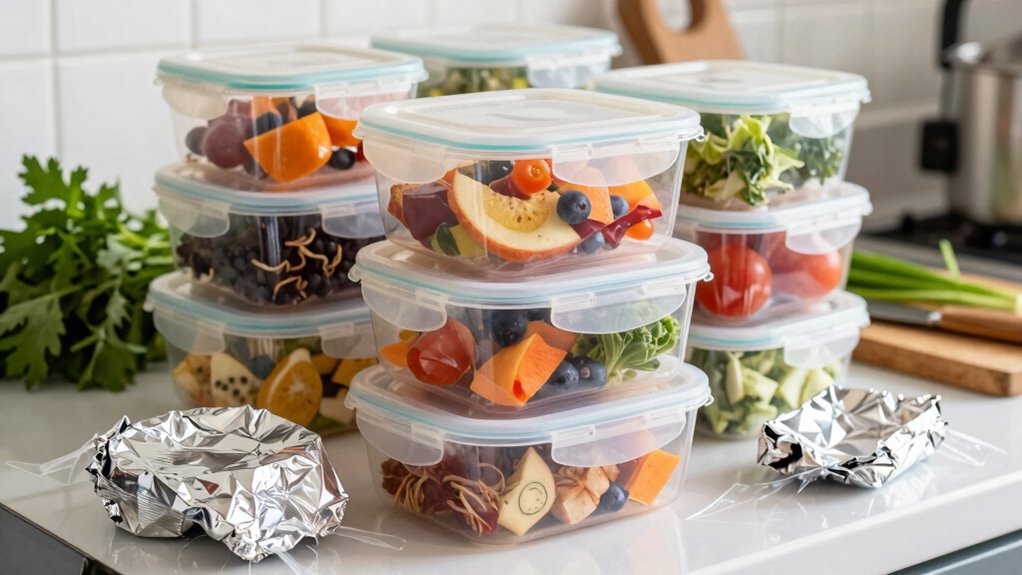
To effectively reduce food waste and keep leftovers safe, adopting good habits is essential. Always label leftovers with dates so you know when to consume or discard them. When dining at a food truck or enjoying gourmet snacks, plan portion sizes to prevent excess leftovers. Store leftovers in airtight containers to maintain freshness and prevent spoilage. Keep your fridge at the right temperature—below 40°F—to inhibit bacteria growth. Use clear containers for easy identification, reducing the chance of forgotten food. When reheating, ensure leftovers reach the proper internal temperature. By practicing these habits, you minimize waste and ensure leftovers stay safe to eat. Staying organized, mindful of storage times, and handling leftovers properly can make a significant difference in food safety and waste reduction.
Organizing Your Fridge for Easy and Safe Leftover Storage
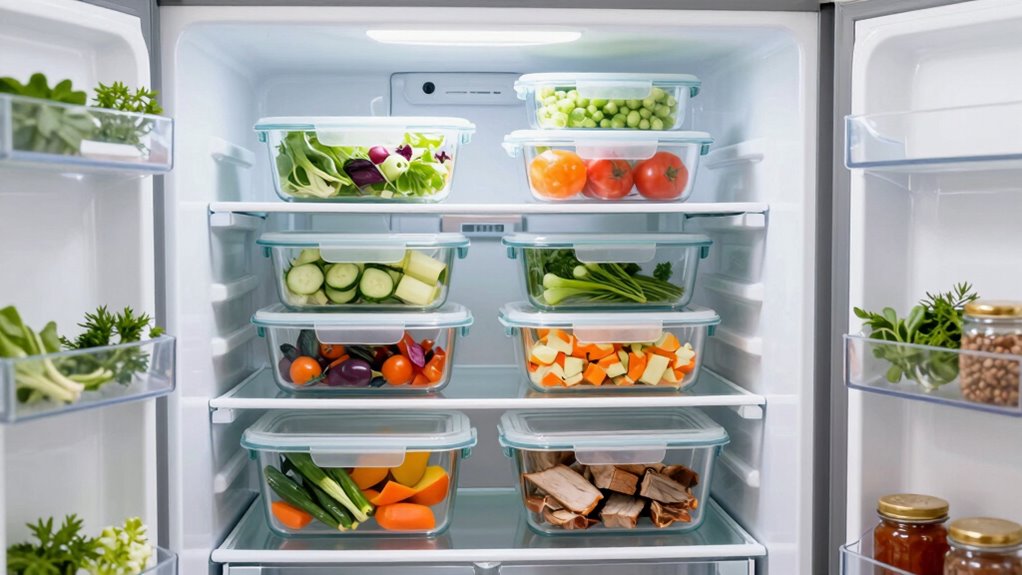
A well-organized fridge makes it easier to store leftovers safely and access them quickly. To do this, focus on effective fridge organization and food labeling. First, designate specific zones for leftovers, placing them on the top or front for easy reach. Second, use clear containers to keep leftovers visible and avoid confusion. Third, label each container with food labeling, including the date stored, to track freshness. Fourth, arrange the fridge so raw meats are separate from cooked foods to prevent cross-contamination. Keep frequently used leftovers in the front for quick access. Regularly clean and reassess your fridge’s layout to maintain organization. Proper fridge organization not only reduces waste but also helps ensure leftovers stay safe to eat longer.
Simple Steps to Keep Leftovers Fresh and Safe Longer
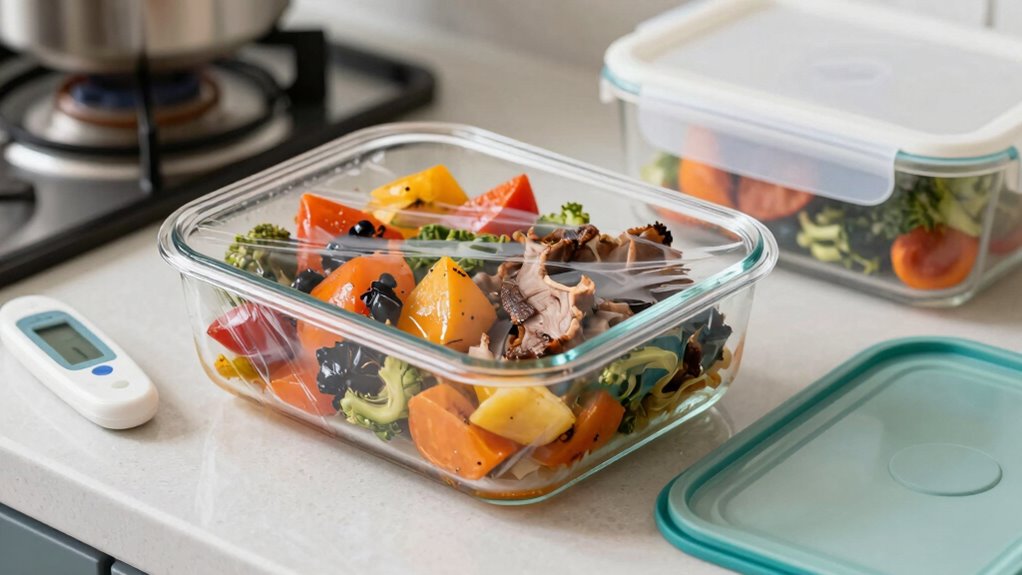
Keeping leftovers fresh and safe longer requires following some simple yet effective steps. First, always use proper food storage techniques by placing leftovers in airtight containers. Label your food with dates to track freshness and prevent spoilage. This practice helps you know what to consume first and reduces waste. Store leftovers promptly, ideally within two hours of cooking, to inhibit bacterial growth. Keep your fridge at or below 40°F (4°C) to maintain safety. Use the table below as a quick reference for ideal storage times:
| Food Type | Max Storage Time |
|---|---|
| Cooked meats | 3-4 days |
| Cooked vegetables | 3-4 days |
| Soups and stews | 3-4 days |
| Dairy-based dishes | 2-3 days |
Frequently Asked Questions
Can I Reheat Leftovers Multiple Times Safely?
You can reheat leftovers multiple times if you follow proper reheating procedures and use safe storage containers. Make sure to reheat food to at least 165°F (74°C) to kill bacteria. Store leftovers in airtight containers to prevent contamination. Only reheat what you plan to eat and avoid reheating multiple times, as each cycle increases the risk of bacterial growth. Always check for spoilage before reheating leftovers again.
What Are the Best Signs That Leftovers Are Unsafe to Eat?
You’ll know leftovers are unsafe if they develop an off odor detection or a sour smell, indicating bacterial growth. Check for mold inspection clues like fuzzy spots or discoloration, which signal spoilage. If leftovers look slimy, have a strange texture, or you notice an unusual odor, it’s best to discard them. Trust your senses—when in doubt, throw it out to avoid foodborne illnesses.
How Does the Type of Food Affect Storage Duration?
The type of food affects storage duration because different foods have varying shelf lives. Food type variations, like cooked meats or dairy, typically last 3-4 days, while fruits and vegetables might stay good for a week. You should always adhere to storage time limits to prevent spoilage or foodborne illness. Properly storing leftovers in airtight containers and labeling them helps you track freshness and avoid eating unsafe food.
Is It Safe to Eat Leftovers That Have Been Left Out Overnight?
Leaving leftovers out overnight is like leaving a garden unwatered—bacteria thrive in the warmth. It’s unsafe because of temperature abuse, which accelerates spoilage. Even if it looks okay, improper labeling and storage mean you can’t be sure how long it’s been exposed to danger zones. To stay safe, refrigerate leftovers within two hours, and avoid eating anything left out overnight, no matter how tempting it looks.
How Can I Prevent Cross-Contamination When Storing Leftovers?
To prevent cross-contamination when storing leftovers, always use proper container sealing to keep foods separate and fresh. Store different types of leftovers in separate storage containers, especially raw meats and cooked items, to avoid cross-contact. Label containers with dates, and place them on the fridge shelves in an organized way. This helps you quickly identify and safely access leftovers while reducing the risk of contamination.
Conclusion
By avoiding common leftovers mistakes, you’ll keep your food safe and fresh like a well-oiled machine. Proper storage, timely cooling, and smart reheating can turn leftovers from potential hazards into tasty treats. Think of your fridge as a fortress guarding your health—organized and vigilant. With these simple habits, you’ll reduce waste and enjoy leftovers worry-free, making your kitchen a safe haven rather than a minefield. Stay vigilant, and your leftovers will always serve you well!