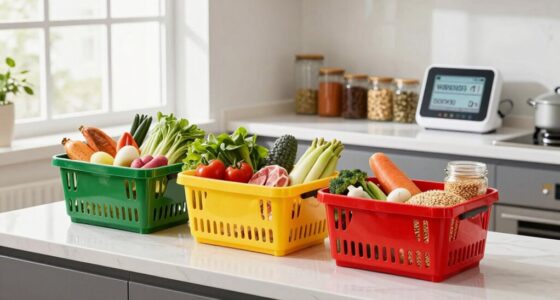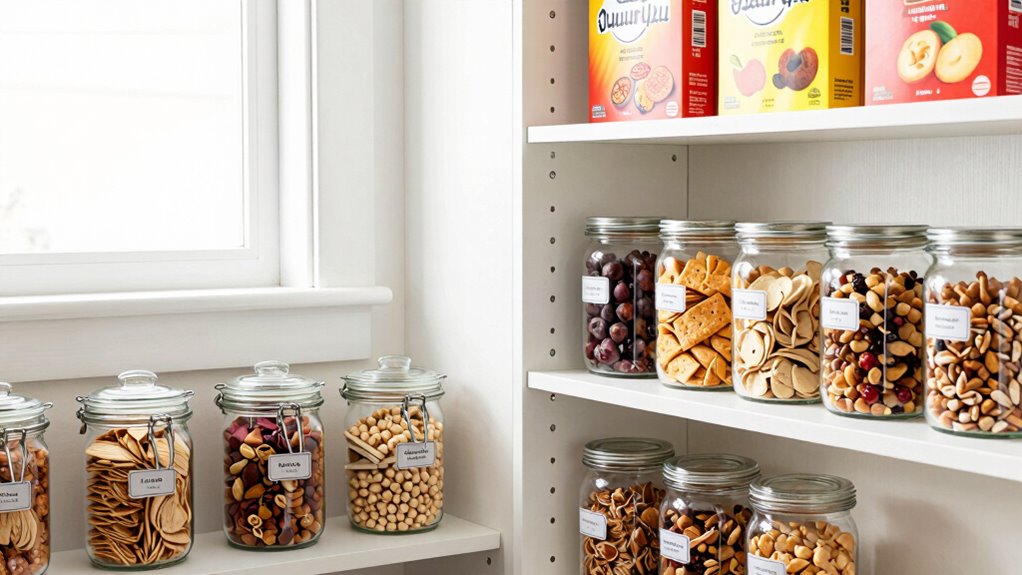

Resetting your pantry is a smart way to cut snacking without relying on willpower. By removing tempting junk foods and swapping in healthy options, you create an environment that encourages better choices. Organizing your shelves with clear containers and easy-to-reach nutritious snacks makes mindful eating automatic. Arranging items strategically boosts long-term habits and reduces impulsive treats. Keep discovering simple tips to maintain your pantry reset and make healthy snacking effortless.
Key Takeaways
- Remove tempting, unhealthy snacks from your pantry to eliminate impulsive choices.
- Organize healthy options visibly in clear containers at eye level for easy selection.
- Store less nutritious foods out of sight to reduce temptation and promote mindful snacking.
- Stock your pantry with nutritious, high-fiber, protein-rich snacks that promote fullness and satisfaction.
- Use labels and grouping to streamline routines and reinforce positive, healthy eating habits effortlessly.
Why Resetting Your Pantry Reduces Snacking Temptations
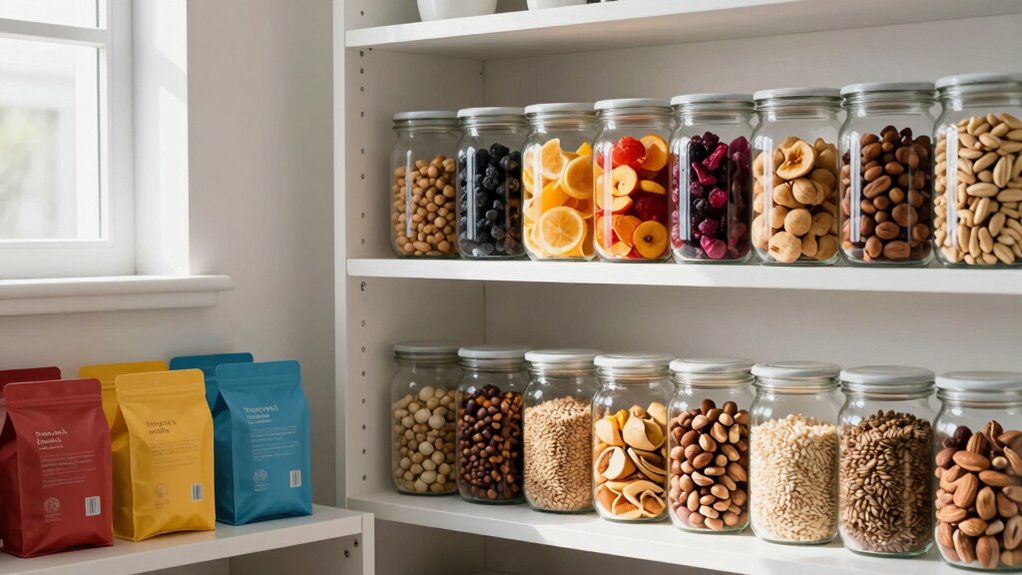
Resetting your pantry makes it easier to resist unhealthy snack cravings because it removes temptation and creates a more intentional environment. When you clear out junk food and high-sugar treats, you set the stage for guilt-free indulgences that satisfy your needs without guilt. This process encourages mindful snacking, where you think about what you’re eating and why. Instead of mindlessly reaching for chips or candy, you become more aware of healthier choices that truly nourish or satisfy you. A reset helps break the cycle of impulsive snacking rooted in temptation, making it easier to develop habits that support your goals. Additionally, understanding sound vibrations can also help you manage your food budget more effectively, ensuring your pantry reset aligns with your financial goals. By removing tempting foods, you increase your chances of making mindful, deliberate snack choices, reducing cravings and supporting long-term wellness. Creating a healthy eating environment after your reset further reinforces your new habits and supports sustained success. Incorporating mindful eating practices can deepen your awareness and help sustain your new habits over time. Recognizing the role of food environment can empower you to craft a space that naturally promotes healthier choices.
Identify and Remove Tempting Unhealthy Snacks
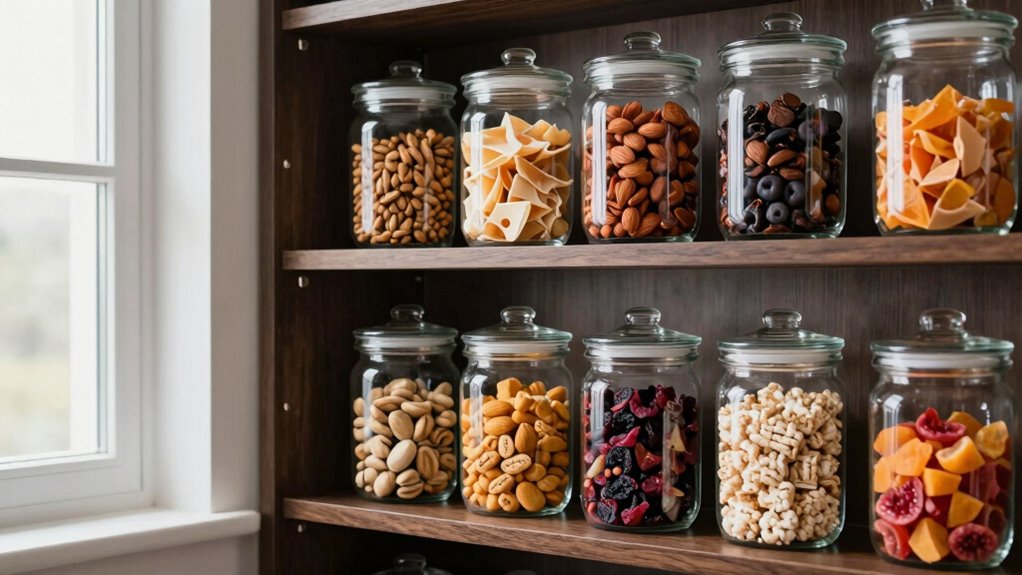
Start by spotting the unhealthy snacks that trigger your cravings and make it hard to resist. Once identified, remove them from your pantry to eliminate temptation. Then, replace those snacks with nutritious alternatives to keep your options healthy and satisfying. Incorporating healthy cooking techniques can also help you prepare tasty, low-calorie snacks that satisfy your cravings without derailing your goals. Utilizing electric bike technology for outdoor activities can also promote a more active lifestyle, reducing reliance on snacking. Being mindful of ethical consumer choices can further support making healthful and responsible decisions about your diet and lifestyle. Additionally, understanding accessibility features can help you create a more inclusive environment that encourages healthier habits for everyone. Exploring investment options in precious metals can offer a stable financial foundation to support your overall well-being and future planning.
Spot Unhealthy Snack Triggers
Unhealthy snack triggers often lurk in places where you least expect them, making it easy to reach for temptations when you’re bored or stressed. Recognizing these triggers helps you stay ahead. Common triggers include sweet cravings and emotional triggers like anxiety or boredom. To identify them, observe when you’re most tempted—after a stressful day or late at night. Use this table to spot your patterns:
| Trigger Type | Common Examples |
|---|---|
| Sweet cravings | Candy, cookies, ice cream |
| Emotional triggers | Stress, sadness, boredom |
| Situational cues | Watching TV, working at your desk |
| Time-based triggers | Late-night snacking |
| Environmental cues | Keeping snacks visible on counters |
Removing these triggers from your environment makes it easier to resist unhealthy snacks when cravings hit. Being aware of emotional triggers can help you develop healthier coping strategies. Additionally, understanding how environmental cues influence your snacking habits empowers you to make smarter choices. Recognizing these cues can also reduce mindless snacking, making it easier to stick to your health goals. Developing awareness of trigger patterns can further enhance your ability to maintain healthy eating habits over time. Incorporating habit tracking can also help you notice patterns and adjust accordingly.
Store Nutritious Alternatives
To effectively curb your snacking habits, it’s essential to replace tempting unhealthy options with nutritious alternatives. Start by stocking your pantry with easy-to-grab snacks like nuts, fresh fruit, or veggie sticks. Meal prep can help you control portions and ensure you have healthy options ready, reducing impulsive choices. When shopping, focus on calorie counting to choose snacks that satisfy without excess calories. Keep pre-portioned servings to prevent overeating. Clear out candy, chips, and sugary treats to avoid temptation. Instead, opt for high-fiber, protein-rich snacks that keep you full longer. Incorporating portion control considerations into your snack choices can help you better understand portion sizes and energy needs. Understanding survival gear essentials can also teach you about planning and preparedness, which can be applied to managing your food choices. Developing mindful eating habits can further support your efforts by making you more aware of hunger cues and emotional triggers. Additionally, practicing habit formation techniques can help reinforce healthier snacking behaviors over time. By making these swaps, you train your mind to reach for nourishing foods instead of junk, supporting your goals without relying on willpower.
Stock Your Pantry With Healthy Snack Alternatives

Having healthy snack alternatives readily available makes it easier to resist tempting junk food choices. Stock your pantry with fiber options like whole-grain crackers, nuts, and dried fruits to keep you full longer. Portion control is key—pre-portion snacks into small containers or bags to prevent overeating and make mindful choices effortless. Instead of chips or candy, reach for air-popped popcorn, roasted chickpeas, or veggie chips. Keep a variety of options to satisfy different cravings without sacrificing health. When healthy snacks are easy to grab, you’re less likely to reach for less nutritious options. This simple swap helps you stay on track, reduces unnecessary calorie intake, and supports your overall wellness goals. Regularly choosing healthy snack options can also contribute to better energy levels throughout the day. Incorporating nutrient-dense foods into your pantry can boost your nutritional intake without complicating your routine. Maintaining good indoor air quality by reducing dust and microplastics can create a healthier environment that supports your wellness efforts. Using air purifiers and proper ventilation can also help improve indoor air quality and promote a healthier living space. Having a variety of nutritional benefits readily accessible encourages healthier choices and can improve your overall diet. Consistent availability of healthy alternatives makes snacking both satisfying and beneficial.
Organize Your Pantry for Easy Access to Healthy Choices
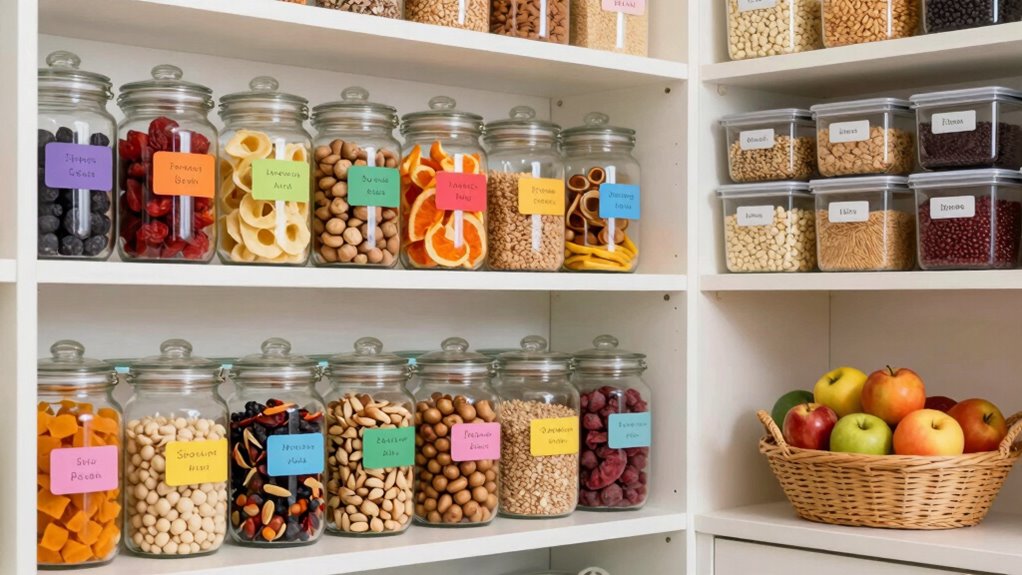
Organizing your pantry so healthy choices are front and center makes it easier to reach for nutritious snacks instead of less healthy options. When you clearly see your options, you’re more likely to pick wholesome foods during meal prep or when updating your shopping list. Use bins or baskets to group similar items like nuts, dried fruit, or whole-grain crackers. Place daily staples at eye level for quick access. Consider arranging items by type or frequency of use to streamline your routine. Here’s a simple layout:
| Healthy Snacks | Whole Grains | Protein Sources |
|---|---|---|
| Nuts & Seeds | Brown Rice | Canned Beans |
| Dried Fruit | Whole Grain Bread | Jerky |
| Snack Bars | Oatmeal | Nut Butters |
Being mindful of your food organization can help reinforce healthy choices and reduce impulsive snacking.
Practical Tips to Set Up Your Pantry and Curb Impulsive Eating
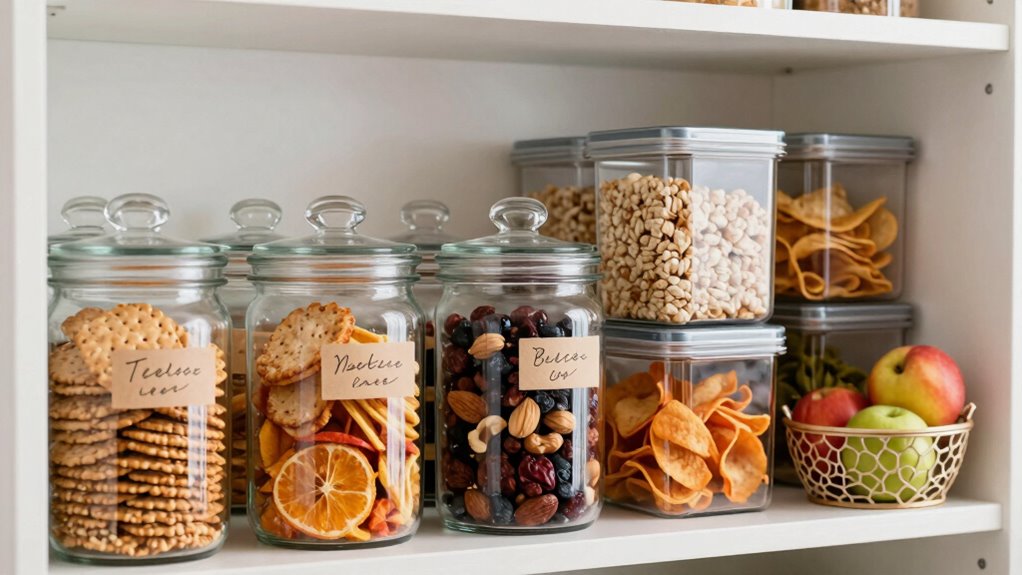
Using smart storage solutions helps you keep healthy snacks within easy reach, reducing the temptation to grab less nutritious options. Stocking your pantry with nutritious, appealing snacks makes it easier to choose wisely when cravings hit. With these simple changes, you’ll set yourself up for better habits and fewer impulsive bites.
Smart Storage Solutions
Smart storage solutions can make a big difference in controlling your snacking habits. Using bulk storage helps you buy in larger quantities and transfer items into clear, airtight containers, making it easier to see what you have and reducing impulse buys. Implementing labeling systems guarantees everything is organized and easy to identify at a glance, which discourages rummaging through unorganized snacks. Keep healthier options front and center, while less nutritious treats are stored in less accessible areas. Consider using stackable containers to maximize space and maintain order. These practical adjustments not only streamline your pantry but also create visual cues that promote mindful eating. When your snacks are well-organized and clearly labeled, you’re less likely to reach for something impulsively, helping you stay on track effortlessly.
Stock Healthy Snacks
Have you ever noticed how easily tempting snacks can lead to impulsive eating? To curb this, stock your pantry with healthy options that satisfy cravings without guilt. Focus on smart choices during meal planning and grocery shopping. Here are four tips:
- Choose whole foods like nuts, seeds, and dried fruit for natural energy.
- Keep portion-controlled snacks ready to prevent overeating.
- Opt for high-fiber, protein-rich snacks to stay full longer.
- Avoid storing processed or sugary snacks that trigger cravings.
How a Pantry Reset Supports Long-Term Snacking Habits

A pantry reset can be a powerful tool for establishing healthier long-term snacking habits because it removes tempting, unhealthy options from your immediate environment. When your pantry aesthetics are organized with wholesome snacks at eye level and junk foods out of sight, it taps into snacking psychology, making healthier choices easier. This visual cue reinforces positive behaviors and reduces impulsive snacking. By creating a space that promotes nutritious options, you’re setting a foundation for lasting change. Over time, these small adjustments influence your habits, making healthier choices feel natural. A well-organized pantry helps you stay mindful of what you’re snacking on, supporting your goals without relying on willpower. Ultimately, a strategic reset makes healthy eating more accessible and sustainable in the long run.
Troubleshooting Common Challenges in Resetting Your Pantry
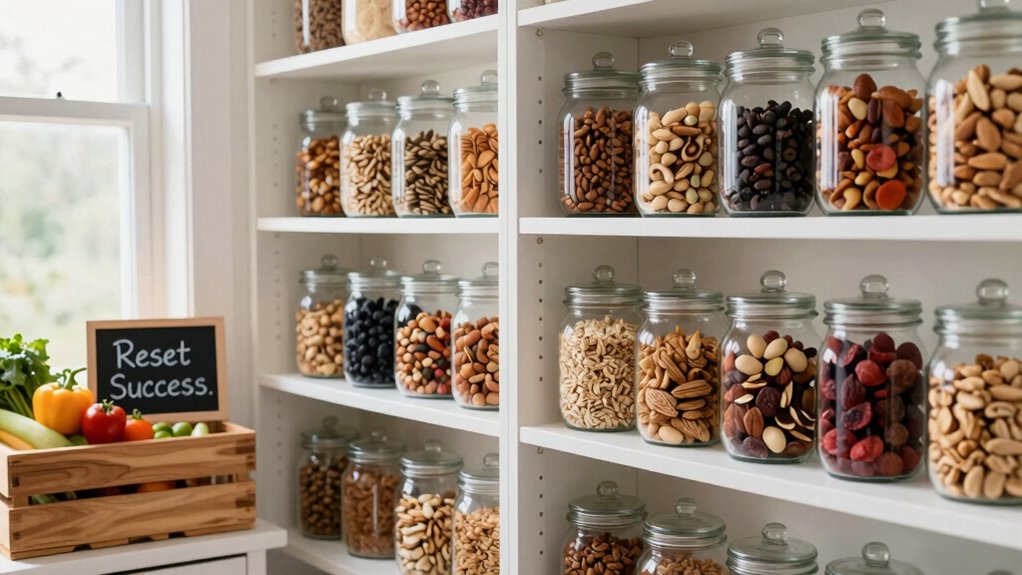
Even with the best intentions, resetting your pantry can come with unexpected hurdles. Time management might slip, making it tough to plan and shop intentionally. Emotional eating can trigger cravings for familiar comfort foods, undermining your reset. To overcome these challenges:
- Schedule dedicated shopping and prep times to stay on track.
- Recognize emotional eating triggers and find healthier coping strategies.
- Keep a list of snack alternatives to resist impulsive choices.
- Be patient with setbacks—adjust your plan rather than abandoning it.
Maintain Your Pantry Reset for Lasting Snack Control

To maintain your pantry reset and guarantee lasting snack control, consistency is key. Regularly practicing meal prep helps you keep nutritious options visible and ready, reinforcing healthy choices. Focus on portion control by pre-portioning snacks into small containers, preventing overeating. To stay motivated, track your progress and celebrate small wins. Keep your pantry organized, removing tempting, unhealthy items.
| Tip | Benefit |
|---|---|
| Meal prep weekly | Ensures healthy options are accessible |
| Pre-portion snacks | Reduces impulse snacking |
| Regular pantry review | Eliminates temptations and keeps focus |
| Use clear containers | Aids in visual portion control |
| Consistent routine | Reinforces healthy habits daily |
Frequently Asked Questions
How Often Should I Redo My Pantry Reset for Optimal Results?
You should redo your pantry reset every three to four months to maintain ideal results. This frequency helps with planning and keeps your snacks aligned with your health goals. Reset timing depends on your habits and progress, so if you notice your snacks creeping back in or cravings returning, it’s time for another reset. Regularly revisiting your pantry ensures you stay on track and avoid temptation.
Can Pantry Resets Help With Emotional or Boredom Snacking?
Did you know that emotional eating accounts for nearly 75% of overeating? Pantry resets can definitely help with emotional or boredom snacking by removing tempting, unhealthy options and replacing them with nourishing alternatives. When your environment supports healthier choices, you’re less likely to reach for snacks out of boredom or emotional triggers. This proactive step helps you develop better habits and regain control over your cravings, making healthier choices feel more automatic.
What Are Cost-Effective Ways to Stock Healthy Snacks?
To stock healthy snacks affordably, try affordable snack swaps like nuts, seeds, and dried fruits instead of pricey processed options. Use bulk buying tips by purchasing larger quantities of staples like oats, popcorn, or whole-grain crackers, which save money over time. Look for sales and store brands to cut costs further. Planning your snacks in advance helps you avoid impulse buys, ensuring you stick to healthy, budget-friendly choices.
How Do I Handle Family Members’ Preferences During a Pantry Reset?
Did you know that 65% of families struggle to agree on snack choices? To handle family members’ preferences during a pantry reset, encourage family compromise by involving everyone in selecting healthy options. Respect individual snack preferences while offering nutritious alternatives. Communicate openly about your goals, and find common ground to guarantee everyone feels heard and satisfied. This teamwork makes maintaining a balanced pantry much easier and more sustainable.
Are There Specific Pantry Storage Solutions That Promote Healthier Choices?
Yes, using organized containers and clear labeling can promote healthier choices in your pantry. Store nutritious snacks like nuts, dried fruits, and whole grain crackers in transparent containers so you can easily see what’s available. Label each container clearly to distinguish healthier options from less healthy ones. This setup encourages mindful eating, reduces temptation, and makes it easier for everyone to grab nutritious snacks quickly, supporting your pantry reset goals.
Conclusion
Resetting your pantry can cut snacking by up to 50%, making healthier choices easier and more automatic. By removing temptations and stocking smart alternatives, you’ll find it simpler to resist impulsive treats. Staying consistent with your pantry reset creates lasting habits that support your health goals. Remember, a well-organized pantry isn’t just convenient—it’s a powerful tool to take control of your snacking and boost your well-being effortlessly.