

Your daily protein needs depend on factors like your age, activity level, and health goals. For most adults, 0.8 grams per kilogram of body weight guarantees for basic health. If you’re active or aiming to build muscle, aim for 1.2 to 2.0 grams. Eating quality protein from varied sources makes certain you meet these needs without falling for myths or overdoing it. Keep going to discover practical tips for balancing your intake effectively.
Key Takeaways
- Sedentary adults generally need about 0.8 grams of protein per kilogram of body weight daily.
- Active individuals and athletes may require between 1.2 and 2.0 grams per kilogram for optimal health.
- Older adults might need slightly more to prevent muscle loss and support recovery.
- Protein needs vary based on age, activity level, health status, and personal goals like muscle building or weight loss.
- Consuming a mix of high-quality animal and plant proteins from diverse sources ensures adequate amino acid intake.
What Is Protein and Why Do You Need It?
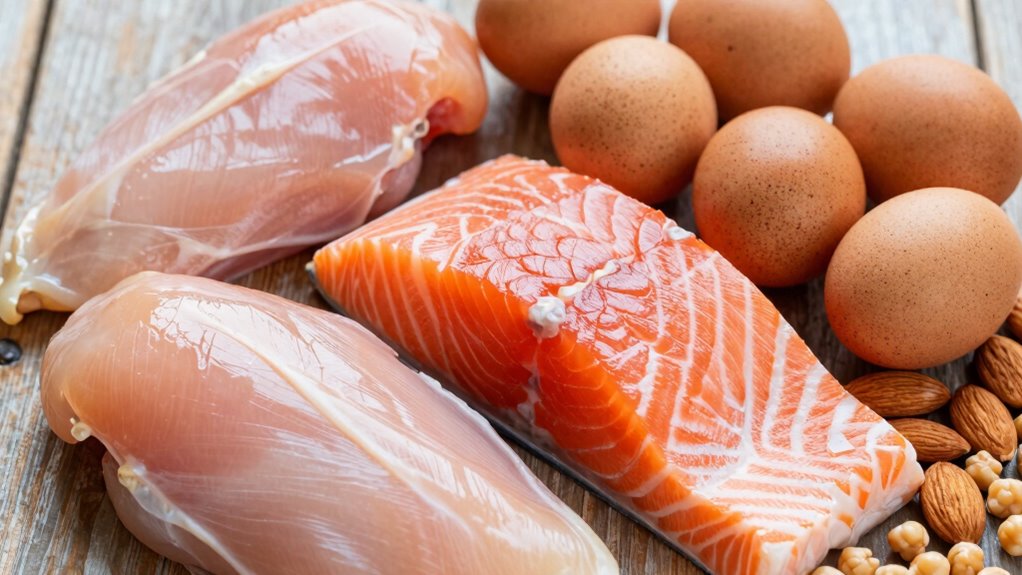
Have you ever wondered what protein really is and why it’s essential for your body? Protein is made up of building blocks called amino acids, which play crucial roles in your health. When you eat protein, your body begins protein digestion, breaking it down into amino acids. These amino acids then serve various functions, like building and repairing tissues, supporting immune health, and producing enzymes and hormones. Without enough protein, your body can’t perform these vital tasks efficiently. Think of amino acids as the raw materials your body needs to keep everything running smoothly. Additionally, understanding the process of protein digestion reveals how your body efficiently absorbs and utilizes these amino acids. By understanding how protein digestion works, you realize that consuming sufficient protein guarantees your body has the amino acids necessary for growth, recovery, and overall well-being. Recognizing the importance of protein quality can help you make better dietary choices to meet your nutritional needs. Moreover, the evolution of arcade games demonstrates how entertainment and technology have advanced, much like how nutritional science evolves to improve health guidance.
How Much Protein Should You Eat Every Day?

Figuring out how much protein you need depends on your daily recommendations, personal factors, and your fitness goals. Your age, activity level, and whether you’re aiming to build muscle or maintain your weight all influence the right amount for you. Understanding these factors helps you adjust your intake to meet your specific needs effectively. For example, knowing your daily protein requirements can help optimize your nutrition plan. Additionally, being aware of waterpark safety tips and proper gear can ensure a fun and injury-free experience during your active days. Recognizing the importance of personalized nutrition allows you to tailor your diet more precisely to your unique needs, which is a key aspect of modern life skills. Being mindful of household safety practices can also support your overall well-being and help prevent common accidents at home.
Daily Protein Recommendations
Determining how much protein you need each day depends on several factors, including your age, activity level, and overall health. The recommended daily intake varies, but general guidelines suggest:
- Sedentary adults should aim for 0.8 grams per kilogram of body weight.
- Athletes or active individuals may require 1.2 to 2.0 grams per kilogram.
- Older adults might need slightly more to counteract muscle loss.
- Protein absorption efficiency and amino acid profiles influence how well your body utilizes dietary protein.
Consuming adequate protein ensures you get a complete amino acid profile, supporting muscle repair and immune function. Remember, your body’s ability to absorb and use protein varies, so meeting these guidelines helps optimize health without overconsumption.
Factors Influencing Needs
Your daily protein needs aren’t one-size-fits-all; they depend on factors like your age, activity level, and overall health. Your body’s ability to absorb protein efficiently, known as protein absorption, varies based on these factors. For instance, active individuals or those engaging in strength training typically require more protein to support muscle repair and growth. Dietary timing also plays a role; spreading your protein intake evenly throughout the day can optimize absorption and utilization. Age influences needs too—older adults may need more protein to combat muscle loss. Additionally, the type of protein consumed can impact how effectively your body uses it. The body’s protein absorption efficiency is influenced by both dietary choices and individual health status, underscoring the importance of personalized nutrition. Recognizing how digestibility affects protein utilization can further refine your dietary strategies for optimal health. Moreover, understanding your body’s unique metabolic rate can help in tailoring your protein intake more precisely. Factors like tissue repair demands also play a significant role in determining your specific protein requirements, especially during recovery periods.
Adjusting For Goals
When setting your daily protein intake, your specific goals—such as building muscle, losing weight, or maintaining health—play a essential role. Your needs influence how much protein you should consume to optimize protein absorption and muscle synthesis. For example:
- Muscle growth: Aim for 1.6–2.2 grams per kilogram of body weight to maximize muscle synthesis.
- Weight loss: Maintain around 1.6 grams per kilogram to preserve lean mass while losing fat.
- Maintenance: About 0.8 grams per kilogram supports overall health without excess.
- Endurance training: Slightly higher intake, around 1.2–1.4 grams per kilogram, helps recovery and performance.
Adjust your intake based on these goals for effective results, ensuring your body efficiently uses protein for your desired outcome. Additionally, understanding your protein requirements can help you avoid excess or insufficient intake, which is important for maintaining overall nutritional balance. Being aware of protein absorption rates can further fine-tune your diet to meet your specific needs, and considering amino acid profiles can optimize muscle recovery and growth.
What Factors Affect Your Daily Protein Needs?
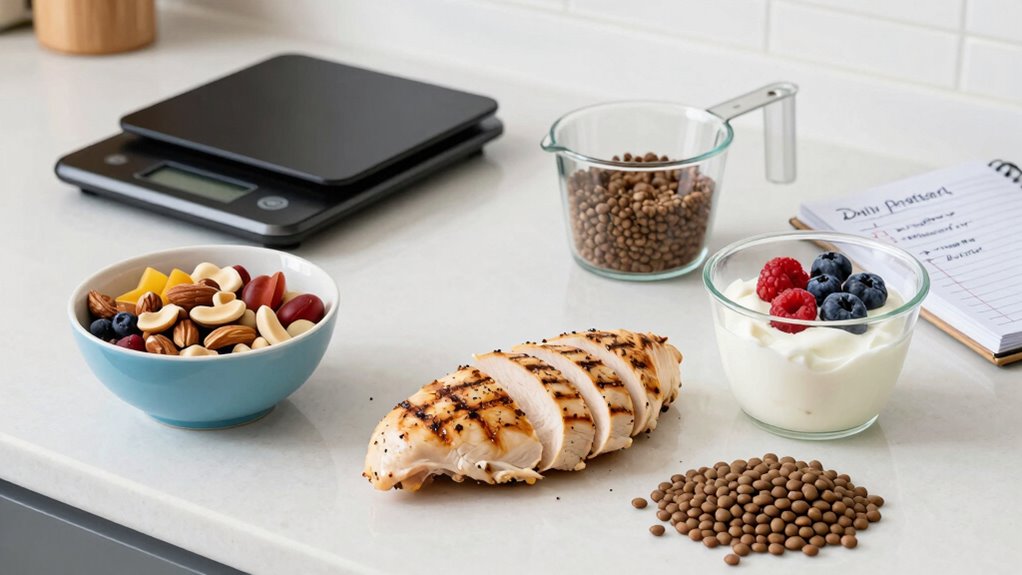
Several key factors influence how much protein you need each day, and understanding these can help you tailor your intake effectively. One major factor is your activity level; athletes or those with physically demanding jobs generally require more protein to support muscle repair and recovery. Age also plays a role, with older adults needing slightly more protein to prevent muscle loss. Protein absorption efficiency varies among individuals, affecting how well your body utilizes dietary protein. Additionally, dietary timing matters—spreading protein intake evenly throughout the day can optimize muscle synthesis and recovery. Moreover, incorporating strength training can significantly impact your protein requirements by stimulating muscle growth and repair. Your overall health, body composition, and goals (like building muscle or losing weight) all influence your daily protein requirements. Recognizing these factors helps you create a personalized, effective protein plan. Understanding metabolic rate can further refine your intake to match your body’s unique energy expenditure. Proper hydration and digestive health also play crucial roles in optimal protein utilization and absorption. Ensuring good gut health can improve nutrient absorption, including protein, thereby supporting your dietary needs. Additionally, factors like lifestyle habits and environmental influences can subtly affect how your body processes and utilizes protein.
Best Food Sources for Protein: What Should You Eat?
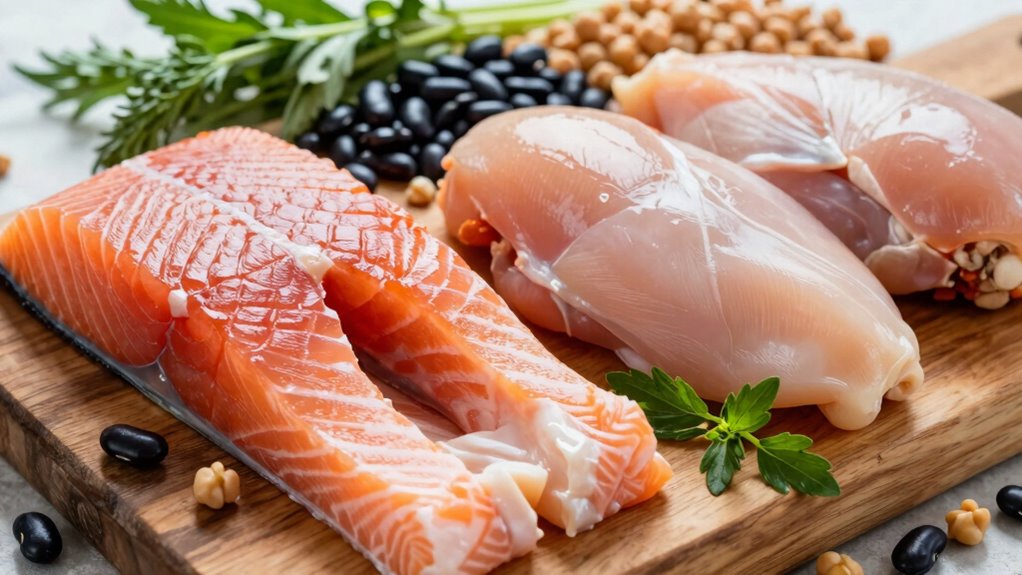
When choosing your protein sources, you have options like high-quality animal proteins such as meat, eggs, and dairy, which provide all essential amino acids. You can also incorporate plant-based options like beans, lentils, nuts, and seeds to meet your needs. Knowing these choices helps you build a balanced diet tailored to your preferences and lifestyle. Additionally, understanding the importance of unavailable partners can influence your dietary decisions, especially when considering emotional well-being and relationship dynamics.
High-Quality Animal Proteins
High-quality animal proteins are among the most complete and easily digestible sources of essential amino acids your body needs. They typically have ideal amino acid profiles, supporting muscle repair and overall health. When considering protein digestion, these sources break down efficiently, ensuring rapid absorption. To maximize benefits, focus on:
- Eggs – Rich in complete proteins and highly digestible.
- Lean meats (chicken, turkey, beef) – Packed with essential amino acids and low in fat.
- Dairy products (milk, yogurt, cheese) – Provide high-quality proteins with excellent amino acid profiles.
- Fish and seafood – Offer complete proteins with added omega-3s for overall health.
Regional flavors and culinary traditions also influence the types of animal proteins commonly consumed in different areas, enhancing both nutritional value and cultural enjoyment.
Choosing these sources guarantees you get the necessary amino acids with minimal digestion issues, making them ideal for building and maintaining muscle.
Plant-Based Protein Options
Plant-based proteins can effectively support your nutritional needs, offering a wide variety of options for those seeking alternatives to animal sources. Soy protein stands out as a complete plant-based protein, providing all essential amino acids your body needs. Incorporating soy into your diet can help meet your protein goals without relying on animal products. Legumes, including lentils, chickpeas, and beans, also offer significant legume benefits, such as high fiber and nutrient content, along with a good protein punch. These options are versatile and affordable, making them easy to include in meals like salads, stews, or smoothies. By choosing soy protein and legumes, you ensure you’re getting quality plant-based proteins that support muscle growth, recovery, and overall health without sacrificing variety or nutrition. Additionally, exploring specialized protein sources can further diversify your plant-based diet and optimize your nutritional intake.
Common Myths About Protein Intake: Busted

Many common beliefs about protein intake are simply myths that can lead you astray. For instance, some think that consuming excessive protein boosts muscle gains infinitely, but your body can only absorb a certain amount at once. Here’s what you should know:
- Protein absorption rates vary; eating small, frequent meals enhances uptake.
- Higher protein intake doesn’t automatically mean better muscle growth.
- Supplements aren’t always more effective than whole foods; their effectiveness depends on timing and quality.
- More protein isn’t necessary for everyone; individual needs depend on activity level and body weight.
Debunking these myths helps you understand that balance and quality matter more than just quantity, ensuring your efforts align with your actual needs.
Simple Tips to Meet Your Protein Goals Every Day
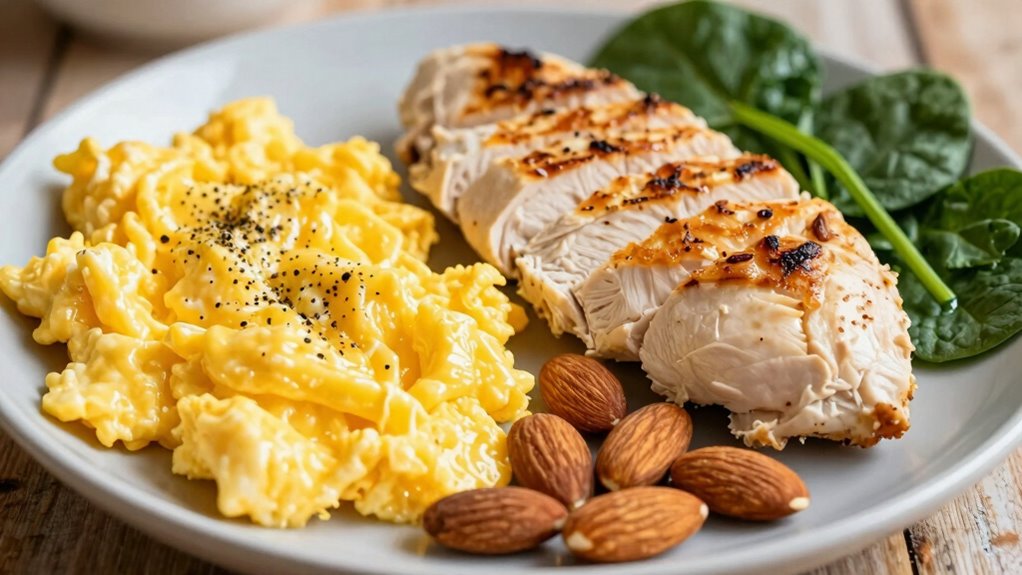
To effectively meet your daily protein goals, it’s important to plan your meals thoughtfully and include a variety of protein sources throughout the day. Focus on foods that maximize protein absorption, such as lean meats, dairy, beans, and nuts. Combining different sources helps guarantee amino acid completeness, which is essential for muscle repair and overall health. Incorporate both animal and plant proteins to cover all essential amino acids, especially if you’re vegetarian or vegan. Spread your protein intake evenly across meals to optimize absorption and utilization. Additionally, consider protein-rich snacks like Greek yogurt or boiled eggs to boost your intake without overhauling your diet. Staying consistent with these simple tips will help you reliably meet your protein goals every day.
Frequently Asked Questions
Can Vegetarians Get Enough Protein Without Supplements?
Yes, you can get enough protein without supplements by consuming a variety of plant-based sources like beans, lentils, tofu, nuts, and seeds. While some plant foods aren’t amino acid complete on their own, combining different sources guarantees you get all essential amino acids. Eating a balanced, diverse diet makes it easy to meet your protein needs naturally, without relying on supplements.
Is Excessive Protein Intake Harmful to Health?
Excessive protein intake can be harmful, as it may lead to protein overdose, stressing your kidneys. Studies show that high-protein diets can increase kidney workload, especially if you already have kidney issues. While moderate consumption supports muscle health, overdoing it may jeopardize kidney health over time. To stay safe, stick to recommended amounts and consult healthcare professionals before making significant dietary changes.
How Does Aging Affect Protein Requirements?
As you age, your protein requirements increase because your body’s ability to absorb protein and support muscle synthesis declines. To maintain muscle mass and overall health, you should consume slightly more protein, focusing on high-quality sources. This helps offset age-related muscle loss and supports recovery. Prioritize balanced meals with adequate protein to make sure your body effectively absorbs nutrients and promotes muscle synthesis as you get older.
Do Athletes Need More Protein Than Sedentary Individuals?
Yes, athletes need more protein than sedentary individuals because their bodies demand extra for muscle repair and recovery. You absorb protein more efficiently from high-quality dietary sources like lean meats, dairy, and legumes, which support your increased needs. By fueling your workouts with adequate protein, you optimize absorption and promote muscle growth, helping you perform at your best and recover faster after intense activity.
What’s the Best Time of Day to Consume Protein?
Ever wonder when’s the best time to fuel your body? The ideal moment for protein intake depends on your goals, but generally, consuming it evenly throughout the day optimizes muscle repair and growth. Meal timing and digestion efficiency matter—eating protein post-workout can boost recovery, while spreading intake helps maintain muscle synthesis. So, aim for balanced snacks and meals to support your fitness journey effectively.
Conclusion
Now that you understand the basics, you can confidently tailor your protein intake to your needs. Remember, not all sources or amounts are created equal—quality matters. Are you ready to ditch the bro-science and make informed choices that fuel your body? By focusing on balanced, real food sources and listening to your body’s signals, you’ll stay energized and healthy. Isn’t it time to take control of your nutrition and ditch the myths once and for all?