
Your tap water may taste different day to day due to variations in chlorine levels, mineral content, and pipe corrosion. Seasonal changes or adjustments in water sources can alter mineral amount and flavor, while aging pipes might release metals that affect taste. Storage and exposure to air or sunlight can also cause subtle flavor shifts. To get a clearer picture and discover practical solutions, explore more about what influences water taste and how to improve it.
Key Takeaways
- Variations in mineral levels and seasonal water sources affect taste day to day.
- Fluctuations in chlorine levels used for water disinfection can alter flavor.
- Changes in storage conditions or exposure to air and sunlight impact water taste.
- Pipe corrosion or mineral buildup may vary, influencing metallic or off-flavors.
- Temperature differences and water treatment adjustments contribute to daily taste variations.
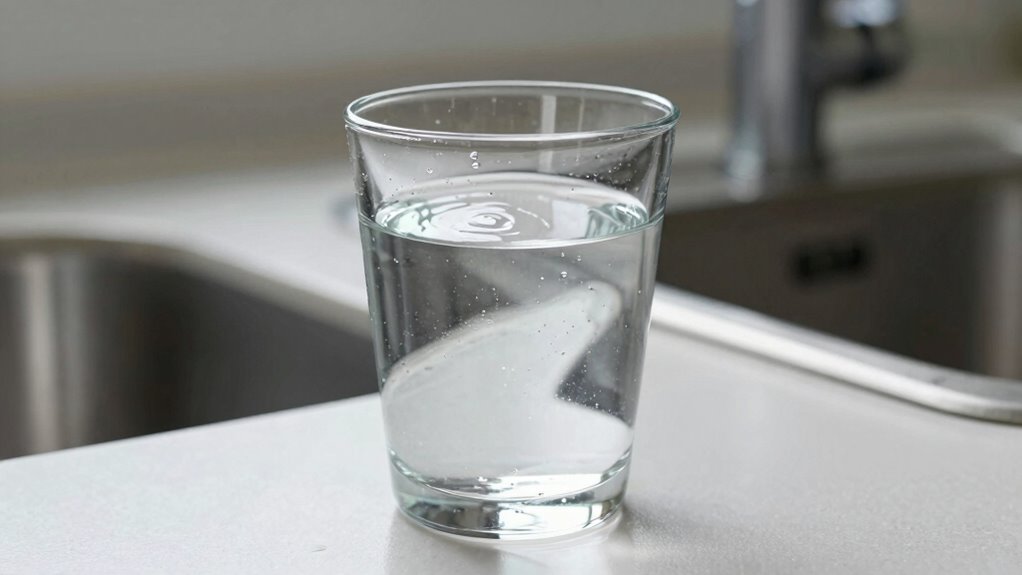
Many people notice a strange or unpleasant taste in their tap water, which can be both frustrating and concerning. This dip in water quality often stems from the presence of chlorine, a common disinfectant used by municipal water systems. If you’re sensitive to its taste or smell, you might find yourself avoiding tap water altogether. To improve your drinking experience, you’ll want to focus on effective chlorine removal. Activated carbon filters are a popular choice because they absorb chlorine efficiently, helping to restore a fresher, cleaner flavor. Installing such a filter on your faucet or using a pitcher with a built-in filter can make a noticeable difference. Not only will this improve the taste, but it can also remove other impurities that may affect water quality.
Activated carbon filters effectively remove chlorine, improving tap water’s taste and quality.
However, removing chlorine isn’t the only factor influencing water taste. The mineral balance in your tap water plays an essential role as well. Minerals like calcium, magnesium, and iron can alter the flavor, sometimes imparting a metallic or salty taste, especially if levels are high. Changes in mineral concentrations can occur due to seasonal shifts, pipe corrosion, or differences in water source, which is why you might notice variations in taste from day to day. Maintaining a balanced mineral level is key to achieving water that’s pleasant and consistent. Using a water testing kit can help you identify which minerals are present and at what levels. If mineral imbalances are significant, you might consider water treatment options such as remineralization filters or water softeners, which can help stabilize mineral content and improve overall flavor.
Temperature also impacts how water tastes, with colder water often seeming crisper and more invigorating. However, colder temperatures can sometimes mask unpleasant flavors or mineral tastes, so experimenting with different serving temperatures might help you find your ideal drinking water. Additionally, storage conditions matter—leaving water exposed to air or sunlight can lead to subtle changes in taste, especially if the container isn’t sealed properly. Regularly maintaining your plumbing system can also prevent corrosion and mineral buildup that influence water taste.
Ultimately, understanding the factors behind water taste problems empowers you to take control. Whether it’s tackling chlorine with a filter or adjusting mineral levels through treatment systems, these steps help guarantee your tap water is both safe and pleasant to drink. Addressing these issues not only enhances flavor but also encourages better hydration habits, making your daily water intake more enjoyable and less of a chore.
Frequently Asked Questions
Can Boiling Tap Water Improve Its Taste?
Boiling tap water can improve its taste by removing some gases and volatile compounds, but it doesn’t change mineral content or chemical reactions that influence flavor. If your water has a metallic or chemical taste, boiling won’t fix it. Instead, it might be better to filter your water or let it sit to dissipate certain chemicals. Boiling mainly helps with safety, not necessarily with improving taste caused by mineral content.
Does Water Temperature Affect Taste Variations?
Yes, water temperature affects taste variations. As temperature fluctuates, mineral solubility changes, which can alter the taste of your tap water. Warmer water may dissolve more minerals, making it taste different than cold water. Conversely, cooler water tends to suppress flavors and mineral presence. So, the temperature at which you drink or store water can influence how it tastes from day to day, especially if mineral content varies.
Are Bottled Waters Always Tastier Than Tap Water?
Think of bottled water as a clear, pristine lake—often perceived as tastier due to its quality and purity. While bottled water quality varies, many find it more consistent and appealing than tap water. Taste preference factors, like mineral content and packaging, influence your choice. However, some tap waters are just as good, especially when filtered, so it’s about what suits your taste and trust in the source.
How Do Water Filters Impact Taste Consistency?
Water filters help improve taste consistency by removing impurities and chlorine that cause flavor fluctuations. However, if you neglect filter maintenance, minerals and contaminants can build up, negatively affecting the water’s taste. The filter’s ability to balance mineral content is essential for steady flavor. Regularly replacing your filter guarantees it functions properly, maintaining a clean, fresh taste every time you turn on the tap.
Can Plumbing Materials Influence Water Flavor?
Imagine your plumbing as a silent artist affecting your water’s flavor; yes, plumbing materials can influence taste. Pipe corrosion releases metals that taint your water, while old or cheap fixtures can impart odd flavors. These materials interact with water over time, altering its taste, making it sometimes metallic or plasticky. Upgrading to corrosion-resistant pipes and high-quality fixtures helps guarantee your tap water stays fresh and consistent.
Conclusion
So, next time your tap water tastes off, remember that it’s often just a passing phase. Don’t jump to conclusions or get your knickers in a twist; water quality can fluctuate daily due to various factors. Stay patient and informed, because understanding the reasons behind the taste can save you from unnecessary worry. Sometimes, it’s just a small blip on the radar. Keep your chin up and trust that the situation will clear up before you know it.