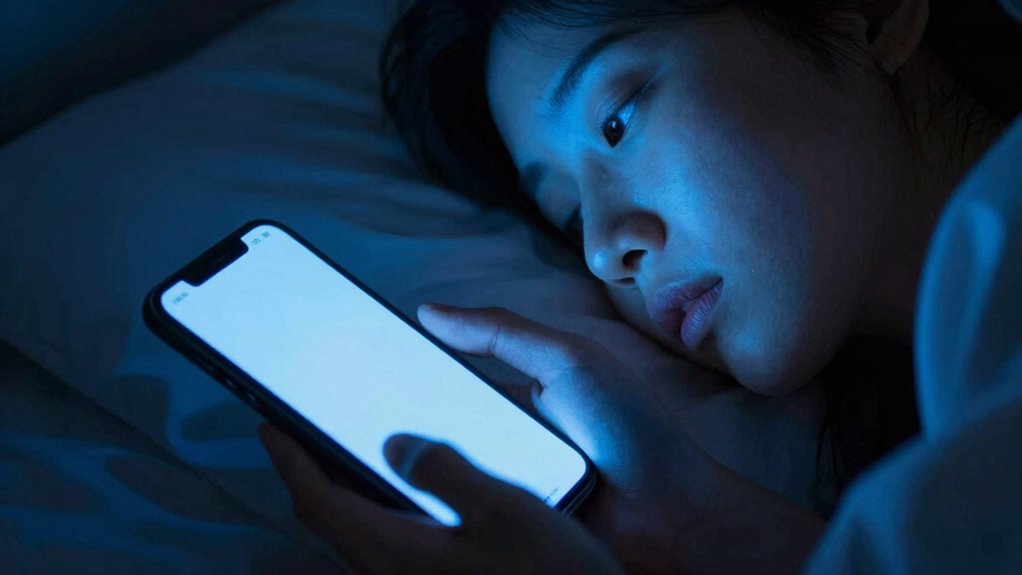

Many myths link screen use and blue light directly to sleep problems, but the science shows it’s more nuanced. Blue light can suppress melatonin and delay sleep if it’s exposure during evening hours, but it doesn’t fully prevent hormone production. Factors like content, usage duration, and timing matter more than blue light alone. To truly protect your sleep, adopting smarter habits helps—stick around, and you’ll discover effective ways to stay aligned with your natural rhythms.
Key Takeaways
- Blue light can delay sleep onset by suppressing melatonin, but it does not completely prevent hormone production.
- The impact of screens on sleep depends on exposure duration, timing, and content, not blue light alone.
- Using blue light filters or glasses can help mitigate sleep disruption but are not entirely foolproof.
- Consistent sleep routines and limiting screen time before bed are more effective for good sleep than worry over blue light.
- Blue light’s effect on sleep is often overstated; managing overall sleep hygiene is key for healthy sleep patterns.
What Is Blue Light and How Does It Affect Sleep?
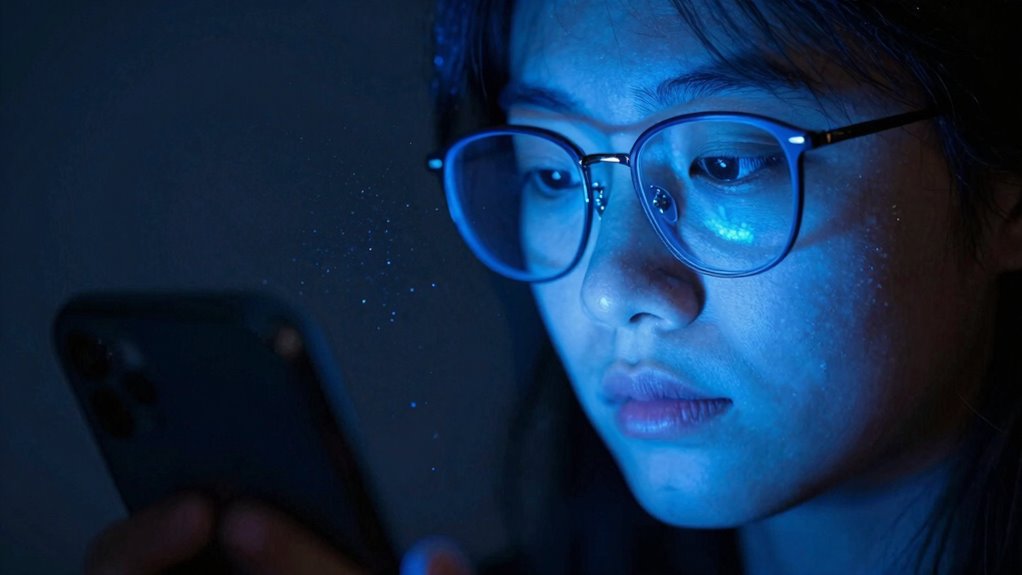
Blue light is a type of high-energy visible light emitted by screens on devices like smartphones, tablets, and computers. It’s part of the light spectrum that influences your body’s internal clock, known as the circadian rhythm. When you’re exposed to blue light during the evening, it signals to your brain that it’s daytime, which can delay sleep onset. This disruption affects your natural sleep-wake cycle, making it harder to fall asleep and wake up refreshed. The intensity and duration of blue light exposure determine how much it impacts your circadian rhythm. Understanding how blue light interacts with your internal clock helps explain why evening screen time can interfere with your sleep, even if it doesn’t seem immediately obvious. Blue light’s impact on circadian rhythms highlights the importance of managing evening screen exposure for better sleep health. Additionally, blue light exposure can vary based on device settings and environmental factors, influencing its overall effect on sleep patterns. Recognizing the effects on sleep quality can help you develop healthier screen habits for improved rest. Research also shows that light intensity and timing play crucial roles in how significantly blue light affects sleep, emphasizing the need for mindful screen use in the evening. Moreover, screen brightness and duration are key factors that can be adjusted to minimize adverse effects on your sleep cycle.
How Blue Light Suppresses Melatonin and Disrupts Rest
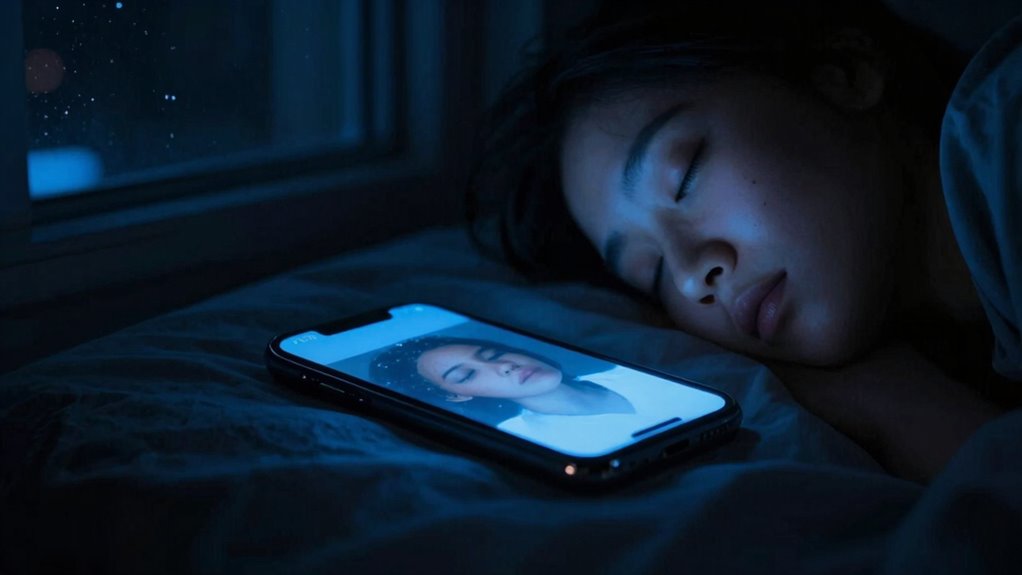
Blue light from screens can suppress your body’s melatonin production, making it harder to fall asleep. When melatonin levels drop, your sleep cycle gets disrupted, leaving you restless or tired. Understanding this process helps you see why managing blue light exposure is essential for better rest. Additionally, exposure to blue light before bedtime can affect circadian rhythms, further complicating your sleep patterns. Since indoor environments can contain microplastics in dust, reducing screen time also minimizes exposure to potential airborne irritants that may impact overall health. Recognizing how light exposure influences sleep can empower you to create a healthier nighttime routine. Being aware of sleep hygiene practices can further improve your ability to rest peacefully. Moreover, limiting blue light exposure in the evening can support natural sleep cycles, promoting more restorative sleep.
Melatonin Production Suppressed
When exposed to blue light in the evening, your body reduces its production of melatonin, the hormone responsible for regulating sleep. This suppression interferes with your circadian rhythm, the internal clock that tells your body when to sleep and wake. Blue light tricks your brain into thinking it’s still daytime, disrupting hormone regulation. Additionally, light exposure can influence other hormonal pathways that affect sleep quality. As melatonin levels drop, you may find it harder to fall asleep and stay asleep, making your rest less restorative. This effect isn’t just about feeling alert; it directly impacts your body’s natural sleep signals. The more blue light you’re exposed to at night, the more you weaken this essential hormonal balance, which can lead to sleep difficulties and long-term health issues. Recognizing the impact of light exposure on sleep can help you develop better habits for healthier sleep patterns. Furthermore, limiting evening blue light exposure can support your natural circadian rhythm, promoting more restorative sleep.
Sleep Cycle Disrupted
Since melatonin signals your body that it’s time to sleep, any disruption to its production can throw off your entire rest cycle. Blue light exposure in the evening suppresses melatonin, making it harder for your sleep cycle to align with your natural circadian rhythm. When this rhythm is out of sync, you may find it difficult to fall asleep or experience lighter, less restorative sleep. Over time, disrupted circadian rhythms can lead to sleep deprivation and negatively affect your overall health. Blue light tricks your brain into thinking it’s daytime, delaying melatonin release and throwing your entire sleep pattern off balance. Protecting your sleep cycle means minimizing exposure to screens before bed, helping your circadian rhythm stay in sync. Screen time habits play a crucial role in maintaining your natural sleep-wake cycle. Additionally, understanding the role of light in circadian regulation can help you develop better habits to safeguard your sleep. Engaging in mindful screen use can further support your efforts to maintain healthy sleep patterns. Proper light exposure during the day can also strengthen your circadian rhythm, making it more resilient to evening blue light exposure. Recognizing how light influences biological clocks can empower you to create a more sleep-friendly environment.
Debunking Common Myths About Screen Time and Sleep
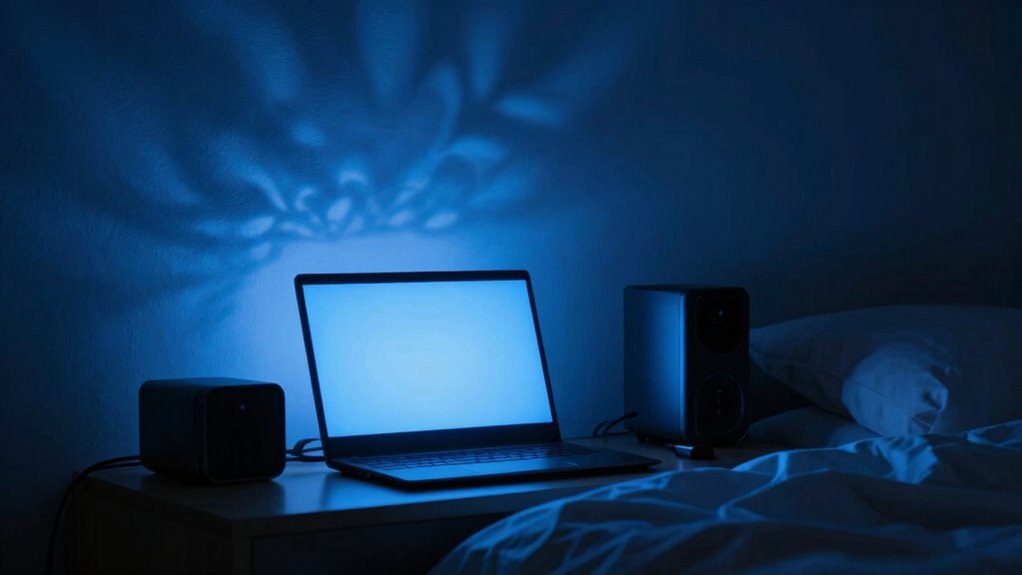
Many believe that screen time directly ruins sleep, but the truth isn’t always that simple. While blue light can suppress melatonin, other factors like overall screen use and sleep habits matter too. Let’s clarify what science really says about screen time and its impact on your sleep quality. For example, understanding the effects of electric bikes can shed light on how technology influences our daily routines and health. Additionally, considering the environmental impact of tissue paper can help us make more sustainable choices in our everyday lives. Recognizing the environmental footprint of our tech use can further inform healthier and more eco-conscious habits. Moreover, research shows that user privacy practices and data collection can influence user well-being and trust in digital devices. Awareness of digital sustainability can guide us toward more responsible technology habits.
Blue Light and Melatonin
A common belief is that exposure to blue light from screens considerably suppresses melatonin, the hormone responsible for regulating sleep. While blue light can influence your circadian rhythm, the impact isn’t as drastic as many think, especially if you practice good sleep hygiene. The idea that blue light completely halts melatonin production is overstated; research shows it may delay sleep onset slightly but doesn’t prevent melatonin from being produced altogether. Your body’s natural rhythm can adapt, especially if you limit screen time before bed. Instead of obsessing over blue light, focus on consistent sleep routines, darkened bedrooms, and relaxing activities. These habits support your circadian rhythm more effectively than simply avoiding screens. Understanding this helps you maintain healthy sleep without unnecessary anxiety over blue light exposure. Additionally, carrier oils can be used to create relaxing bedtime routines, such as massage or aromatherapy, to promote better sleep quality. Incorporating sleep-friendly habits can further enhance your ability to rest well, even if blue light exposure occurs.
Screen Time Effects
The belief that all screen time negatively impacts sleep is widespread, but the truth is more nuanced. Not all screen exposure affects your sleep equally. Factors like duration, timing, and content matter more than just blue light. For example:
- Excessive screen time before bed can delay sleep onset.
- Blue light from screens can suppress melatonin, but only if exposure is prolonged.
- Using screens in moderation earlier in the evening is less disruptive.
- Content engagement, like work or intense gaming, can increase alertness regardless of blue light.
While screen exposure can interfere with sleep, it’s not an automatic barrier. Managing your screen time and avoiding late-night exposure helps protect your sleep quality without complete disconnection.
Are All Screens Equally Harmful to Your Sleep?
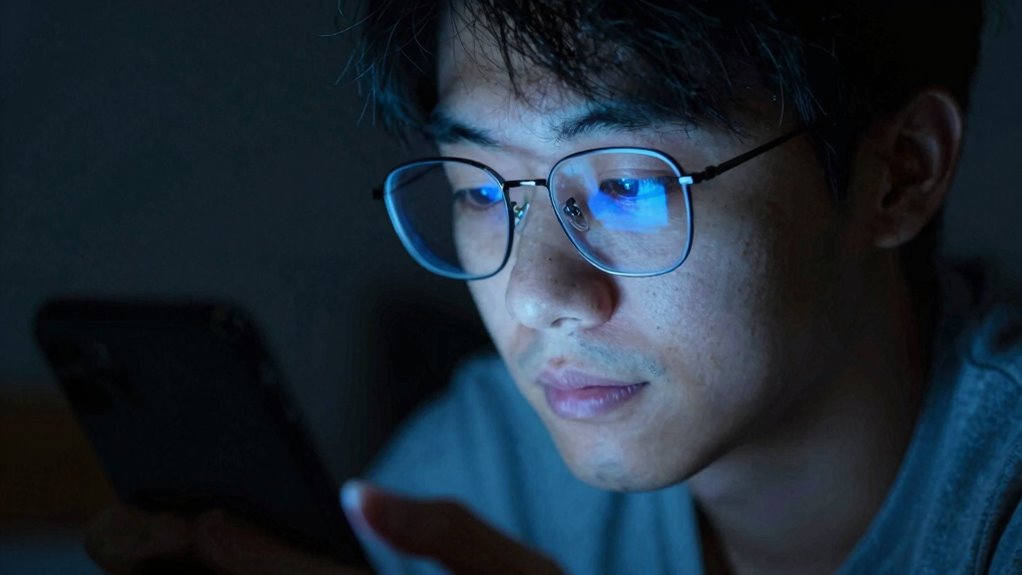
Are all screens equally disruptive to your sleep? Not necessarily. While smartphones, tablets, and computers emit blue light, their impact varies depending on usage. Excessive screen time can lead to screen addiction, making it harder to disconnect and unwind before bed. The type of content also matters; engaging or stressful activities can keep your mind alert, further disrupting sleep. Some devices have built-in blue light filters, but relying solely on them isn’t enough. A digital detox—taking breaks from screens—can help reset your sleep patterns. Remember, the goal isn’t just reducing blue light exposure, but also establishing healthier habits around device use. Not all screens are equally harmful, but overuse and poor habits amplify their negative effects on your sleep quality.
Can Blue Light Glasses and Filters Really Help You Sleep Better?
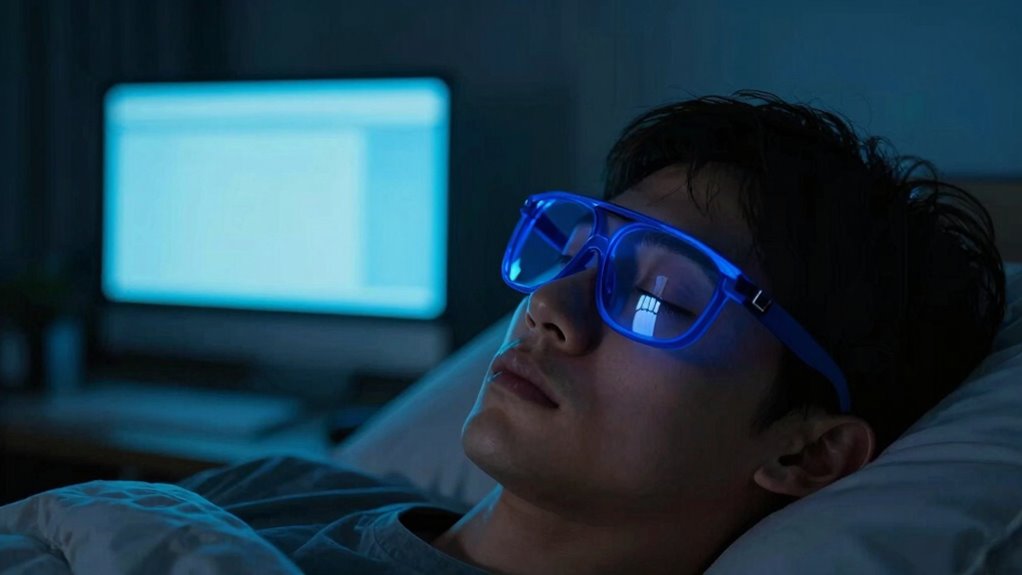
Blue light glasses and screen filters are popular tools claimed to improve sleep, but do they really work? Some studies suggest they can reduce blue light exposure, while others see limited benefits. It’s worth exploring whether these solutions truly make a difference for your sleep quality.
Effectiveness of Blue Light Glasses
Many people turn to blue light glasses and filters in hopes of improving their sleep, but evidence supporting their effectiveness remains mixed. While they aim to block blue light and reduce sleep disruption, studies show mixed results on their actual benefits. Some find they help delay sleep onset and improve sleep quality, but others see little difference. Your success depends on factors like screen usage habits and individual sensitivity. To better understand their impact, consider these points:
- They may reduce blue light exposure during evening hours.
- Effectiveness varies based on how much you use screens before bed.
- Some users report improved sleep, while others notice minimal change.
- They don’t address other sleep disruptors like stress or caffeine.
Impact of Screen Filters
Screen filters and blue light glasses are popular tools aimed at reducing blue light exposure, especially during evening hours. They promise better sleep by limiting blue light that can interfere with melatonin production. But do they really work? Some filters provide significant blue light reduction, while others only block a small portion. The effectiveness depends on the quality and type of filter. Here’s a quick comparison:
| Filter Type | Blue Light Reduction | Ease of Use |
|---|---|---|
| Screen Filter | High | Easy to install |
| Blue Light Glasses | Moderate to High | Wearable, convenient |
| Software Apps | Varies | Adjustable, quick |
| No Filter | None | No impact |
While filters can help, they aren’t foolproof. Combining them with good habits yields better sleep benefits.
How Bright Screens and Bedtime Timing Impact Sleep Quality
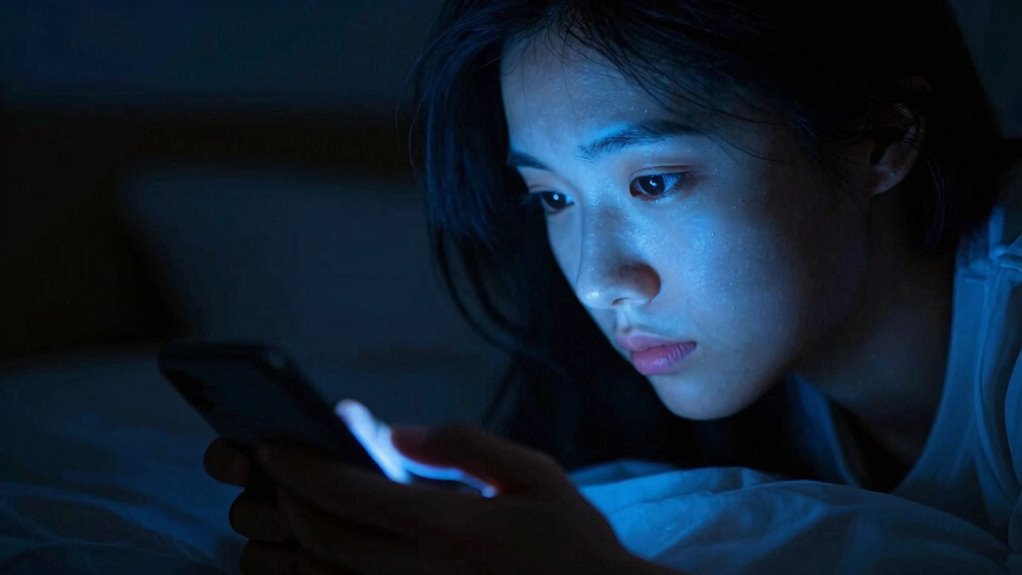
Bright screens before bed can markedly disrupt your sleep quality, especially if you’re exposed to intense light close to your usual bedtime. High screen brightness can suppress melatonin production, making it harder to fall asleep. Additionally, your bedtime timing plays a vital role; the later you stay up, the more your circadian rhythm is thrown off. To understand the impact, consider these points:
Bright screens before bed can hinder sleep by suppressing melatonin and disrupting your natural rhythm.
- Bright screens emit blue light that signals your brain it’s daytime, delaying sleep onset.
- Increasing screen brightness intensifies melatonin suppression.
- Using screens too close to bedtime shortens the duration of deep sleep cycles.
- Delayed bedtime due to screen use can shift your natural sleep schedule, reducing overall sleep quality.
Adjusting screen brightness and being mindful of bedtime timing can help protect your sleep.
Tips and Tools to Reduce Blue Light Exposure at Night
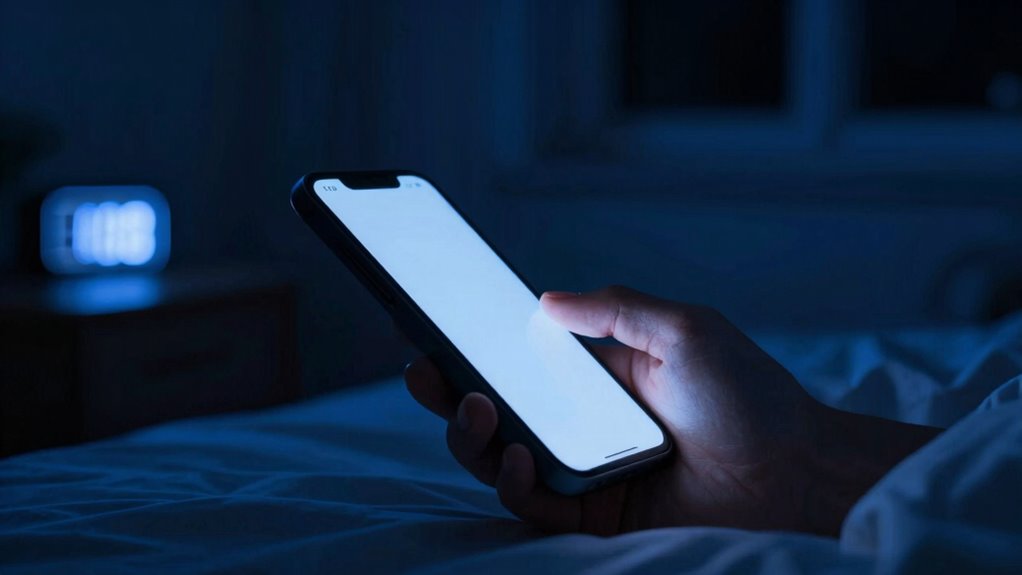
To reduce blue light exposure at night, consider using built-in or downloadable blue light filters on your devices, which can substantially lessen blue light emissions during evening hours. Incorporating these filters helps support better sleep hygiene by minimizing disruptions to your circadian rhythms. Additionally, you can set devices to “night mode” or “dark mode,” reducing blue light exposure automatically as it gets darker outside. Wearing blue light blocking glasses in the evening is another effective strategy, especially if you spend time on screens close to bedtime. Establishing a screen curfew at least an hour before sleep allows your body to wind down naturally. These tools and habits help maintain your sleep hygiene and keep your circadian rhythms aligned, promoting more restful and restorative sleep.
Other Nighttime Habits That Disrupt Sleep Beyond Blue Light
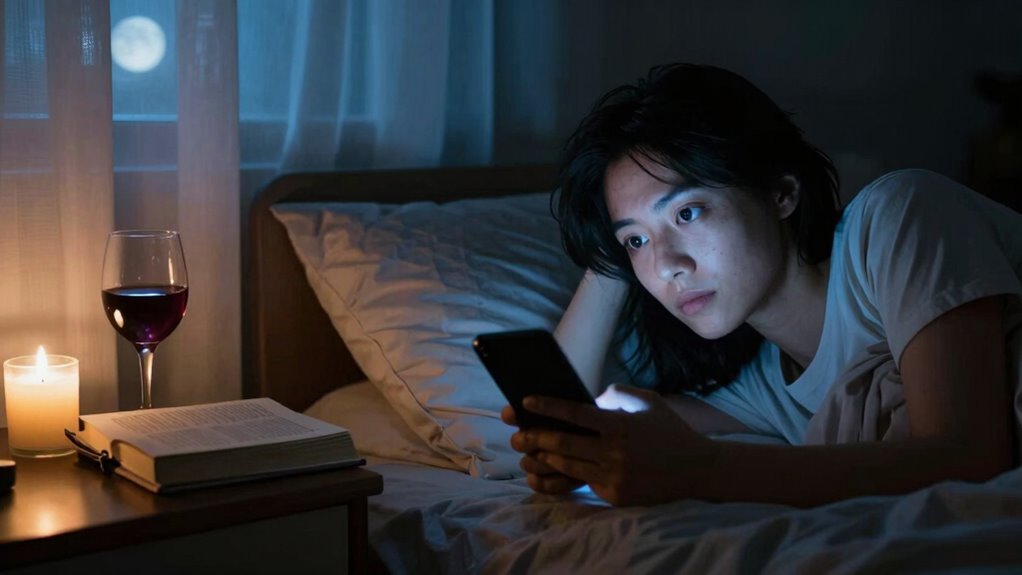
While reducing blue light is essential, many other nighttime habits can also disrupt your sleep without you realizing it. Your bedtime routines and lifestyle choices play a significant role. For example, consuming caffeine late in the day can interfere with falling asleep, even if you don’t feel its effects immediately. Additionally, irregular sleep schedules can throw off your body’s internal clock, making sleep less restorative. Engaging in stimulating activities right before bed, like intense exercise or work, can make it hard to unwind. Ultimately, eating large or spicy meals too close to bedtime can cause discomfort and indigestion, disrupting sleep. Being mindful of these habits helps improve sleep quality beyond just managing blue light exposure.
How Much Screen Time Before Bed Is Too Much?
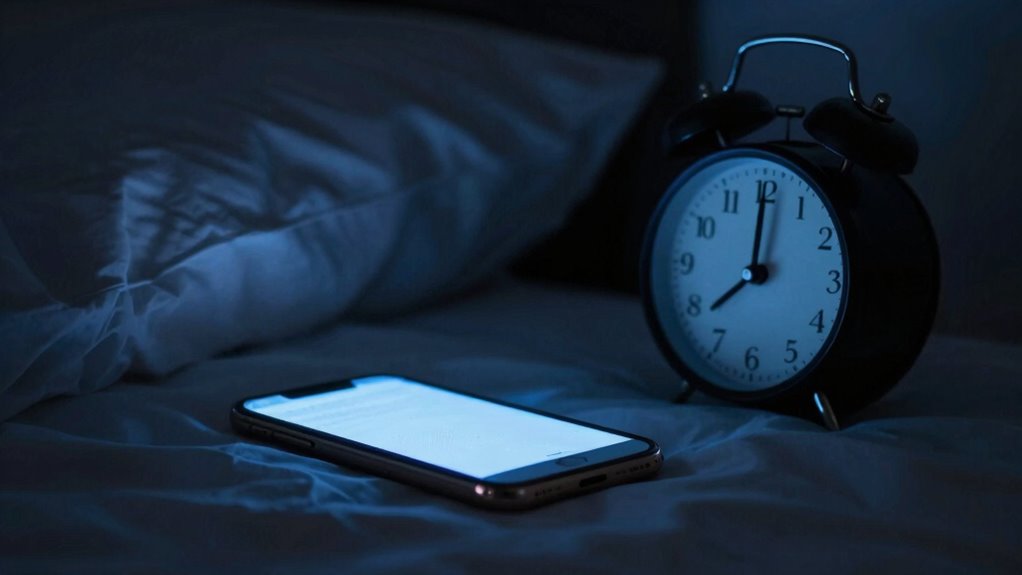
How much screen time before bed is too much? For most people, scrolling or watching for more than 30 to 60 minutes can start to interfere with sleep quality. Excessive screen time can foster screen addiction, making it harder to disconnect and unwind naturally. If you find yourself constantly reaching for your device at night, it’s a sign you might need a digital detox—setting boundaries to limit evening screen use. Reducing screen time before bed helps your brain shift more smoothly into sleep mode, minimizing disruptions caused by blue light and overstimulation. Remember, it’s not just about avoiding blue light but also about creating a healthier overall bedtime routine. Limiting screen exposure helps you sleep better and wake up more refreshed.
What Science Says About Protecting Your Sleep in a Digital World
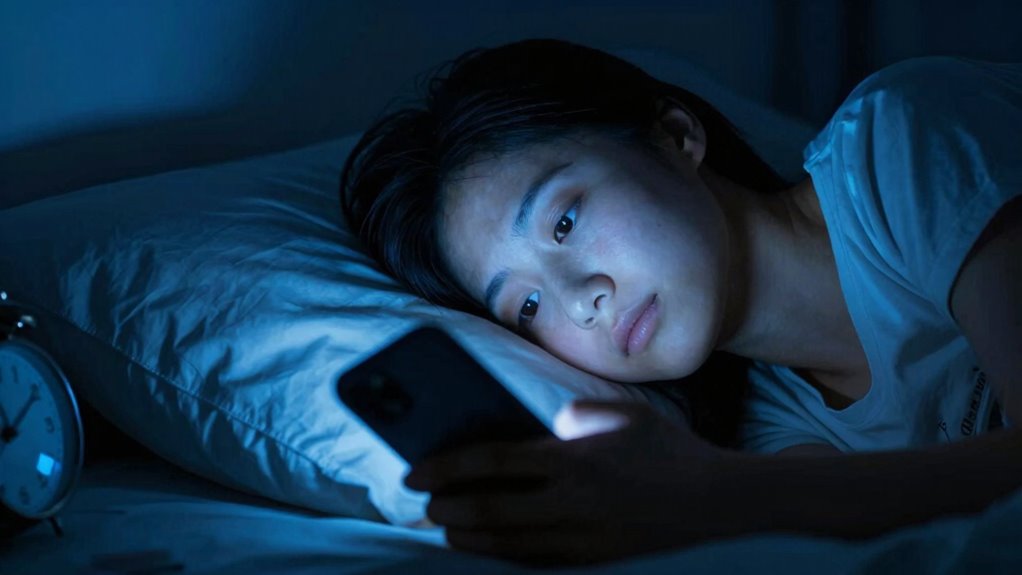
Scientific research confirms that blue light from screens considerably impacts sleep by suppressing melatonin production, the hormone that regulates your sleep-wake cycle. To protect your sleep in a digital world, consider these science-backed strategies:
Blue light from screens disrupts melatonin, impairing sleep; adopt strategies to protect your rest.
- Establish a digital detox at least an hour before bed to reduce blue light exposure.
- Improve sleep hygiene by creating a relaxing, screen-free environment in your sleeping area.
- Use blue light filters or glasses if you must use devices late at night.
- Limit screen time overall, especially in the evening, to help maintain your natural circadian rhythm.
Implementing these measures helps your body naturally wind down, promoting better sleep quality and aligning with your biological sleep needs.
Frequently Asked Questions
Does Blue Light Exposure Affect Sleep Differently Across Age Groups?
You should know that blue light exposure affects sleep differently across age groups due to age-specific impacts and developmental sensitivities. Younger children are more vulnerable because their developing eyes and brains are more sensitive to light, which can disrupt their sleep patterns more profoundly. Teenagers and adults may experience delayed sleep onset, but their mature systems are less affected. Being aware of these differences helps you protect your sleep at any age.
Can Blue Light Exposure Influence Sleep Quality Beyond Melatonin Suppression?
Sure, blue light doesn’t just mess with melatonin; it also causes circadian disruption and alertness impairment. Your screen time could be secretly sabotaging your sleep quality by throwing your internal clock out of sync and making you feel wired instead of rested. So, next time you binge-watch late, remember, it’s not just about sleepy eyes—it’s about your entire sleep cycle suffering in silence.
What Are the Long-Term Health Effects of Chronic Blue Light Exposure?
Chronic blue light exposure can harm your long-term health by causing eye strain and increasing the risk of digital eye strain, which may lead to discomfort and vision problems. It can also contribute to circadian disruption, making it harder for your body to regulate sleep cycles and potentially increasing risks for metabolic and cardiovascular issues. Protect your eye health by limiting screen time and using blue light filters, especially before bed.
Are There Specific Types of Screens More Harmful to Sleep Than Others?
You might find that certain screen types, like tablets and smartphones, are more harmful to your sleep because they emit higher blue light levels. Also, device brightness plays a big role—keeping screens at maximum brightness can disrupt your melatonin production more than dimmer settings. To protect your sleep, consider using screens with lower blue light emissions, enable night mode, or reduce brightness before bedtime.
How Does Blue Light Exposure Impact Sleep in People With Sleep Disorders?
Like Icarus flying too close to the sun, blue light exposure can worsen sleep in those with sleep disorders. If you have blue light sensitivity, it may disrupt your circadian rhythm further, making sleep management harder. Limit screen time before bed, especially if you struggle with sleep, to help stabilize your sleep patterns. Managing blue light exposure becomes vital in your sleep disorder management journey for better rest.
Conclusion
Did you know that using screens just an hour before bed can decrease melatonin production by up to 23%? By understanding blue light’s true effects, you can make smarter choices to protect your sleep. Try limiting screen time and using blue light filters or glasses. Small changes make a big difference—better sleep leads to better days. Prioritize your rest tonight, and your body will thank you tomorrow.