
Your sleep position affects your comfort by changing how your pillow support and mattress firmness work together. Back sleepers need a supportive pillow and medium-firm mattress to keep your spine aligned. Side sleepers benefit from a pillow filling the space between ear and shoulder and a softer mattress to cushion pressure points. Stomach sleepers should opt for a thin pillow and firmer mattress to avoid neck and back strain. Explore more to see how adjusting these elements can improve your sleep experience.
Key Takeaways
- Sleep position affects spinal alignment, pressure points, and overall comfort, influencing sleep quality and recovery.
- Back sleeping with proper pillow support maintains neutral neck and spine alignment, enhancing comfort.
- Side sleeping benefits from supportive pillows and softer mattresses to reduce shoulder and hip pressure.
- Stomach sleeping often causes neck and back strain; using minimal pillows and firmer mattresses can improve comfort.
- Adjusting pillow height and mattress firmness based on sleep position optimizes comfort and minimizes discomfort.
Sleep positions play a essential role in how well you rest and how your body recovers overnight. The way you position yourself can influence comfort, pain levels, and overall sleep quality. When considering your sleep position, it’s necessary to think about pillow support and mattress firmness, as these factors directly impact comfort and spinal alignment. Each sleep posture has its unique benefits and challenges, so understanding how they interact with your bedding setup helps you optimize your sleep environment.
Your sleep position affects comfort, pain, and recovery—think about pillow support and mattress firmness to optimize your sleep.
If you primarily sleep on your back, you probably notice that pillow support and mattress firmness are indispensable for maintaining proper spinal alignment. A pillow that keeps your head and neck in a neutral position prevents strain and reduces the chances of waking up with stiffness. The pillow shouldn’t be too high or too flat; it should support the natural curve of your neck. As for mattress firmness, a medium-firm mattress often works best because it provides enough support to keep your spine aligned without sacrificing comfort. Too soft, and your hips and shoulders might sink, causing misalignment; too firm, and it can create pressure points that lead to discomfort. When your pillow support and mattress firmness are properly balanced, back sleeping can promote restful sleep and reduce neck and back pain.
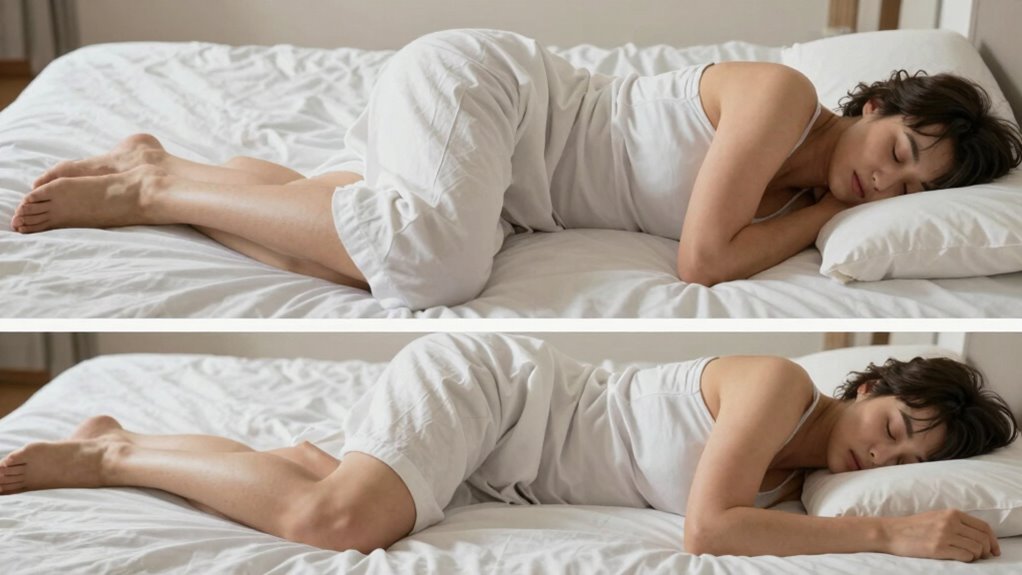
Side sleeping is popular and often recommended for its ability to alleviate certain health issues like sleep apnea. To make this position more comfortable, you need a pillow that fills the space between your ear and shoulder, supporting your head and neck properly. This prevents strain and keeps your spine straight. Your mattress firmness also plays a role here; a slightly softer mattress can help cushion your shoulders and hips, reducing pressure points. However, if your mattress is too soft, it might cause your body to sag, leading to misalignment. Conversely, a very firm mattress can create discomfort in these pressure-sensitive areas. Finding the right balance between pillow support and mattress firmness ensures side sleeping remains a comfortable, healthy position.
Stomach sleeping tends to be less recommended because it often strains your neck and back. If you prefer this position, choosing a thin pillow or skipping it altogether can help reduce neck twisting. A softer mattress might seem appealing, but it can lead to your hips sinking too deeply, causing lower back pain. Instead, a firmer mattress can help keep your spine more aligned, but it shouldn’t be so hard that it causes pressure points. Proper pillow support is essential here too, as it can prevent your head from turning excessively, which strains your neck. While stomach sleeping isn’t ideal for everyone, adjusting your pillow support and mattress firmness can make it more manageable and reduce discomfort.
In the end, your sleep position influences how pillow support and mattress firmness work together to give you a restful night. Paying attention to these factors and making small adjustments can substantially improve your sleep quality and overall well-being.
Frequently Asked Questions
How Do Sleep Positions Affect Sleep Quality Long-Term?
Your sleep position impacts your long-term sleep quality by affecting spinal alignment and pressure points. Sleeping on your back or side promotes better spinal health and reduces pressure on sensitive areas, leading to fewer aches and pains. Conversely, stomach sleeping can cause misalignment and strain. Consistently maintaining good positions helps prevent chronic discomfort, improves rest, and supports overall health. Choose your position wisely to guarantee restorative sleep night after night.
Can Changing Sleep Positions Improve Chronic Health Issues?
Like a tailor perfecting a suit, you can improve chronic health issues by adjusting your sleep posture. Changing your sleep position to enhance position comfort can reduce strain on your joints and organs, alleviating symptoms like acid reflux or back pain. Experimenting with different sleep positions can lead to better long-term health outcomes, ensuring you rest more comfortably and wake up refreshed, ready to face the day.
Are Certain Sleep Positions Better for Specific Ages?
Yes, certain sleep positions are better for specific ages because they support age-specific comfort and developmental sleep needs. For example, infants often need tummy or side sleeping for safety and breathing, while adults benefit from back or side positions that reduce pressure and improve circulation. As you age, comfort and health considerations change, so adjusting your sleep position can help meet your evolving developmental sleep needs and promote better rest.
How Do Sleep Positions Influence Snoring and Sleep Apnea?
Did you know that sleeping on your back increases snoring and sleep apnea risk by 50%? Your sleep posture directly influences airway obstruction; lying on your side helps keep airways open, reducing these issues. When you sleep on your stomach, it can also lessen snoring, but might cause neck strain. Adjusting your sleep position can markedly improve sleep quality by minimizing airway obstruction and easing breathing.
What Are the Best Pillows for Different Sleep Positions?
You should choose pillows based on your sleep position. For back sleepers, opt for medium firmness pillows with supportive pillow material like memory foam that maintains shape. Side sleepers benefit from firmer pillows with thicker profiles, using materials like latex or buckwheat for extra support. Stomach sleepers need softer pillows with plush pillow material, such as down or microfiber, to prevent neck strain. Adjust firmness and material for personalized comfort and proper alignment.
Conclusion
Choosing the right sleep position is like finding your perfect dance partner—each move feels natural and supportive. I once switched from sleeping on my stomach to my side, and suddenly, I woke up refreshed and pain-free. Studies show that your sleep posture can profoundly impact your rest and health. So, experiment until you find what feels right—after all, the best sleep position is the one that helps you wake up ready to face the day.