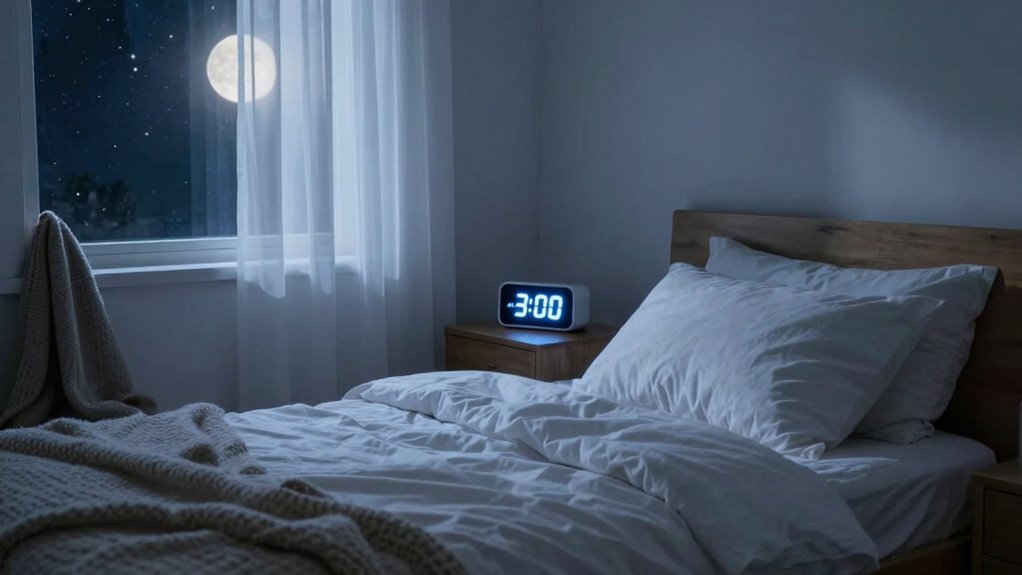

Waking up at 3AM often results from stress, anxiety, or environmental disruptions like noise or light, which keep your nervous system on high alert. Poor sleep habits, caffeine, spicy foods, or inconsistent routines can also cause early awakenings. To improve, try creating a calming sleep environment, sticking to a regular bedtime, and practicing relaxation techniques. For deeper insights and effective tips, keep exploring what might be disrupting your sleep tonight.
Key Takeaways
- Stress, anxiety, or unresolved worries can cause early awakening around 3AM. Practice relaxation techniques like deep breathing tonight.
- Sleep environment disruptions such as noise, light, or temperature fluctuations may trigger wakefulness; optimize your room conditions.
- Poor sleep habits or overstimulating bedtime routines can fragment sleep; establish a calming pre-sleep ritual tonight.
- Dietary choices like caffeine, heavy meals, or alcohol can disturb sleep; avoid these close to bedtime.
- Persistent or recurring awakenings warrant professional evaluation; consider consulting a healthcare provider if issues continue.
Why Do I Wake Up at 3AM? Common Causes Explained
Waking up at 3AM can be frustrating, and understanding why it happens is the first step toward fixing it. One common cause is your mind’s activity during sleep, which can be influenced by unresolved dreams or stress. Dream journaling helps identify recurring themes or anxieties that may cause nighttime awakenings. Additionally, poor sleep habits and an overstimulating bedtime routine can disrupt your sleep cycle. Incorporating bedtime meditation can calm your mind, making it easier to stay asleep through the night. These practices help create a peaceful passage into sleep and reduce disturbances. Recognizing these factors gives you actionable steps to improve your sleep quality and minimizes the chances of waking up in the middle of the night. Creating a sleep-friendly environment is also crucial, as factors like room temperature and lighting can significantly impact your sleep continuity. Adjusting your environment to support natural sleep patterns and minimize disruptions can promote more restful nights, especially when combined with understanding how your emotional needs influence sleep quality. Ensuring proper piercing care and hygiene during the day can also contribute to overall well-being, reducing stress that might interfere with your sleep. Incorporating contrast ratio awareness into your sleep space setup, such as managing lighting, can further enhance your ability to stay asleep.
How Stress and Anxiety Keep You Awake at Night

Have you ever wondered how stress and anxiety manage to keep you tossing and turning through the night? When your mind races and worries flood your thoughts, your body stays in a heightened state, making it hard to relax. Practicing mindfulness meditation helps calm your nervous system by focusing your attention on the present moment, reducing racing thoughts. Breathing exercises, like deep inhaling and slow exhaling, lower your heart rate and ease tension. These techniques interrupt the cycle of stress that keeps you awake, helping you shift into restful sleep. Additionally, understanding heat buffering techniques used in baking can serve as a helpful analogy—just as controlling oven temperature prevents burning, managing your body’s stress responses can prevent sleeplessness. Incorporating stress management techniques such as progressive muscle relaxation or visualization can further enhance your ability to unwind. Engaging in relaxation techniques like guided imagery or gentle stretching before bed can promote a calmer mind and body. Recognizing the importance of mind-body connection can motivate you to adopt these practices consistently. Developing a consistent bedtime routine can signal to your body that it’s time to wind down, making relaxation easier. By incorporating mindfulness meditation and breathing exercises into your nightly routine, you give yourself tools to manage anxiety and create a more peaceful, uninterrupted night’s sleep.
How Your Diet and Caffeine Intake Disrupt Sleep

Stress and anxiety can keep your mind active at night, but what you eat and drink also play a significant role in your sleep quality. Your diet disruption and caffeine interference can cause frequent awakenings, especially around 3AM. Consuming heavy or spicy meals before bed can cause discomfort, leading to disrupted sleep. Caffeine, a stimulant, blocks sleep-inducing chemicals, making it harder to stay asleep. To improve your sleep, consider:
Managing stress and avoiding heavy meals or caffeine before bed can improve your sleep quality.
- Avoiding caffeine after early afternoon
- Limiting alcohol, which can fragment sleep
- Eating light, early dinners
- Reducing sugary snacks before bed
- Being mindful of sleep environment factors that can influence rest
Additionally, paying attention to your diet patterns can help identify and mitigate other potential sleep disruptors. Incorporating sleep-friendly foods such as bananas or almonds can promote relaxation and support better sleep. These changes help minimize diet disruption and caffeine interference, allowing your body to relax and stay asleep longer. Recognizing how your choices impact sleep can help you wake up feeling more rested.
Create a Sleep-Friendly Environment to Stay Asleep
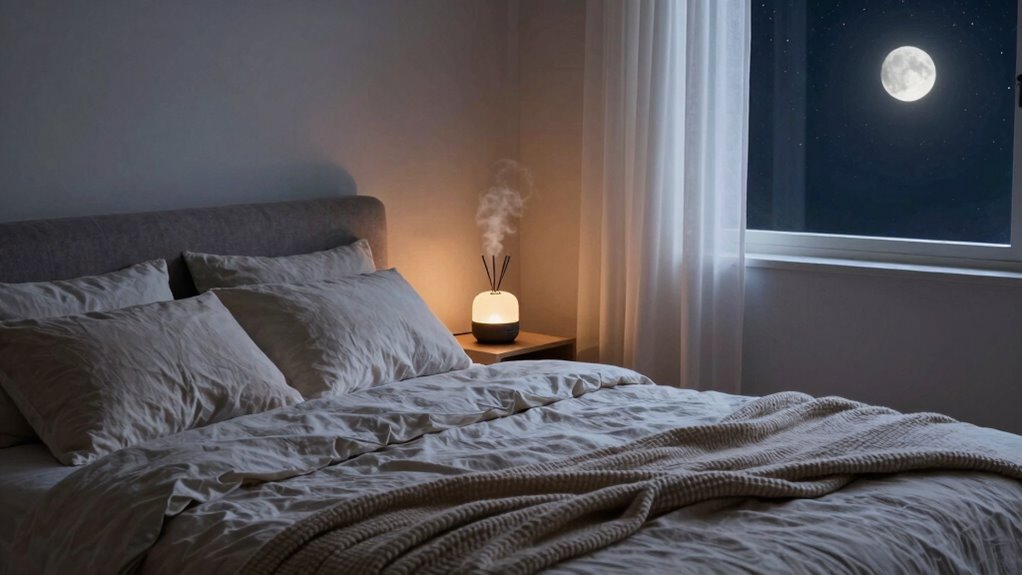
Creating a sleep-friendly environment is essential for staying asleep through the night. Your bedroom lighting plays a big role—keep it dim or use blackout curtains to block out streetlights and early morning sunlight. A dark, quiet room helps signal to your brain that it’s time to rest, making it easier to stay asleep. Turn your bedroom into a sleep sanctuary by removing electronic devices that emit blue light, which can interfere with melatonin production. Keep your mattress and pillows comfortable, and set the temperature to a cool, comfortable level—around 65°F (18°C). These small changes create an environment that promotes uninterrupted sleep, helping you avoid waking up at 3AM and improving your overall sleep quality. Additionally, ensuring good indoor air quality can reduce nighttime disruptions caused by dust or allergens, further supporting restful sleep. Proper ventilation also plays a key role in air exchange, helping to keep the air fresh and free of irritants, which can enhance your sleep environment. Incorporating air purifiers can further improve air quality by removing common indoor pollutants.
Lifestyle Changes That Help You Sleep Through the Night

Making simple lifestyle changes can notably improve your sleep quality. By optimizing your sleep environment and sticking to a consistent bedtime routine, you create conditions that support uninterrupted rest. These small adjustments can make a big difference in how well you sleep through the night. Incorporating relaxing activities, like avoiding screens before bed, can further enhance your sleep. Additionally, considering smart yard care devices such as robot mowers can reduce noise disturbances and create a quieter outdoor environment conducive to better sleep. Using drone insights to monitor your property can also help identify sources of noise or disturbances that might disrupt your rest. Incorporating foam rolling into your recovery routine can help reduce muscle tension and promote relaxation, further supporting restful sleep. Implementing noise reduction strategies around your home can further minimize disruptions and promote more restful sleep. Paying attention to noise pollution levels in your environment can also have a significant impact on sleep quality.
Sleep Environment Optimization
Optimizing your sleep environment is key to staying asleep through the night. Your bedroom setup should create a sleep sanctuary that promotes rest and minimizes disruptions. Start by controlling light: use blackout curtains or a sleep mask to block out external light. Keep the room cool, ideally between 60-67°F, to help your body relax. Reduce noise with earplugs or a white noise machine to drown out disturbances. Finally, invest in a comfortable mattress and pillows that support your preferred sleep position. These adjustments help establish a sleep-friendly environment, making it easier to stay asleep and wake up refreshed. Creating a sleep environment that minimizes external stimuli signals to your body it’s time to rest. Additionally, paying attention to room layout and furniture placement can further enhance sleep quality by reducing clutter and creating a calming space. Furthermore, incorporating proper bedroom lighting can reinforce your circadian rhythms and improve sleep consistency.
Consistent Bedtime Routine
Establishing a consistent bedtime routine signals to your body that it’s time to wind down, which can considerably improve your sleep quality. By sticking to regular bedtime rituals, you reinforce sleep consistency, helping you fall asleep faster and stay asleep longer. Consistent routines prepare your mind and body for rest, reducing nighttime awakenings. To create effective bedtime rituals, consider activities like reading, gentle stretching, or meditation. Avoid screens and caffeine before bed, as they disrupt your routine. Here’s a quick guide:
| Ritual | Timing | Benefits |
|---|---|---|
| Reading a book | 30 minutes before | Calms your mind |
| Meditation | 15 minutes prior | Reduces stress |
| Warm bath | 1 hour before | Eases muscle tension |
| Gentle stretching | 20 minutes before | Promotes relaxation |
| Avoid screens | 1 hour before | Enhances sleep quality |
Signs You Might Have a Sleep Disorder

If you frequently wake up in the middle of the night and struggle to fall back asleep, it could be a sign of a sleep disorder. Notice if you experience any of these:
- Loud snoring or choking sounds during sleep, which may indicate sleep apnea.
- Uncontrollable movements or sensations in your legs, typical of restless leg syndrome.
- Feeling exhausted or unrefreshed even after a full night’s sleep.
- Consistent difficulty staying asleep, leading to frequent awakenings.
These signs suggest underlying issues disrupting your sleep cycle. Sleep apnea causes breathing interruptions, while restless leg syndrome leads to uncomfortable sensations that keep you awake. Recognizing these symptoms is key to seeking proper treatment.
Simple Tips to Sleep Better Tonight

Getting a better night’s sleep might be simpler than you think. Start by tracking your sleep patterns with sleep tracking devices or apps. Monitoring your sleep helps identify habits that disrupt rest, so you can make targeted changes. Additionally, try dream journaling; writing down your dreams each morning can reveal subconscious stressors or patterns affecting your sleep. Establish a consistent bedtime and wind down with a calming routine, like reading or deep breathing. Limit screen time before bed, as blue light interferes with melatonin production. Keep your bedroom cool, dark, and quiet to create an ideal sleep environment. Combining sleep tracking and dream journaling gives you insight into your sleep habits and helps you develop personalized strategies for better sleep tonight.
When to See a Professional for Sleep Problems

While implementing tips like sleep tracking and creating a calming bedtime routine can improve your rest, persistent sleep issues may require professional help. If you experience ongoing difficulties, consider consulting a specialist. They can evaluate whether sleep therapy, such as cognitive behavioral therapy for insomnia (CBT-I), is appropriate. Additionally, a healthcare provider can review medication options if necessary. You should seek help if:
Persistent sleep issues may need professional help—consider consulting a specialist if problems last or affect daily life.
- You regularly wake up at 3AM and can’t fall back asleep
- Sleep problems last longer than a few weeks
- Sleep issues affect your daily functioning
- You’re experiencing symptoms like anxiety or depression related to sleep disturbances
Addressing these concerns early can prevent chronic problems and improve your sleep quality.
Frequently Asked Questions
Can Medication Help Prevent Waking up at 3AM?
Yes, medication can help prevent waking up at 3am, but you should talk to your doctor first. Sleep medication might offer short-term relief, yet herbal remedies could provide a natural alternative. Keep in mind, these options vary in effectiveness and potential side effects. It’s important to address underlying causes, so professional guidance guarantees you choose the safest, most effective approach for improving your sleep consistently.
Does Age Influence Waking up in the Middle of the Night?
As you age, your sleep patterns shift like the tides, making waking up in the middle of the night more common. Age-related changes in your body, such as decreased melatonin and hormonal fluctuations, can cause these disruptions. You might notice difficulty falling back asleep or shorter deep sleep cycles. Embrace these changes by creating a calming bedtime routine, reducing caffeine, and managing stress, helping you find smoother, more restorative nights despite the shifting sands of age.
Are There Specific Sleep Cycles Linked to Waking at 3AM?
Yes, specific sleep cycles, influenced by your sleep architecture, can cause you to wake around 3AM. During the night, your circadian rhythms naturally dip, especially in the early morning hours, making you more likely to wake. These fluctuations in sleep stages, such as shifts between deep sleep and REM, often coincide with that time. Understanding your body’s circadian rhythm and sleep stages can help you manage these wake-ups better.
How Does Hormonal Imbalance Affect Middle-Of-The-Night Awakenings?
Hormonal fluctuations can turn your sleep into a rollercoaster, making you wake at 3AM. When your hormones, like cortisol and melatonin, get out of sync, they disrupt your natural rhythm. Thyroid health also plays a role; imbalances here can send signals that wake you unexpectedly. You might feel like your body’s a puppet, with hormones pulling the strings, keeping you from reaching deep, restorative sleep.
Can Exercise Timing Impact My Sleep Continuity?
Yes, exercise timing can impact your sleep continuity. Exercising too close to bedtime may make it harder to fall asleep or cause awakenings, disrupting your sleep hygiene. Aim to finish vigorous workouts at least 2-3 hours before bed to allow your body to wind down. Consistently practicing good sleep hygiene, like maintaining a regular sleep schedule and avoiding screens before bed, also supports uninterrupted sleep.
Conclusion
If you find yourself waking at 3 a.m. regularly, know you’re not alone—about 30% of adults experience similar sleep disruptions. By identifying stressors, adjusting your diet, and creating a calming environment, you can improve your chances of staying asleep through the night. Remember, small changes often make a big difference. Don’t hesitate to seek professional help if sleep issues persist—better rest is within reach, and you deserve it.