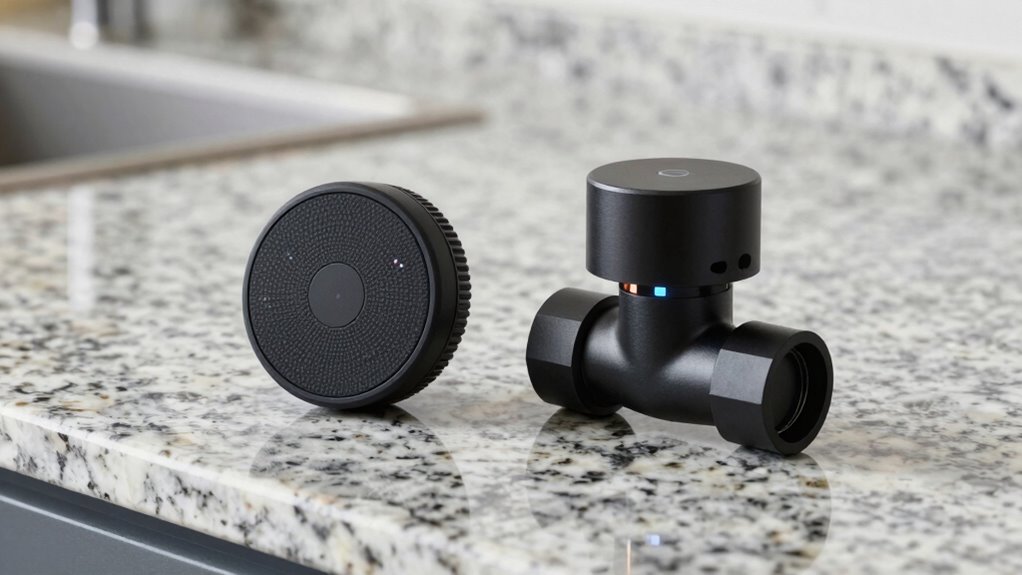

Choosing between a $20 leak sensor and a smart shutoff valve depends on your home’s needs. Sensors detect moisture and send alerts to prevent damage, but they might miss slow leaks or give false alarms. Shutoff valves automatically cut off water when a leak is detected, offering more reliable protection. To maximize safety and savings, consider your home layout and budget—more details can help you make an informed decision.
Key Takeaways
- Leak sensors (~$20) detect moisture and alert homeowners but do not stop water flow automatically.
- Smart shutoff valves automatically shut off water upon leak detection, offering proactive protection.
- Sensors are easy to install and cost-effective but may produce false positives; shutoff valves require more installation effort.
- Sensors primarily provide early alerts, while shutoff valves provide immediate, automatic leak response.
- Combining sensors with shutoff valves enhances overall leak protection and minimizes water damage risks.
Why Whole-Home Leak Protection Matters for Your Home
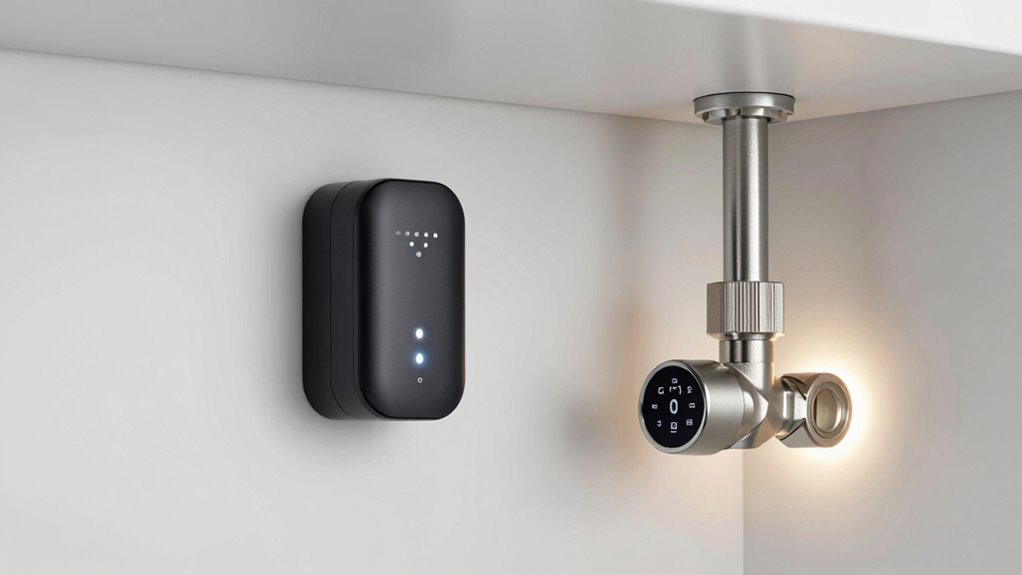
Whole-home leak protection is essential because even small leaks can cause significant damage over time. When pipes aren’t properly insulated, they’re more vulnerable to temperature fluctuations, which can lead to cracks and leaks. Proper pipe insulation helps maintain consistent water pressure, reducing stress on your plumbing system. High water pressure can strain pipes, increasing the risk of leaks and bursts that might go unnoticed until damage occurs. Additionally, Proper pipe insulation can help improve energy efficiency by reducing heat loss from hot water pipes. Maintaining a safe water system is crucial for preventing mold growth and structural damage caused by water intrusion. Using best leak detection sensors can help identify potential issues early before they develop into costly problems. Additionally, implementing electric leak sensors can provide immediate alerts to prevent water damage in real-time. Protecting your home from leaks isn’t just about fixing problems; it’s about preventing them before they happen. Incorporating advanced leak detection technology can further enhance your home’s safety by monitoring for leaks continuously and alerting you instantly.
Types of Leak Detection Devices: Sensors and Shutoff Valves
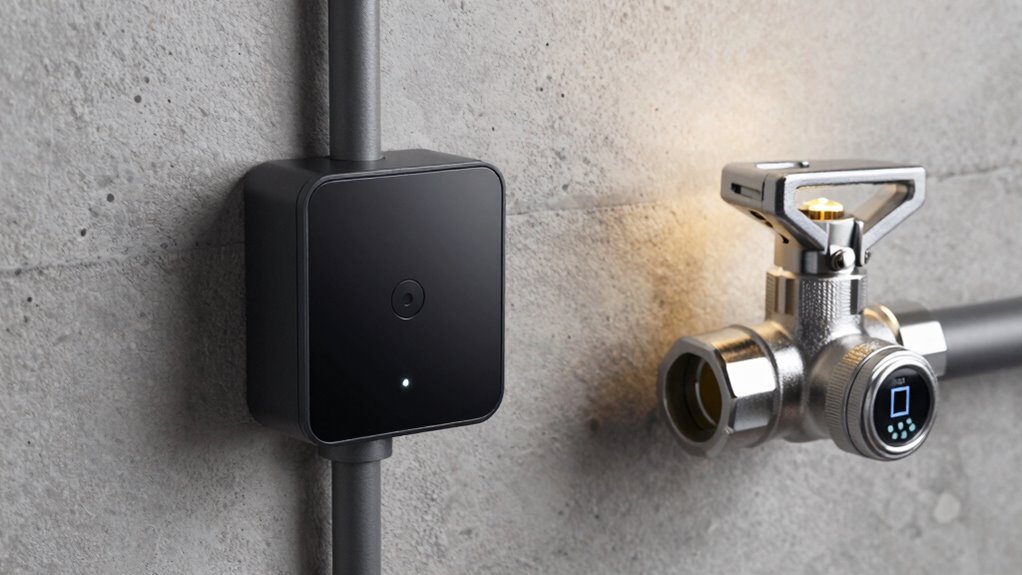
To effectively prevent water damage, incorporating leak detection devices into your home’s plumbing system is a smart move. Sensors and shutoff valves work together to monitor water pressure and trigger leak detection protocols. Sensors detect water presence at vulnerable points, sending alerts or activating shutoff valves to stop leaks immediately. Shutoff valves automatically cut off water flow when a leak is detected, minimizing damage. Choose between basic $20 sensors that alert you or advanced smart shutoff valves that act autonomously. Understanding how each device fits into your leak prevention plan helps you decide what’s best for your home. Properly integrated, these devices form a critical part of your leak detection protocols, reducing risk and protecting your property. Additionally, integrating water pressure monitoring can help identify abnormal fluctuations before a leak occurs, providing an extra layer of preventative protection. Being aware of leak detection devices and their capabilities is essential for comprehensive water damage mitigation. Regular system maintenance of these devices ensures they remain reliable and effective over time.
How Do $20 Leak Sensors Detect Water Leaks?
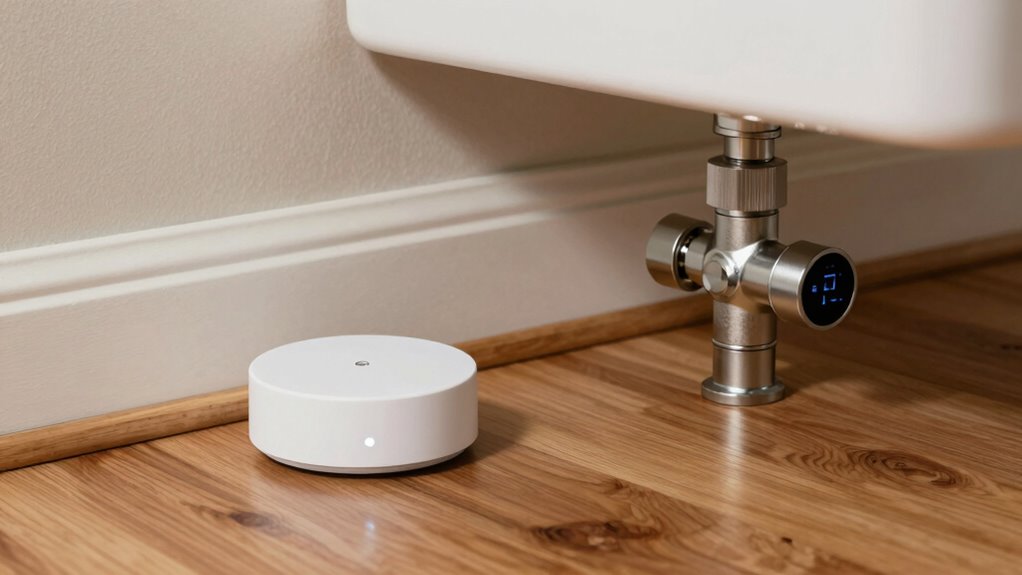
Ever wonder how inexpensive $20 leak sensors can detect water leaks so effectively? These sensors work by sensing moisture or water contact on their surface, alerting you before extensive damage occurs. Proper pipe insulation helps prevent condensation and leaks from forming in hidden areas, reducing the likelihood of unnoticed leaks. Additionally, these sensors are designed to monitor areas prone to drainage maintenance issues, such as under sinks or near appliances. Their water contact detection technology enhances their accuracy and reliability, making them a dependable choice for early leak detection. When water touches the sensor, it triggers an alert—often via a smartphone app or sound—so you can respond quickly. Their simple design allows them to detect leaks early, even in hard-to-see spots. Many of these sensors utilize moisture sensing capabilities, which further improves their effectiveness. The sensors often feature low power consumption, enabling longer operation without frequent battery replacements. This cost-effective approach helps you catch leaks quickly, saving money and preventing damage before it worsens. Additionally, installation ease makes them accessible for homeowners without specialized skills. Moreover, some models include wireless connectivity, making integration with smart home systems straightforward.
What Are Smart Shutoff Valves, and How Do They Protect Your Home?
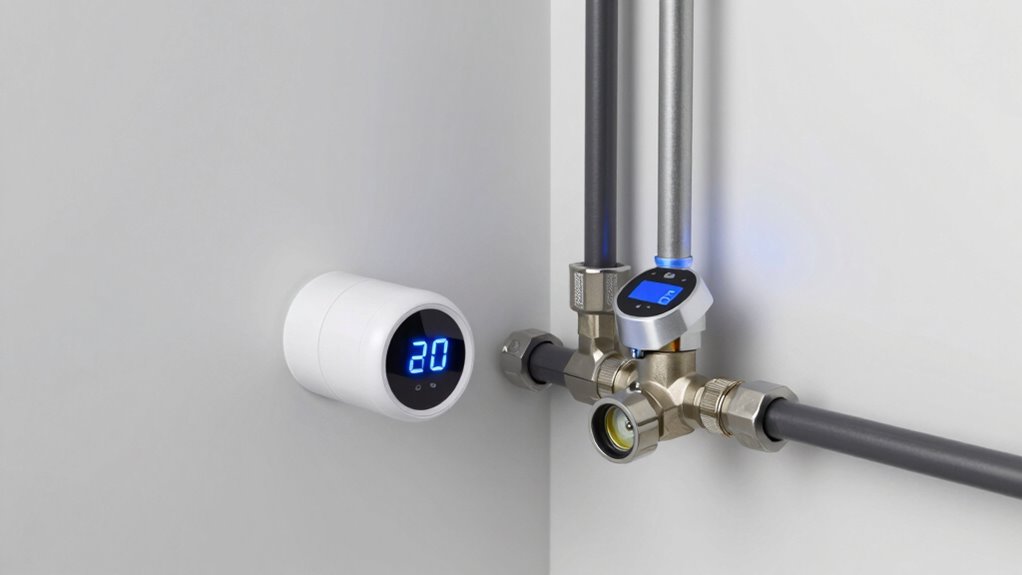
Smart shutoff valves automatically turn off your water supply when a leak is detected, preventing flooding and damage. They work in real-time, stopping leaks before they cause costly issues. With these valves, you gain peace of mind knowing your home is protected around the clock. Implementing privacy and security practices can further enhance your overall smart home safety. Using the right DIY tools can help ensure proper installation and maintenance of these systems. Additionally, choosing models with durable stainless steel components can increase their longevity and reliability over time. Incorporating regional water quality considerations can also ensure the longevity of your leak protection system, especially in areas with hard or contaminated water. Being aware of potential side-channel attacks can help you better defend your smart home devices against cyber threats.
Automatic Water Shutoff
Have you ever worried about hidden leaks causing water damage in your home? Smart shutoff valves automatically detect leaks and shut off your water supply, protecting your home from costly damage. These devices integrate into your smart home system, offering peace of mind and convenience. They respond swiftly to leaks, reducing water waste and conserving resources. Home safety is significantly enhanced with these innovative devices, providing real-time alerts and control. Moreover, these systems can help you avoid insurance claim issues by preventing extensive water damage. Additionally, many of these systems feature advanced leak detection technologies that can identify even minor leaks early, further safeguarding your property. Employing proper installation ensures maximum effectiveness and reliability of these leak protection systems. Understanding smart home integration can optimize the performance of your leak protection setup and ensure seamless operation.
Real-Time Leak Detection
Did you know that real-time leak detection is the key to preventing water damage before it happens? Smart shutoff valves monitor your home’s water pressure continuously, instantly sensing any drops or irregularities that might indicate a leak. They also consider factors like pipe insulation, which can influence leak risks, especially in colder months. When a leak is detected, the system automatically shuts off the water supply, stopping damage before it escalates. This proactive approach means you don’t have to constantly check for signs of trouble; instead, you get peace of mind knowing your home is protected around the clock. With real-time detection, you’re alerted immediately, allowing you to address issues swiftly and minimize repairs. Understanding microplastics in dust can also help identify potential indoor pollutants that affect air quality.
Which Is More Reliable: Leak Sensors or Smart Shutoff Valves?
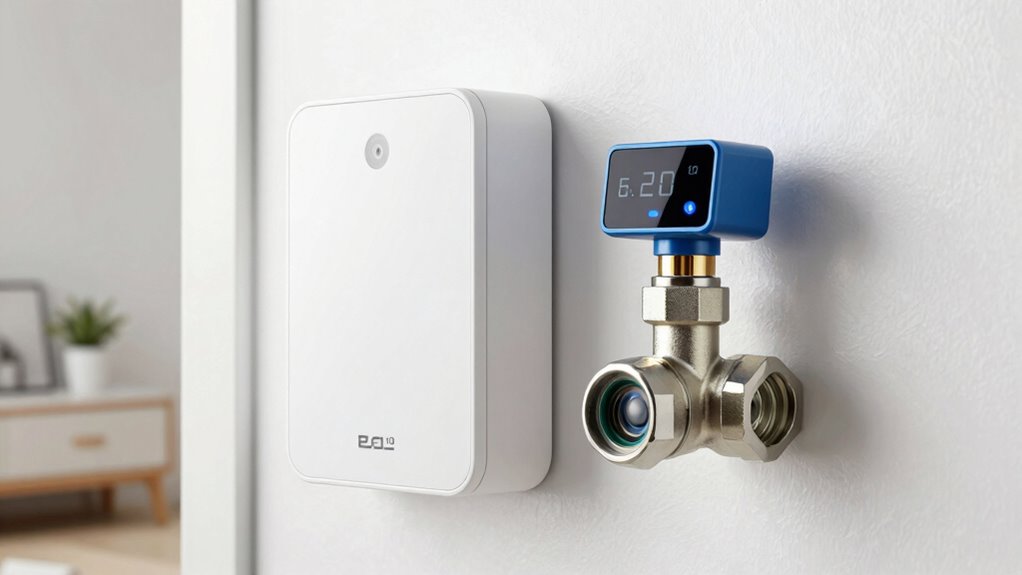
When deciding between leak sensors and smart shutoff valves, it’s important to contemplate their reliability in preventing water damage. Leak sensors are generally reliable if placed correctly near potential trouble spots, but their effectiveness depends heavily on sensor placement. Poor placement can lead to missed leaks. Smart shutoff valves, on the other hand, can automatically shut off water supply when a leak is detected, offering a more direct solution. However, their reliability depends on valve compatibility with your plumbing system and proper installation. While sensors can alert you early, shutoff valves provide a more definitive response. Both systems can be dependable when installed correctly, but shutoff valves tend to provide more consistent protection against significant water damage.
How Easy Is It to Install and Use These Leak Protection Systems?
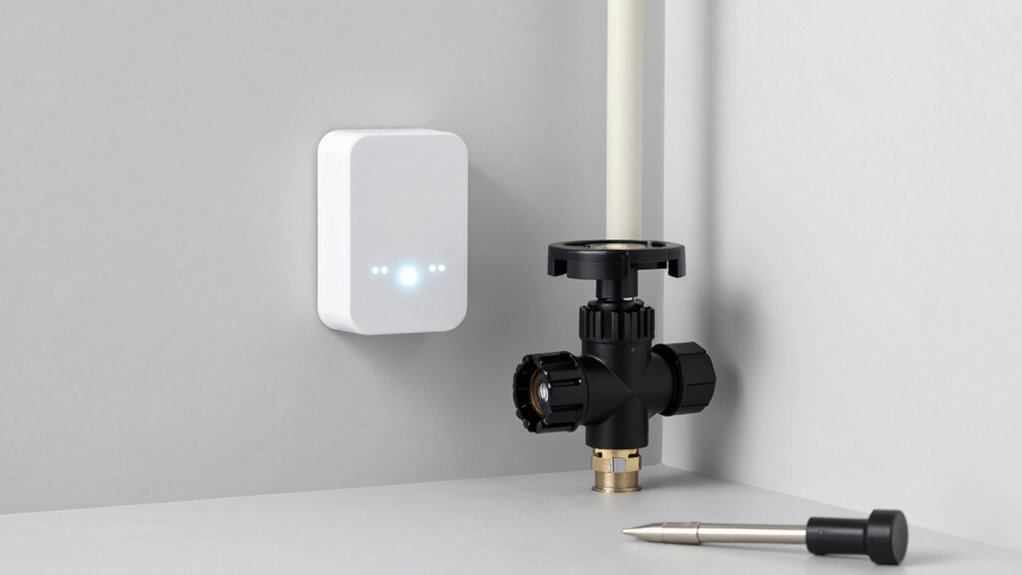
Installing leak sensors and smart shutoff valves varies in complexity, but most systems are designed for straightforward setup. You don’t need to be a DIY expert; many options feature plug-and-play installation with clear instructions. User friendliness is a key focus, so systems often include mobile apps or simple interfaces for easy management. To help you compare, here’s a quick overview:
| System Type | Installation Ease | User Friendliness |
|---|---|---|
| Leak sensors ($20) | Very easy, stick or place | Basic alerts via app or sound |
| Smart shutoff valves | Moderate, connect to water line | Intuitive app control |
| Wi-Fi-enabled sensors | Easy, connect to Wi-Fi | Simple setup, real-time alerts |
| Battery-operated sensors | Easy, replace batteries | User-friendly notifications |
What Are the Costs and Long-Term Savings of Leak Detection Options?
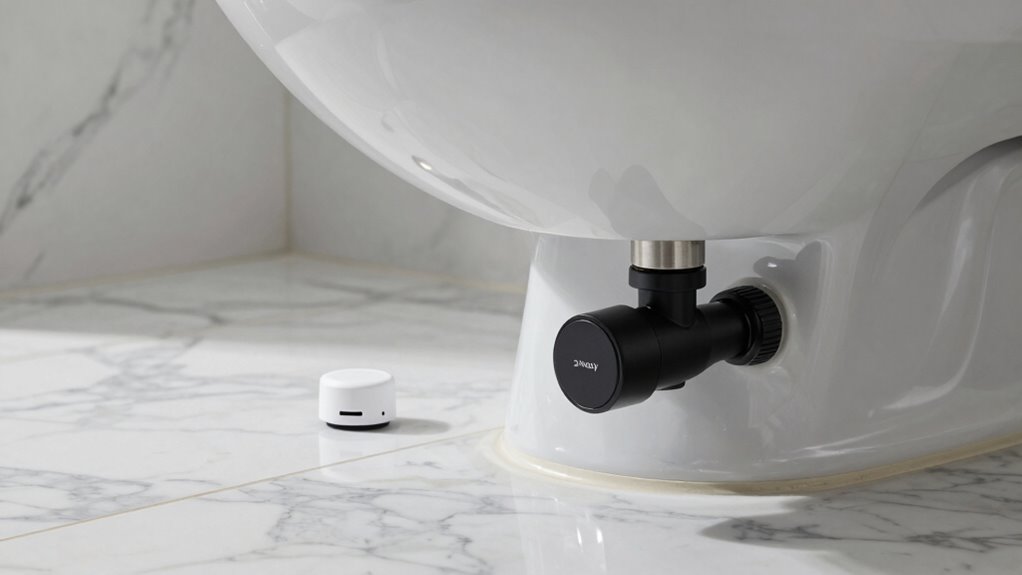
While leak detection systems may require an upfront investment, they can save you significant money in the long run by preventing costly water damage and mold growth. A proper cost comparison shows that small sensors costing around $20 each can add up quickly but require minimal maintenance—like replacing batteries every year. In contrast, a smart shutoff valve may cost $100–$200 but offers automatic water shutoff, reducing damage risk. Consider these points:
- Small sensors have low initial costs but need ongoing battery replacements.
- Smart shutoff valves have higher upfront costs but lower long-term maintenance.
- Both options save money by preventing repairs, but the smart valve minimizes water waste and damage more effectively.
Choosing the right system depends on balancing initial investment with long-term savings and maintenance needs.
Limitations of Leak Sensors and Smart Shutoff Valves You Should Know
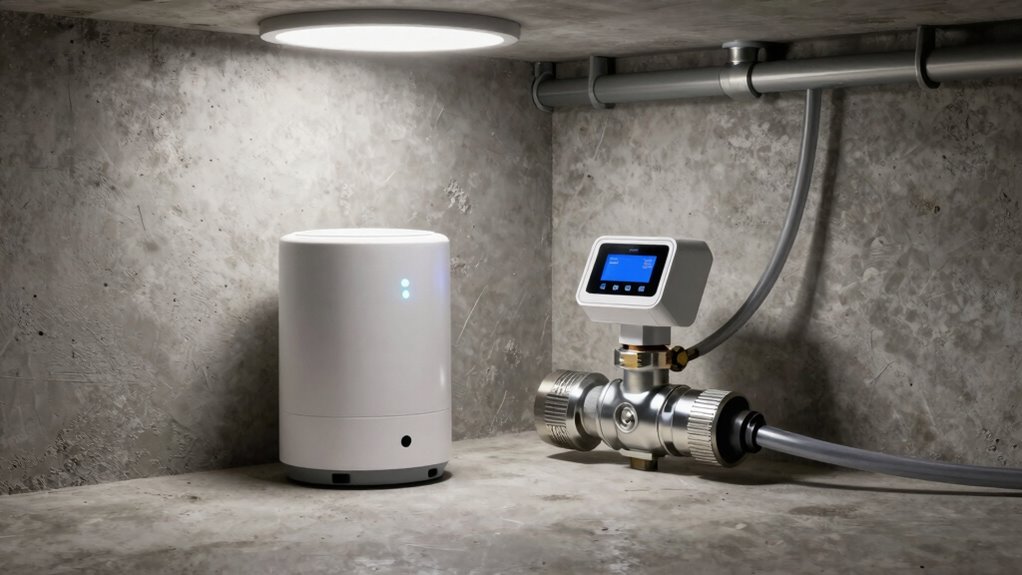
Leak sensors and smart shutoff valves can be valuable tools for protecting your home, but they do have limitations you should understand. Sensor limitations may cause false alarms or missed leaks if placement isn’t ideal. Valve vulnerabilities include potential mechanical failure or power outages, which can prevent timely shutoff. It’s important to recognize these challenges to avoid overreliance.
| Sensor Limitations | Valve Vulnerabilities |
|---|---|
| Sensitive to false positives | Mechanical failure |
| Limited detection range | Power outages disable shutoff |
| May not detect slow leaks | Vulnerable to tampering |
| Placement-dependent accuracy | Software or sensor glitches |
How to Choose the Best Leak Protection System for Your Home
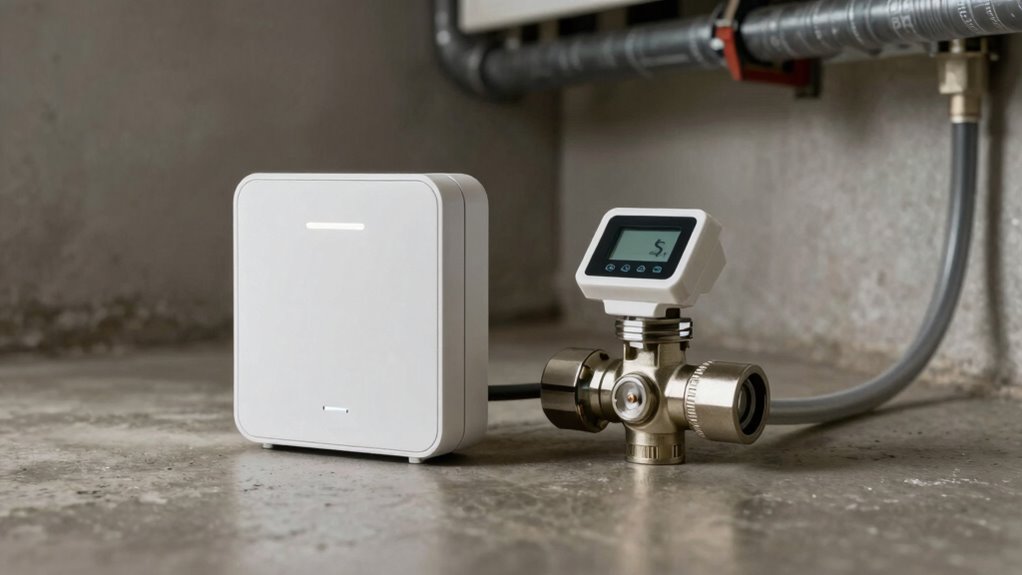
Choosing the right leak protection system for your home involves evaluating your specific needs and understanding the options available. Consider these factors to make an informed decision:
- Imagine a smart home setup where sensors alert you instantly, preventing water damage before it spreads.
- Picture a smart shutoff valve automatically stopping water flow at the first sign of a leak, saving your belongings.
- Think about the ease of integration with existing smart home devices for seamless monitoring and control.
Assess your home’s layout, your budget, and how much automation you want. If you prefer proactive protection, a smart shutoff valve might be best. For simpler coverage, sensors could suffice. Your choice should prioritize preventing costly water damage.
Frequently Asked Questions
Can These Systems Detect Leaks Behind Walls or Under Floors?
Yes, these systems can detect leaks behind walls or under floors, but effectiveness varies. The sensors placed in wall cavities or near underground piping can identify moisture or leaks early, giving you time to act. However, detection behind thick walls or deep underground piping may be limited. Regular maintenance and strategic sensor placement improve leak detection, ensuring you catch issues before they cause significant damage.
How Do Leak Detection Devices Differentiate Between Minor and Major Leaks?
You can spot how leak detection devices differentiate between minor and major leaks by adjusting sensor sensitivity settings. These settings help the system identify leak severity detection, so small drips trigger alerts without causing panic, while larger leaks activate shutoff mechanisms. Think of it as having a keen eye for detail—your device monitors water flow patterns, ensuring it responds appropriately, preventing minor issues from becoming major headaches.
Are Smart Shutoff Valves Compatible With All Home Plumbing Systems?
Smart shutoff valves aren’t compatible with all home plumbing systems, and you might face installation challenges or compatibility issues. Before purchasing, check your system’s type and size, as some valves require specific connections or additional adapters. If your plumbing is older or non-standard, installation could be complicated, so it’s wise to seek advice from a professional to verify it works smoothly and safely with your setup.
What Maintenance Is Required for Leak Sensors and Shutoff Valves?
You need to regularly check, calibrate, and test your leak sensors and shutoff valves. Calibrate sensors by following the manufacturer’s instructions to guarantee accurate detection, and test the valves by simulating leaks or using test features. This routine maintenance helps prevent false alarms, ensures reliable operation, and prolongs the lifespan of your system. Stay proactive with sensor calibration and valve testing to keep your home protected effectively.
Do These Leak Protection Systems Work During Power Outages?
During power outages, your water sensors and shutoff systems can still work if they have a battery backup. These systems rely on battery power to detect leaks and activate shutoff valves, ensuring continuous protection. Make sure your water sensors are equipped with fresh batteries and the backup system is maintained regularly. This way, even when the power’s out, you stay protected from unexpected leaks.
Conclusion
Think of leak protection like a garden hose with a shutoff valve—you want both to catch problems early and stop them fast. A simple $20 sensor can alert you to leaks, but a smart shutoff valve acts like a vigilant gardener, automatically shutting off water before damage spreads. Combining both gives you peace of mind, just like a well-tended garden stays healthy. Protect your home wisely—because prevention is the best kind of repair.