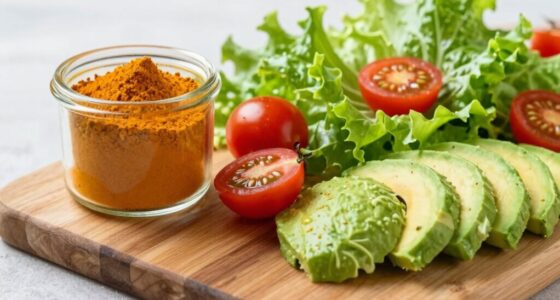
To cook for one without waste, plan your meals weekly, focusing on simple recipes that share ingredients to minimize leftovers. Store produce properly—leafy greens in paper towels and hard vegetables in airtight containers—to keep them fresh longer. Use reusable containers, label dates, and organize your fridge to prevent spoilage and duplicate purchases. By combining smart planning, storage, and organization, you’ll reduce waste and save money—stay tuned for more tips to master this straightforward approach.
Key Takeaways
- Plan meals weekly to buy only what you need and minimize leftovers.
- Store ingredients properly in reusable containers to extend freshness and prevent spoilage.
- Use versatile ingredients across multiple recipes to reduce waste and maximize usage.
- Label stored items with dates to track freshness and avoid consuming spoiled food.
- Organize your fridge and pantry for easy access and mindful ingredient management.
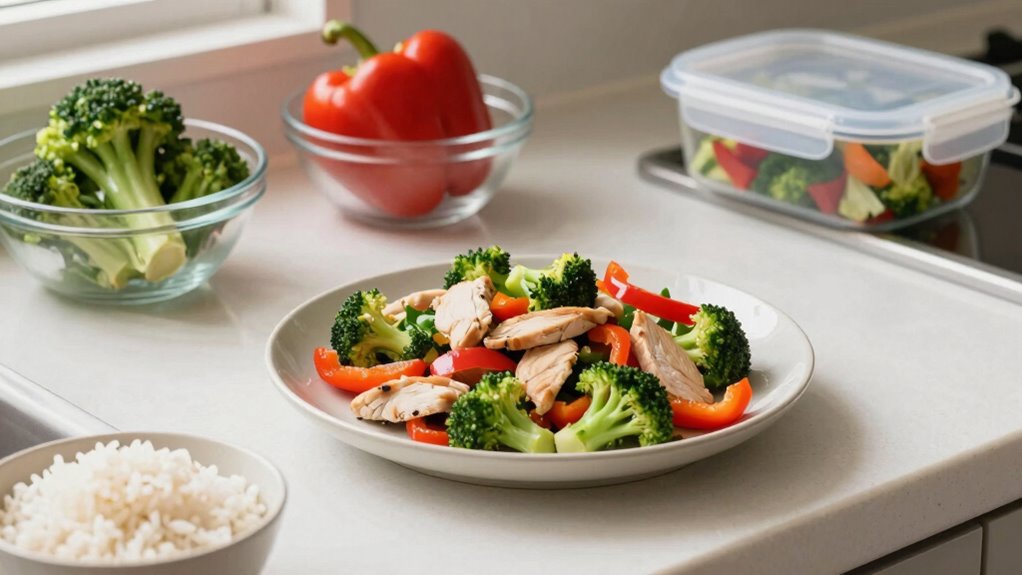
Cooking for one can be tricky, especially when it comes to avoiding food waste. One of the most effective ways to tackle this issue is through smart meal planning. Before heading to the store, take a few minutes to plan your meals for the week. Focus on simple recipes that share ingredients to minimize leftovers and reduce the risk of unused produce going bad. When you plan ahead, you can buy only what you need, cutting down on impulse purchases that might end up wasted. Think about versatile ingredients—like rice, eggs, or vegetables—that can be used in multiple dishes. This approach not only saves money but also makes your shopping list more efficient.
Once you’re home, proper ingredient storage becomes your best friend. Many people overlook how vital it is to store food correctly to extend its freshness. For example, keep leafy greens wrapped loosely in a paper towel inside a plastic bag to absorb excess moisture and prevent wilting. Hard vegetables like carrots and celery should go in the crisper drawer, ideally in airtight containers or wrapped tightly to prevent spoilage. For fruits, some do well in the fridge, while others, like bananas or tomatoes, are better kept at room temperature. Learning the best storage methods for different ingredients minimizes spoilage and makes your ingredients last longer, giving you more time to enjoy your fresh meals. Additionally, learning about regional flavors and chicory/coffee insights can inspire your meal choices and make your cooking more enjoyable.
Furthermore, consider investing in reusable containers to organize your fridge and pantry. Proper storage containers help you see what you have at a glance, reducing the temptation to buy duplicates or forget about ingredients. Label your containers with purchase or prep dates, so you know when it’s time to use or discard items. This habit guarantees you use ingredients at their peak freshness and avoid tossing spoiled food. When you store ingredients thoughtfully, you’re not only reducing waste but also streamlining your cooking process.
Meal planning and ingredient storage are interconnected strategies that make cooking for one more manageable and waste-free. By planning your meals with your ingredient shelf life in mind, you can cook just enough for each meal without leftovers that go bad. Storing ingredients properly prolongs their usability, giving you a longer window to enjoy your food. Together, these habits promote mindful eating, save money, and help you develop a sustainable routine. With a little effort upfront, you’ll find it easier to cook for yourself without the guilt or frustration of food waste piling up.
Frequently Asked Questions
How Can I Store Leftovers to Prevent Spoilage?
To prevent spoilage, you should store leftovers properly by using airtight containers and labeling them with dates. Keep leftovers in the refrigerator within two hours of cooking, ideally at 40°F or lower. Reheat only what you plan to eat, and consume leftovers within three to four days. Proper leftover storage helps you enjoy your food longer and reduces waste, making your cooking more sustainable and economical.
What Are Quick Meal Ideas for Busy Weekdays?
On busy weekdays, you can save time with quick meal ideas like stir-fries, salads, or wraps. Do some meal prep on weekends to streamline your week and consider ingredient swaps to keep things interesting. Use pre-cut veggies or rotisserie chicken to speed up cooking. These strategies help you eat well without spending hours in the kitchen, making it easier to stay on track and avoid takeout.
How Can I Plan Meals to Reduce Grocery Trips?
Think of your meal plan as a well-orchestrated symphony; with it, you reduce grocery trips and stay in tune. You can do this by meal prepping ahead of time and creating a detailed grocery list. This way, you buy only what you need, avoiding waste and extra visits to the store. Stick to your plan, and you’ll find grocery shopping becomes a smooth, efficient melody instead of a chaotic noise.
Are There Specific Tools to Help With Portion Control?
Yes, you can use measuring tools and portion containers to help with portion control. Measuring tools like cups and spoons guarantee you serve the right amount of food, preventing waste. Portion containers are perfect for pre-portioning leftovers or ingredients, making it easy to control servings and reduce waste. These tools make it simple to stick to your meal plan, saving money and minimizing food waste when cooking for one.
How Do I Adapt Recipes for Smaller Servings?
Ever wonder how to adapt recipes for smaller servings? You can easily do this through ingredient scaling, which means adjusting the amounts of each ingredient proportionally. When meal prepping, this helps you avoid waste and keeps portions just right. Why not try halving or even quartering recipes? It’s simple: reduce each ingredient accordingly, and you’ll enjoy perfectly portioned meals without excess leftovers.
Conclusion
So, here’s the irony: cooking for just yourself means you can avoid waste, yet it often feels like more effort than just ordering takeout. But with these simple strategies, you’ll prove that you don’t need a mountain of food to enjoy a delicious meal. Embrace the challenge, save leftovers wisely, and enjoy your solo dining adventure—because who knew that being eco-friendly could be so satisfying, and maybe even a little fun?