
Applying sunscreen only once in the morning won’t protect you all day. You need to reapply every two hours, especially if you’re sweating, swimming, or towel-drying. Even water-resistant formulas need fresh application after water exposure. Using the right ingredients is also key—mineral sunscreens like zinc oxide are often safer for sensitive skin. To stay protected, follow proper application routines and check ingredient safety details for your skin type; more tips are ahead.

Get health and wellness essentials delivered free with Prime
- Fast, free delivery on millions of items
- Prime Video, Amazon Music and more included
- Member-only deals all year
Key Takeaways
- Applying sunscreen only once in the morning fails to provide all-day UV protection.
- Reapplying every two hours, especially after sweating or swimming, is essential for effectiveness.
- Using chemical filters with potential irritants or hormones may reduce safety; mineral sunscreens are preferable.
- Choosing the wrong SPF or neglecting ingredient safety can compromise protection and skin health.
- Proper application, including sufficient amount and coverage, is crucial; uneven or scanty use diminishes effectiveness.
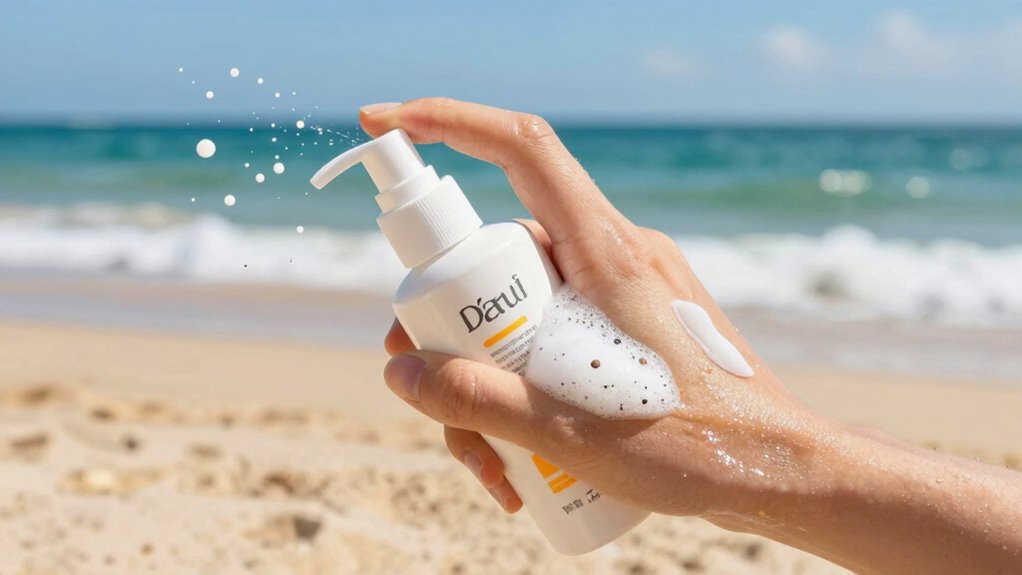
Sunscreen is an essential tool for protecting your skin from harmful UV rays, which can cause sunburn, premature aging, and skin cancer. However, even the best sunscreen won’t do its job if you don’t apply it correctly or consistently. One common mistake is neglecting proper application frequency. It’s not enough to slather it on once in the morning and forget about it. You need to reapply every two hours, especially if you’re sweating, swimming, or towel-drying. Many people assume a single application lasts all day, but UV protection diminishes over time, leaving your skin vulnerable. If you’re spending extended periods outdoors, plan to reapply more often—every two hours is the general rule—regardless of whether your sunscreen claims to be water-resistant. Failing to do so can markedly reduce its effectiveness, increasing your risk of sun damage.
Another essential aspect often overlooked is ingredient safety. When choosing a sunscreen, you should look beyond SPF numbers and consider the ingredients. Some chemical filters, like oxybenzone and avobenzone, have raised concerns about skin irritation or potential hormonal effects, especially with frequent use. On the other hand, mineral sunscreens containing zinc oxide or titanium dioxide are generally regarded as safer options because they sit on the skin’s surface and reflect UV rays. Always check the ingredient list if you have sensitive skin or allergies. It’s important to select a product formulated with safe, non-irritating ingredients, so you’re not risking skin reactions or long-term health issues. Be wary of sunscreens with overly complex formulations filled with fragrances or preservatives, which can cause irritation or allergic responses. Moreover, understanding the vetted safety of ingredients helps you make better choices tailored to your skin type. For example, if you have sensitive or acne-prone skin, mineral sunscreens might be a better fit because they tend to be gentler. Conversely, if you prefer a lightweight feel and are comfortable with chemical filters, look for reputable brands that use safer, dermatologically approved ingredients. Remember, the goal is to find a sunscreen that not only offers adequate SPF protection but also aligns with your skin’s needs and minimizes potential risks.
water-resistant mineral sunscreen SPF 50
As an affiliate, we earn on qualifying purchases.
As an affiliate, we earn on qualifying purchases.
Frequently Asked Questions
How Often Should I Reapply Sunscreen During the Day?
You should reapply sunscreen every two hours during the day, especially if you’re outdoors or sweating. Proper sunscreen application involves covering all exposed skin thoroughly and evenly. Remember, reapplication timing is essential after swimming or towel drying, even if the label says water-resistant. Don’t forget to reapply more often if you’re in direct sunlight for extended periods, ensuring continuous protection and preventing sun damage.
Can Sunscreen Be Effective on Cloudy Days?
Under a cloudy sky, UV penetration can be as relentless as a tidal wave, making sunscreen still essential. It can be effective because clouds don’t block UV rays completely; they diffuse and allow harmful rays to reach your skin. So, don’t skip sunscreen on overcast days. Reapply regularly, especially if you’re outdoors for extended periods, to keep your skin protected from invisible UV threats.
Is SPF 50 Significantly Better Than SPF 30?
SPF 50 provides better sun protection than SPF 30, especially for prolonged sun exposure, as the SPF comparison shows it blocks about 98% of UV rays compared to 97% with SPF 30. While the difference seems small, it’s significant if you spend a lot of time outdoors. Always reapply sunscreen regularly to guarantee maximum sun protection, regardless of SPF level.
Are Natural or Mineral Sunscreens Better Than Chemical Ones?
Is natural or mineral sunscreen better? Think of it as choosing between a gentle guardian and a powerful shield. Mineral sunscreens, made with natural ingredients and mineral filters like zinc oxide or titanium dioxide, often provide broad-spectrum protection without harsh chemicals. They’re ideal for sensitive skin and those wanting a more eco-friendly option. So, if you prefer a more natural approach, mineral sunscreens are your best bet for effective, gentle sun protection.
Can Sunscreen Prevent All Types of Skin Cancer?
Sunscreen can’t prevent all types of skin cancer, but it considerably reduces your risk by providing UV protection. When you apply broad-spectrum sunscreen daily, you shield your skin from harmful UVA and UVB rays that can cause skin cancer. Remember, no sunscreen is foolproof, so combine it with other protective measures like seeking shade and wearing protective clothing to better safeguard your skin’s health.
reusable sunscreen applicator brush
As an affiliate, we earn on qualifying purchases.
As an affiliate, we earn on qualifying purchases.
Conclusion
Think of your sunscreen as a trusted shield in a battle. If you neglect to apply it properly or ignore reapplication, even the strongest armor becomes useless. Just like a knight’s armor needs to be intact to protect him, your sunscreen needs consistent care to do its job. Remember, the sun’s rays are relentless, but with proper application and vigilance, you can stay protected and keep your skin safe—your ultimate armor against damage.
broad spectrum mineral sunscreen for sensitive skin
As an affiliate, we earn on qualifying purchases.
As an affiliate, we earn on qualifying purchases.
SPF 30 face sunscreen for daily use
As an affiliate, we earn on qualifying purchases.
As an affiliate, we earn on qualifying purchases.
Halloween Picks
halloween
As an affiliate, we earn on qualifying purchases.