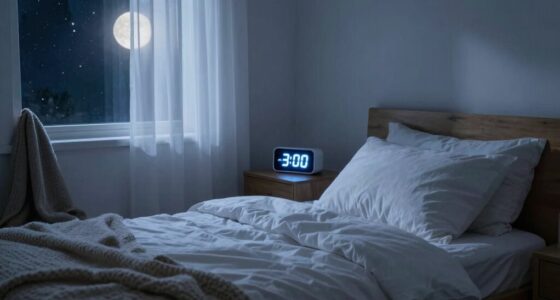
Even if you sleep for a full eight hours, poor sleep quality can leave you feeling tired because your sleep cycles might be disrupted. Factors like a noisy or bright environment, uncomfortable bedding, or screen time before bed can fragment your sleep, preventing deep and REM stages that refresh your body and mind. If you want to understand how environment and routines affect your sleep, you’ll find useful tips that could help improve your rest if you keep exploring.

Get health and wellness essentials delivered free with Prime
- Fast, free delivery on millions of items
- Prime Video, Amazon Music and more included
- Member-only deals all year
Key Takeaways
- Sleeping for 8 hours doesn’t guarantee completing all necessary sleep cycles, leading to tiredness.
- Poor sleep environment (noise, light, discomfort) fragments sleep, reducing sleep quality despite sufficient duration.
- Disrupted melatonin production from screens or bright lights can impair sleep quality even with adequate hours.
- Fragmented or interrupted sleep prevents deep and REM stages, crucial for restorative rest.
- Consistent routines and a conducive environment enhance sleep quality, making 8 hours more effective.

Many people believe that getting enough hours of sleep is the key to feeling rested, but quality often matters more than quantity. If you’re waking up still feeling tired after a full eight hours, it might be because your sleep isn’t as restorative as it could be. Your sleep isn’t just about clocking hours; it’s about how well your body moves through different sleep cycles. Sleep cycles, which last about 90 minutes, include light sleep, deep sleep, and REM sleep. Each stage has an essential role: deep sleep helps your body repair itself, while REM sleep consolidates memories and refreshes your mind. If your sleep is fragmented or you’re missing out on these cycles, you’ll wake up feeling exhausted, regardless of how long you lay in bed.
Your sleep environment plays a fundamental role in ensuring those cycles happen smoothly. Think about your bedroom—if it’s noisy, too bright, or uncomfortable, it disrupts your ability to enter and stay in the deeper, more restorative stages of sleep. A cool, dark, and quiet room signals to your body that it’s time to rest, promoting longer periods of uninterrupted sleep. Investing in a good mattress and pillows also makes a difference; if your bed is uncomfortable, you’re more likely to toss and turn, fragmenting your sleep cycles. Additionally, minimizing screens and bright lights before bed helps your body produce melatonin, the hormone that regulates sleep, so you can fall asleep faster and stay in those essential sleep stages longer. Proper yarn for sleep accessories like comfortable pillows and sleep masks can also improve sleep quality.
Many people underestimate how much their sleep environment impacts sleep quality. Even if you’re in bed for eight hours, a disruptive environment can prevent you from completing enough sleep cycles, leaving you tired and sluggish. Establishing a consistent bedtime routine and creating a sleep-friendly environment can help your body stay aligned with its natural rhythms. This includes keeping your room cool and dark, reducing noise, and avoiding stimulants like caffeine close to bedtime. By paying attention to your sleep environment and understanding sleep cycles, you set the stage for truly restorative sleep. It’s not just about the hours you clock but about how well you use those hours that determines how rested you’ll feel in the morning.
comfortable memory foam mattress
As an affiliate, we earn on qualifying purchases.
As an affiliate, we earn on qualifying purchases.
Frequently Asked Questions
How Does Age Affect Sleep Quality and Quantity?
As you age, your sleep quality and quantity decline due to age-related changes in your sleep cycle. You may find it harder to fall asleep, stay asleep, and experience restorative deep sleep. These changes often lead to shorter sleep duration and more awakenings during the night. Consequently, even if you sleep for eight hours, you might wake up feeling tired because your sleep cycle isn’t as restorative as it once was.
Can Diet Influence How Rested I Feel After Sleep?
Ever wondered if your diet impacts how rested you feel? It definitely does. Your diet impact and nutrient influence your sleep quality by affecting hormone production, digestion, and energy levels. Eating balanced meals rich in magnesium, tryptophan, and complex carbs can promote better sleep, while heavy or sugary foods before bed might disrupt it. So, what you eat directly influences how refreshed you feel after sleep.
What Role Does Stress Play in Sleep Efficiency?
Stress markedly impacts your sleep efficiency by elevating cortisol levels, which can make falling asleep and staying asleep difficult. When you don’t manage stress well, your body stays in a heightened state of alertness, disrupting your sleep cycles. Practice stress management techniques like meditation or deep breathing to lower cortisol, helping your body relax and improve sleep quality, so you wake up feeling more refreshed after your 8 hours.
Are Naps Beneficial or Disruptive to Nighttime Sleep?
Power naps can be beneficial if timed correctly, typically lasting 20-30 minutes, as they boost alertness without disrupting your circadian rhythms. However, long or late-afternoon naps might interfere with nighttime sleep, making it harder to fall asleep or reducing sleep quality. To avoid disruption, keep naps short and early in the day, ensuring they complement your circadian rhythms rather than conflict with them.
How Do Sleep Disorders Impact Perceived Fatigue?
Sleep disorders like sleep apnea and restless legs markedly increase your perceived fatigue. Sleep apnea causes frequent breathing interruptions, leading to fragmented sleep and poor rest. Restless legs make it hard to fall asleep or stay asleep, leaving you tired despite enough hours in bed. These disruptions lower sleep quality, making you feel fatigued during the day, even if you think you’re getting enough sleep. Addressing these issues improves your energy levels.
As an affiliate, we earn on qualifying purchases.
Conclusion
Remember, it’s not just about clocking eight hours—it’s about truly resting your body and mind. Sleep quality matters more than quantity, like pouring fine water into a cracked cup—it leaks away before you can enjoy it. So, prioritize deep, uninterrupted sleep over mere hours. After all, isn’t it better to have a few precious, restorative hours than countless restless ones? Sleep well, and let your body thank you for the difference.
As an affiliate, we earn on qualifying purchases.
As an affiliate, we earn on qualifying purchases.
Halloween Picks
halloween
As an affiliate, we earn on qualifying purchases.