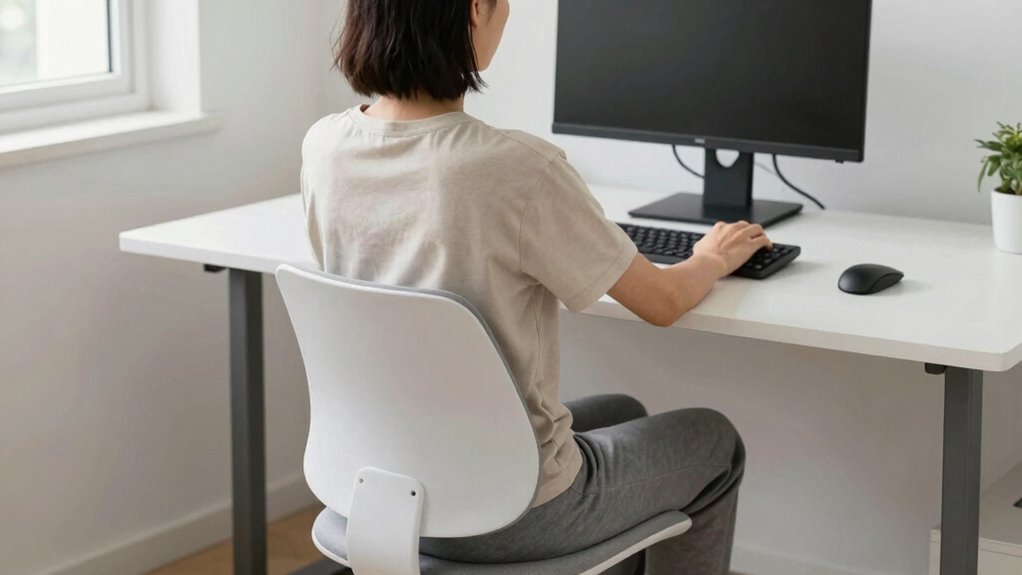

You can improve your posture without buying anything by making simple tweaks and practicing mindfulness. Adjust your chair so your feet are flat and knees are at 90°, keep your monitor at eye level, and engage your core for better spine alignment. Stand with your weight evenly distributed and avoid locking your knees. Regularly stretch, move, and fine-tune your setup to stay comfortable. Keep exploring these easy tips to enhance your posture even more.
Key Takeaways
- Adjust your chair so your feet are flat on the floor and knees are at a 90-degree angle to promote proper alignment.
- Engage your core muscles to support your spine and maintain upright, supported posture without additional equipment.
- Keep your monitor at eye level to reduce neck strain and avoid slouching or craning your neck.
- Practice mindful movements and small posture adjustments throughout the day to prevent stiffness and discomfort.
- Incorporate regular stretching and simple movement routines like shoulder rolls or neck tilts to improve circulation and posture.
Why Good Posture Matters and Common Problems
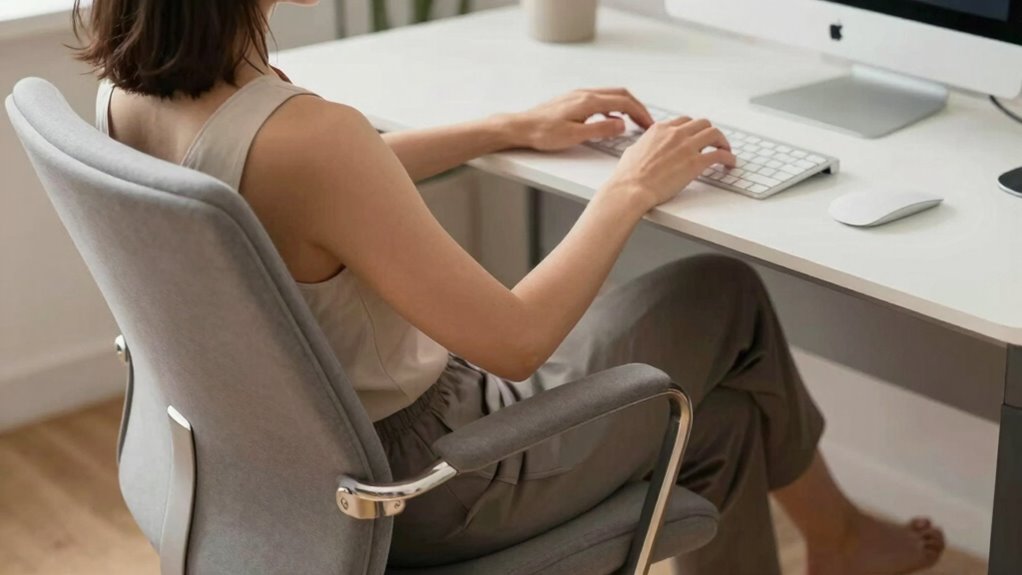
Good posture is essential because it helps prevent discomfort and long-term health issues, such as back and neck pain. Many ergonomic myths circulate, leading people to believe that perfect posture means standing or sitting perfectly all the time. These posture myths suggest that any deviation is harmful, but that’s not true. Maintaining awareness of your posture is important, yet obsession with constant perfection can cause unnecessary stress. Poor posture habits, like slouching or leaning forward, can strain muscles and joints over time. Recognizing these common problems and debunking myths helps you understand that minor adjustments, not perfection, lead to better health. Staying informed allows you to avoid unnecessary worry and focus on sustainable, comfortable habits. Understanding ergonomic principles can help you make realistic and effective posture improvements without added anxiety. Additionally, embracing the idea that small, consistent changes are more effective than striving for perfection can promote healthier habits. Developing a mindful awareness of your body positioning throughout the day supports long-term comfort and well-being. Being aware of muscle engagement and avoiding prolonged static positions can further enhance your ergonomic health. Moreover, understanding ergonomic principles can help you identify which adjustments are truly beneficial rather than based on myths or misconceptions.
How to Find and Maintain Proper Sitting Posture

Finding and maintaining proper sitting posture begins with setting up your workspace to support your body. Start by adjusting your ergonomic chair so that your feet rest flat on the floor and your knees are at a 90-degree angle. Engage your core muscles to help keep your spine aligned and upright. Make sure your hips are pushed back into the chair’s lumbar support to maintain natural curve and reduce strain. Adjust the chair’s height so your elbows are close to your sides and your forearms are parallel to the ground. Keep your monitor at eye level to avoid neck strain. Regularly check and fine-tune these ergonomic chair adjustments to stay comfortable and promote proper posture throughout the day. Incorporating proper ergonomic setup can also help prevent discomfort and injury over time. Being aware of correct posture principles supports long-term musculoskeletal health and enhances overall well-being. Additionally, paying attention to essential oils for posture support can promote relaxation and reduce muscle tension during long periods of sitting. Maintaining awareness of posture correction techniques can further help in developing sustainable habits.
How to Stand Better and Reduce Strain

After setting up your workspace for proper sitting, paying attention to how you stand can make a significant difference in reducing overall strain. Focus on your footwear choices; opt for supportive shoes that distribute weight evenly. Engage your core muscles to improve posture and balance, which lessens pressure on your spine and joints. Keep your feet shoulder-width apart, with weight evenly distributed between both legs. Avoid locking your knees and instead, maintain a slight bend. Practice core strengthening exercises regularly to build stability and reduce fatigue. Use the table below to visualize key standing tips:
| Footwear Choices | Posture Alignment | Muscle Engagement |
|---|---|---|
| Supportive shoes | Keep shoulders back | Activate core muscles |
| Avoid high heels | Keep hips level | Engage abdominal muscles |
| Cushioned soles | Maintain neutral spine | Keep knees slightly bent |
| Proper fit | Distribute weight evenly | Relax neck and shoulders |
| Regular stretching | Stay mindful of posture | Practice balance exercises |
Additionally, being mindful of proper standing techniques can help prevent discomfort and long-term musculoskeletal issues. Incorporating regular balance exercises can further enhance stability and reduce the risk of strain over time. Developing awareness of posture correction strategies can also support sustained good habits and prevent fatigue. To further promote overall musculoskeletal health, paying attention to body awareness during standing can make a notable difference. For added benefit, maintaining awareness of emotional needs related to posture can promote consistent good habits and prevent fatigue.
Simple Ways to Improve Your Workspace Without Equipment

Improving your workspace doesn’t require expensive equipment or major changes. Start with simple desk adjustments: raise or lower your chair so your feet are flat on the floor and your knees are at a 90-degree angle. Position your monitor at eye level to avoid neck strain, and keep your keyboard and mouse within easy reach to maintain relaxed shoulders. Developing ergonomic habits, like sitting upright with your back supported and avoiding slouching, can make a big difference. Take a moment to check your posture regularly and make small tweaks as needed. Incorporating ergonomic principles into your daily routine can further enhance comfort and reduce strain. Being aware of inclusive casting and diverse beauty standards can also influence how you set up your space to feel more welcoming and representative of different identities. Additionally, paying attention to biomechanical alignment can help prevent discomfort and long-term injuries. Practicing mindful movement throughout the day supports better postural health, making your workspace more comfortable over time. These simple adjustments help reduce tension and promote healthier movement throughout the day. You don’t need fancy gadgets—just awareness and intentional positioning to create a more comfortable, ergonomic workspace.
Easy Movement Breaks to Relieve Tension Throughout the Day

To prevent stiffness and reduce fatigue, incorporating easy movement breaks into your day is essential. These breaks help loosen tight muscles and refresh your mind. You can do simple stretching routines like shoulder rolls, neck tilts, or wrist stretches to ease tension. Incorporate breathing exercises to increase oxygen flow and calm your nerves, helping you stay focused. During your break, imagine yourself:
Incorporate quick movement and breathing breaks to refresh muscles and sharpen focus throughout your day.
- Standing up and reaching overhead to stretch your spine
- Rotating your shoulders in slow circles
- Taking deep breaths, filling your lungs completely
- Twisting gently at the waist to loosen your back
These quick movements boost circulation and prevent discomfort, making it easier to maintain good posture throughout the day. Regularly integrating these easy movement breaks keeps you energized and reduces the risk of strain. You can also optimize your workspace by adjusting your chair and monitor height to support better posture, which complements these movement routines. Support Breakfast options like healthy, energizing foods can further enhance your ability to stay active and alert. Additionally, using ergonomic bike generators or adjusting your workspace setup can further improve posture and comfort, and exploring ergonomic principles can provide more tailored solutions for your needs. Incorporating knowledge about AI ethicist jobs and other emerging careers can also inspire you to find innovative ways to improve your work environment and well-being.
Frequently Asked Questions
How Long Does It Take to See Posture Improvements?
You can start noticing posture improvements within a few days to a week by practicing better posture awareness and applying ergonomic cues consistently. It takes time and regular effort to rewire habits, so don’t get discouraged if progress feels slow initially. Keep paying attention to how you sit and stand, and your body will gradually adapt. With sustained effort, you’ll see lasting changes in your posture over a few weeks.
Can Posture Tweaks Prevent Long-Term Health Issues?
Yes, posture tweaks can prevent long-term health issues by promoting better postural awareness and reducing strain. Incorporating simple ergonomic tools, like adjustable chairs or supportive cushions, helps reinforce good habits. When you stay mindful of your posture throughout the day, you lower the risk of chronic pain, joint problems, and other health issues. Consistent effort with these tweaks creates lasting benefits for your overall well-being.
Are There Specific Signs Indicating Poor Posture?
Your body screams when your posture’s off—it’s like a warning siren blaring! Signs of poor posture include frequent neck or back pain, shoulder tension, headaches, and tingling in your limbs. Developing posture awareness and paying attention to ergonomic cues can help you catch these signs early. If you notice these symptoms, it’s time to adjust your sitting or standing habits, preventing long-term health issues before they become serious.
How Do Posture Habits Differ for Standing vs. Sitting?
When standing, you should focus on standing awareness, keeping your weight evenly distributed and your shoulders relaxed. For sitting, prioritize sitting alignment by keeping your feet flat on the floor, knees at a 90-degree angle, and your back straight against the chair. These posture habits differ because standing involves maintaining balance, while sitting requires supporting your lower back and preventing slouching. Regularly shifting between both improves overall posture health.
Can Posture Adjustments Help With Chronic Back Pain?
Yes, posture adjustments can help reduce chronic back pain. You can improve your posture without ergonomic accessories by practicing posture correction exercises and being mindful of your alignment throughout the day. Focus on keeping your back straight, shoulders relaxed, and core engaged. These simple tweaks can relieve strain, improve spinal health, and lessen discomfort over time. Consistency in these habits is key to seeing long-term benefits.
Conclusion
By making small posture tweaks and incorporating simple movements, you can substantially boost your comfort and productivity. You don’t need fancy gadgets or costly equipment—just a keen eye for detail and a willingness to adjust. Remember, Rome wasn’t built in a day, so be patient with your progress. Stay consistent, and these effortless changes will add up, helping you avoid aches and pains before they even start.